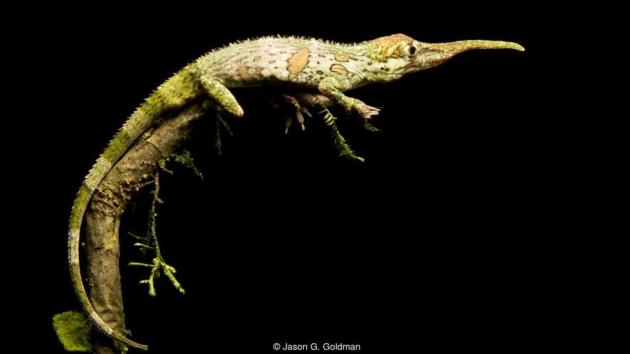
Pinocchio in the Forest

pinocchio20lizard_zpsnwefj0ks

Source: BBC.com

Eccentric and alien-like creatures abound on Earth, but often times these species are found in very remote and small areas. The Ecuadorian horned anole, also known as the “Pinocchio lizard,” is a species that would likely appear in Discovery Channel’s TV series Life (if it has not done so already).  This curious lizard with a long, malleable nose was found in the Mindo cloud forests of Ecuador’s Pichincha Province in the 50’s. Aside from its peculiar nose, what makes the story more intriguing is that it ‘disappeared’ from human research world for almost 40 years until it was rediscovered by a group of birders (hurray birders!) in 2005. The purpose of the horn and how it moves are still a mystery, but Jason Goldman has written an article for the BBC Earth website that elucidates some of the rare reptile’s habits:

Lucas Bustamante carefully aims his laser pointer at a small branch some 50ft (15m) above the ground. The green spot of light is clearly visible, but I just cannot see the lizard he has spotted: just branches, leaves and moss.
Continue reading

Reptile of the Day – Thorny Dragon

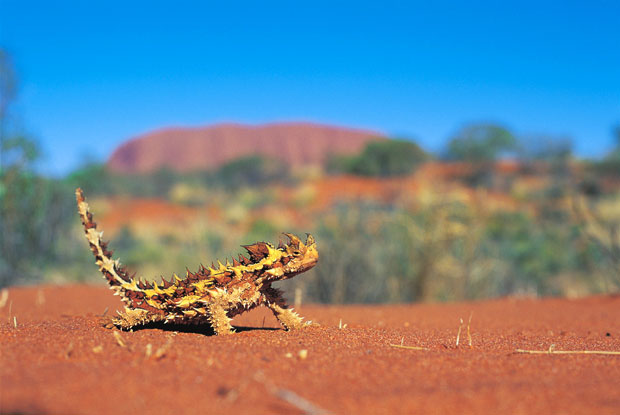
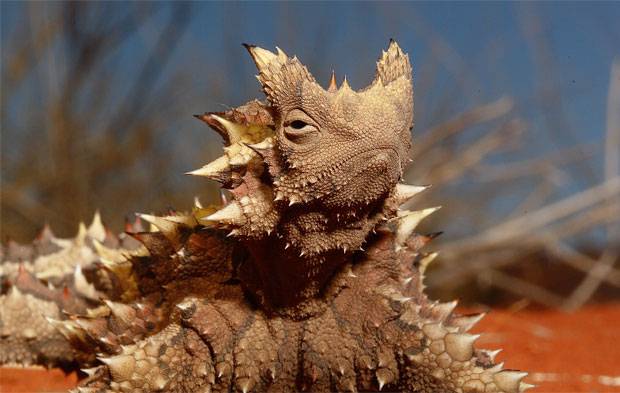
Today’s reptile is the Thorny Dragon, Moloch horridus (Australia) — as its name suggests, this Australian lizard’s body is dominated by intimidating spikes in order to look unappealing and fend off predators.

Occupying scrublands and deserts primarily, the Thorny Dragon’s coloration is perfect for blending in and feasting on ants, its main source of nutrition.

Image


Photo Courtesy: statravel.co.uk


Image

^ The face says it all ^

Photo courtesy: australiangeographic.com.au

Too many birds, not enough Herps!!!

We can’t let the birders have all the fun, so I’m going to start posting my favorite reptiles & amphibians!  (I’m clearly in good company on the subject, however!) These amazing creatures are often unjustly vilified, but if you take a closer look you will realize just how beautiful and unique they are.

So I will start for now with Crotalus cerastes, the desert sidewinder (SW US/NW Mexico) — This small pit viper is specially adapted to live in the desert, most notably in its locomotive behavior of “sidewinding” which leaves a trademark imprint in sand.  Enjoy!

Image

Image

Common Garden Lizard (Calotes versicolor)

The common garden lizard is a medium- sized, arboreal lizard with an oval head and laterally compressed body. In the male, the cheeks are muscular and swollen. Females are considerably smaller. Continue reading

Travancore Tortoise


Periyar’s diverse ecosystems of evergreen, semi-evergreen, moist deciduous and dry forest makes it a reptile friendly habitat. Forty-five species of reptile make the reserve their home, including the charismatic Travancore Tortoise.

Continue reading

The Common Indian Monitor

The Periyar Tiger Reserve is popular for its animal sightings, scenic splendour and biodiversity. The common Indian Monitor is the only known species of monitor lizard found in the reserve.