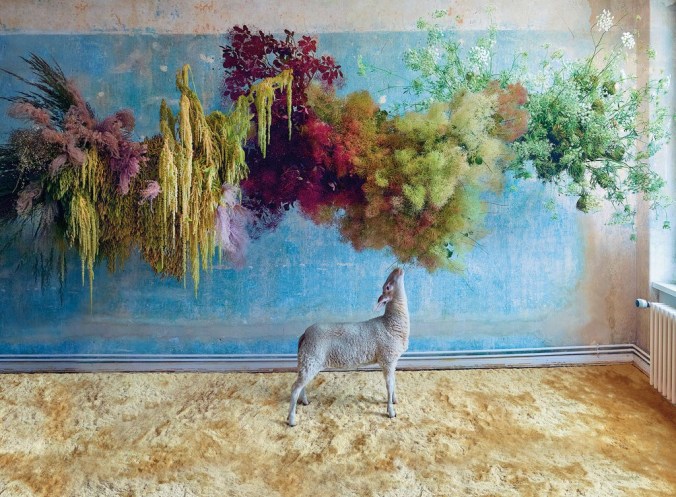
The Berlin-based florist Ruby Barber of Mary Lennox created some of her signature cloud arrangements with once-neglected weeds. A composite of individual arrangements, from left, of weeping amaranth and fresh and dried wild grasses; an abundant gathering of the once-humble smoke bush, now a fashionable challenger to traditional hothouse flowers; and Queen Anne’s lace. Credit Photograph by Guido Castagnoli. Flowers styled by Mary Lennox
Ralph Waldo Emerson may have written that a weed is just “a plant whose virtues have not yet been discovered,” but another way of stating it is that a weed “is a plant growing in the wrong place”. The current revalorization of the “common weed”– aesthetically, culinarily and nutritionally — dovetails beautifully with much of what we highlight on this site. Thanks to Ligaya Mishan of the NYTimes for the refocus.
How the Common Weed Has Grown on Florists (and Chefs)
From the flower arrangement to the plate, this is the era of the formerly unwanted plant.
A WEED IS UNWANTED: That is its definition. It is a plant that we have deemed to have no value because it contributes nothing to our life, neither nourishment nor beauty. Why should it help us when it doesn’t need us to survive, its seeds borne on the idlest gust, taking root and thriving in even the cruelest terrain? It stands wholly apart from human civilization, hardy and self-sustaining, mocking our hegemony, claiming the earth as its own. Worse, it is a predator, stealing resources — real estate, sunlight — from the plants we do value and rely on, crowding them out, threatening their existence and, by extension, ours.
A weed is never singular but an army. Its legions sweep across land like the Golden Horde, “always three steps ahead of the gardener, traveling underground, seeding by the million, smothering all in their path,” says the British writer and landscape designer Isabel Bannerman. Her husband and partner, Julian Bannerman, frames it slightly less savagely: The garden “is a bit like having a party. What we call weeds are the uninvited guests.” And in the Swedish writer and illustrator Elsa Beskow’s picture book “The Flowers’ Festival,” originally published in 1914 as “Blomsterfesten i Tappan,” they appear as exactly that, a rabble of thistles, chickweed, nettles and burdock, “scoundrels and beggars and ragamuffins” all, consigned to a ditch outside the garden to glower while the violets and orchids revel. “But we’re flowers, too,” the weeds roar.
But their time has come. Continue reading
 Organikos