Marsh Matters

Coastal marshlands exist in a precarious state: they need enough sediment to stay above water but not so much they get buried. In San Francisco Bay, the US Army Corps of Engineers and others are working to develop a less destructive way of giving marshes the mud they need. Photo by Aerial Archives/Alamy Stock Photo

For the record, marshes matter, so our thanks to Erica Gies, writing for Hakai:

Making a Marsh out of a Mud Pile

In San Francisco Bay, scientists are looking for a better way to rebuild flagging marshland.

The water in California’s San Francisco Bay could rise more than two meters by the year 2100. For the region’s tidal marshes and their inhabitants, such as the endangered Ridgway’s rail and the salt marsh harvest mouse, it’s a potential death sentence. Continue reading
Thames Is Alive, Again

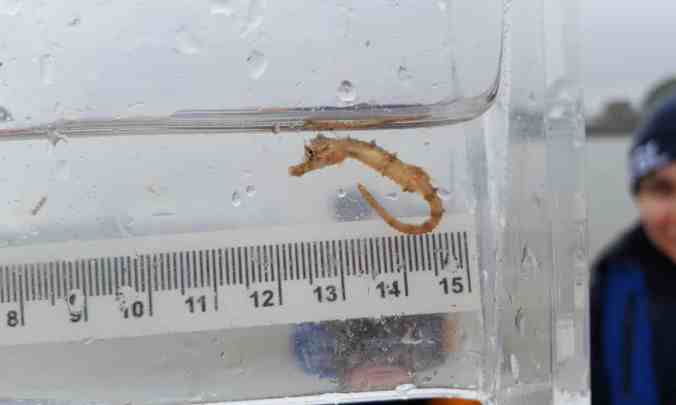
Species living in the Thames include seahorses and sharks. Photograph: ZSL

We will take good news where and how we can get it:

Seahorses and sharks living in River Thames, analysis shows

Zoological Society of London carries out most comprehensive survey since 1950s

Since 2003 there has been as steady increase in seal populations in the Thames estuary. Photograph: ZSL

Seahorses, eels, seals and sharks are living in the tidal Thames, according to the most comprehensive analysis of the waterway since it was declared biologically dead in the 1950s.

But scientists from the Zoological Society of London (ZSL), who carried out the work, warn that the 95 miles of the tidal Thames is suffering from rising nitrate levels as a result of industrial runoff and sewage discharges. Water levels and temperature are also rising as a result of global heating. Continue reading