Flood-proofing Education

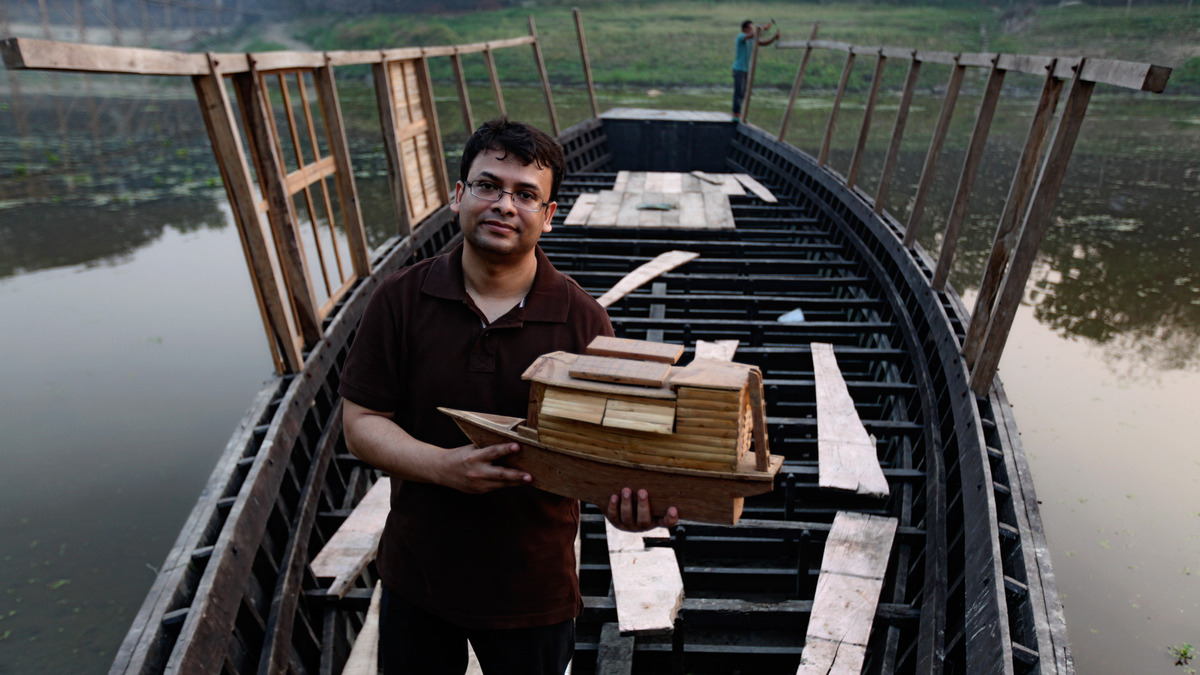
Architect Rezwan’s idea is to combine a school bus with the schoolhouse, and use the traditional wooden boat to create a floating space to bring primary education to doorsteps. PHOTO: ABIR ABDULLAH/ SHIDHULAI SWANIRVAR SANGSTHA

Architect Rezwan’s idea is to combine a school bus with the schoolhouse, and use the traditional wooden boat to create a floating space to bring primary education to doorsteps. PHOTO: ABIR ABDULLAH/ SHIDHULAI SWANIRVAR SANGSTHA

Bangladesh is prone to flooding due to being situated on the Ganges Delta and the many distributaries flowing into the Bay of Bengal. Coastal flooding, combined with the bursting of river banks is common, and severely affects the landscape and society of Bangladesh. 75% of Bangladesh is less than 10m above sea level and 80% is floodplain, therefore rendering the nation very much at risk of periodic widespread damage, despite its development. One man, who as a child often found himself cut off from school, did not want the future generations to face the same plight.

His idea: using boats to facilitate education at the time of floods.
Continue reading

Taking Classrooms to Children

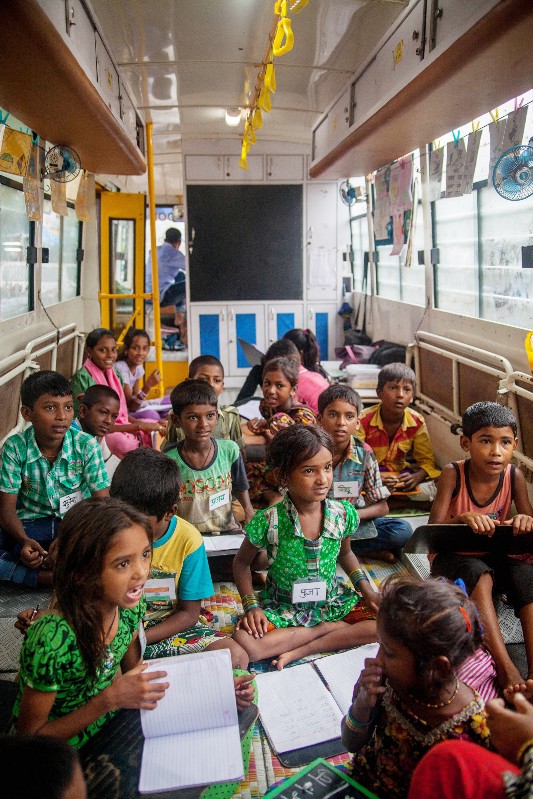
 The buses can only hold 20 students, without much space to wiggle around or store books. But they have unique benefits — like their ability to reach many of Mumbai’s poorest migrants who live on illegal plots of land where schools can’t be built. PHOTO: Karen Dias

The buses can only hold 20 students, without much space to wiggle around or store books. But they have unique benefits — like their ability to reach many of Mumbai’s poorest migrants who live on illegal plots of land where schools can’t be built. PHOTO: Karen Dias

Mumbai’s education system has fallen gravely short of absorbing its children. Only 400,000 children were enrolled in municipal schools in 2014, according to a report by Praja, a non-partisan research and advocacy organization. That number actually dropped 11 percent since 2009, despite increased government spending on education.That leaves more than half of the children in Mumbai either out of school or learning in private institutions. At least 37,000 kids in Mumbai live on the streets and work with their parents to earn a few cents a day, according to advocacy organization Action Aid.

Medium brings you more on how a collaborative system of volunteers, activists and NGOs is transforming the darkness of ignorance in one of India’s largest cities.

Continue reading

Nature’s Wisdom The Only Teacher

The Marudam School in Thiruvannamalai in Tamil Nadu. For starters, it’s run by an NGO – The Forest Way – a registered charitable trust involved in education, afforestation, environmental education, organic farming and more. Also, it receives no funding from the government. The school, set in an organic farm and powered by renewable energy, teaches its students about conscious living that respects the environment.

Continue reading

Bird Fun (…and Aristotle?) around Tacacorí

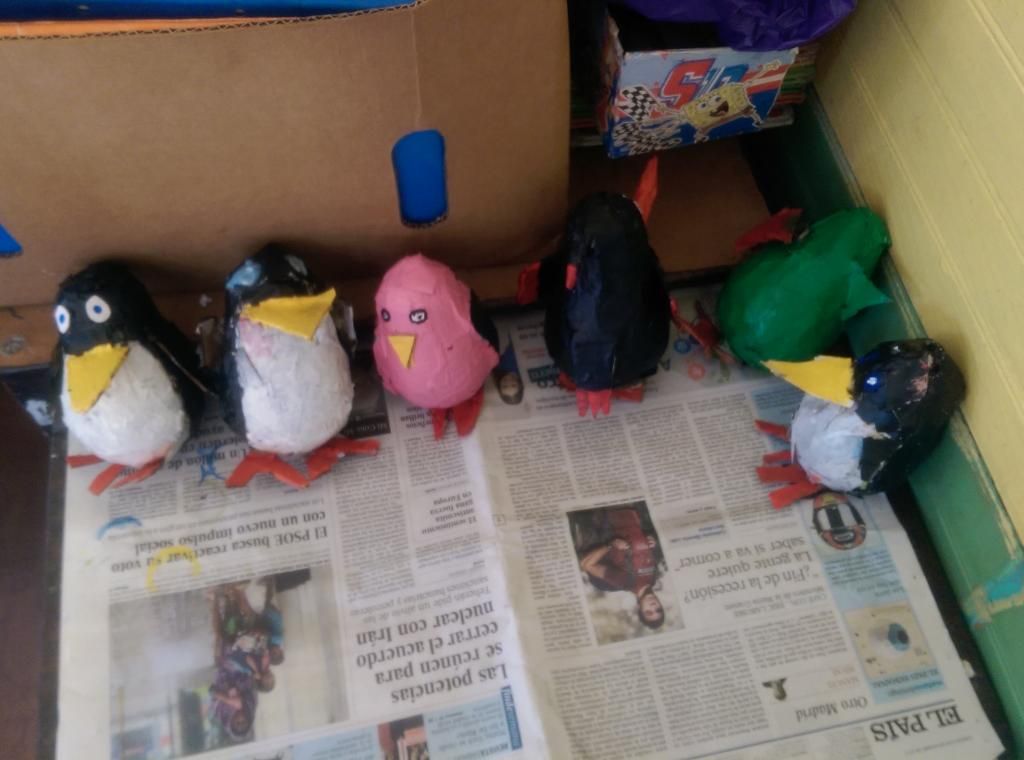
Papier-mâché penguins and other birds from the fourth grade class

In his recent post on our work at the local school in Tacacorí, Seth outlined our papier-mâché and painting ambitions with the third and fourth grades there. The second half of the week, Seth and I were split up because of the kids’ conflicting class schedules. I took fourth grade on the last few days, and he worked with third grade.

In his Poetics, Aristotle elaborates an aesthetic theory partly on the basis of μίμησις (mimēsis), or “imitation.” According to Aristotle, humans are “mimetic” beings, that is, disposed to imitate nature and other human beings. Art’s basis is precisely in Continue reading