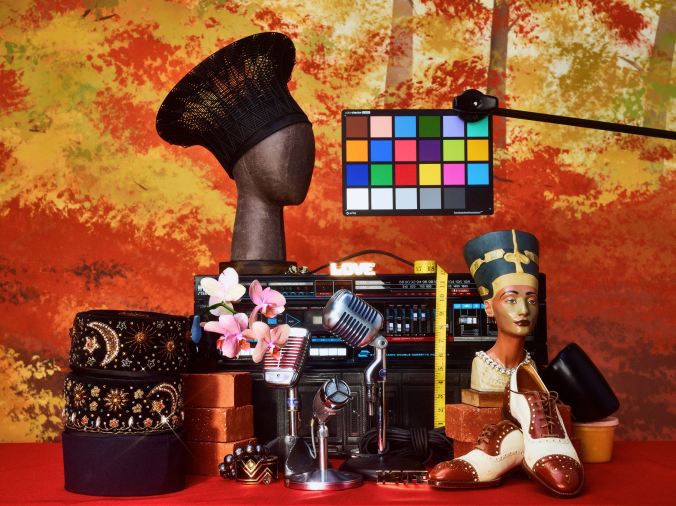
A still-life of accessories from various films that Carter has worked on: the headpiece of Queen Ramonda, in “Black Panther”; cufflinks for Martin Luther King, Jr., in “Selma”; and the dancing shoes worn by Shorty, a character in “Malcolm X,” who was played by Spike Lee. Photographs by Awol Erizku
In film and theatre, costume design is often as important as a setting and script to craft the sense of both character and story. It’s debatable whether non-fiction or fiction is more challenging, but Ruth E. Carter’s work carries the story for either one, with an attention to detail that brings the viewer back into history or forward into new worlds.
Be sure to click through the article for more of Awol Erizku’s dynamic photos, as well as watch the video below for more images and Carter’s own explanation of her work.
Throughout her career, the costume designer for “Black Panther” has created visions of black identity, past and future.
Ryan Coogler’s “Black Panther” is a rare thing: a big-budget superhero movie that is unabashedly serious about great clothes. The film’s costume designer, Ruth E. Carter, evoked the fictional African kingdom of Wakanda by melding sci-fi with global fashion history, drawing influence from sources including the color symbolism of the Maasai people, samurai armor, and the jewelry of Ndebele women. She realized her vision with the help of an international team of researchers, buyers, tailors, beaders, and engineers, and by exploring the possibilities of 3-D-printing technology. For her efforts, she has been lauded as one of the essential visual storytellers of Afrofuturism. Continue reading →
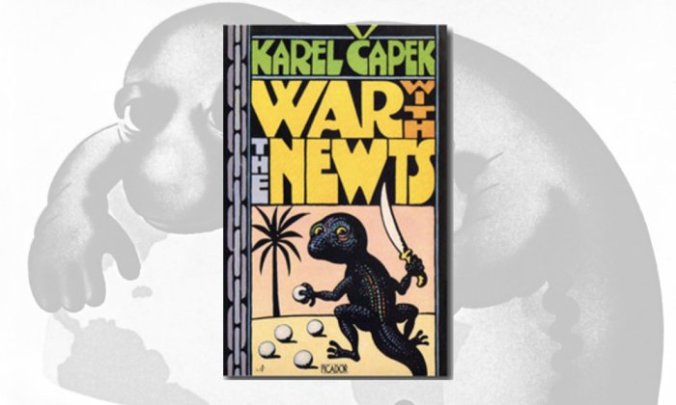
 John Rieder, an emeritus professor of English at the University of Hawai‘i at Mānoa, shares the following, excerpted from the book Uneven Futures: Strategies for Community Survival From Speculative Fiction:



 Organikos