Interview with Creator of Segway and More Important Technologies

Dean Kamen. Credit: DEKA Research

It is a somewhat morbid urban legend that the inventor of the Segway drove off a cliff in a fatal freak accident, but is founded in some truth: the man who purchased the company from inventor/entrepreneur Dean Kamen did indeed pass away in such a manner, a year after acquiring the tech manufacturer and nine years after the creation of the two-wheeled transportation tool. Mr. Kamen being alive and well, with hundreds of patents and plenty of ideas for inventions that particularly help in the medical world, spoke with Chau Tu from Science Friday about his company DEKA Research and Development and his history of prolific invention:

How did you first get interested in engineering?
I think I got started in a much more unusual way than most people I know. I sort of got into it as a kid, because I wanted to make things that weren’t available at the time, and in order to make them, I had to learn some engineering. I learned a little bit of electronics, I learned a little bit about mechanics, and I learned a little bit about how to make things and run machines—a lathe and a mill and a machine shop. I did that long before I academically studied any engineering or math or physics.

When I was in college, I had an older brother in med school who was a pediatric hematologist, and he needed ways to deliver very, very tiny amounts of drugs to very, very tiny babies. The equipment in the hospital was pretty much made for adults. So he asked if I could find a way to make a drug delivery system do what he needed. That was one of my first businesses and projects. [This was the AutoSyringe.]

Continue reading

Most Orangutans are Left-handed

Image © playbuzz.com

It may seem like a strange title, but this post, which partly continues our celebration of orangutans (see how you can help the endangered species by avoiding palm oil), comes from this week’s Science Friday segment on whether other animals display a preference for left or right in their daily lives, the way humans do. A couple of our contributors here are lefties, making up a small percentage of the total, while 66% of orangutans are left-handed! Nicole Wetsman writes:

The human tendency to be right-handed is obvious—especially if you’re a lefty, and have to deal with right-handed desks and scissors, not to mention spiral notebooks.

But humans aren’t the only members of the animal kingdom that show handedness, or the preference for one hand over the other. Other primates exhibit right-handed or left-handed proclivities, as do animals that don’t technically have hands. For instance, research has shown that some mice are righties while others are southpaws, and that some tree frogs preferentially jump away from predators in one direction over another.

Continue reading

Video Tour of a Recycling Plant in Brooklyn

My junior year, I founded and sat as president of my high school’s recycling club, which was a fairly simple operation of setting up cardboard boxes in classrooms and asking people to put their plastic or glass bottles and aluminum cans inside – paper recycling was already managed by the school district, but the rest wasn’t. Every Monday I’d go around collecting all that material into the big blue plastic bags sold by the county for residential recycling, normally filling one to two of them a week, and then take them to some neighbor of the school’s gracious enough to loan us their curb space for recycling pickup the next morning. From those big trucks that would load up the blue bags for the county, all the glass, plastic, metal (and garbage people thought was recyclable or didn’t care enough to remove) probably went to a recycling plant a bit like the one in the video below:

Continue reading

A Sperm Bank for Coral Reefs

An example of a coral spawning, in this case, the species Orbicella faveolata, or mountainous star coral. Credit: Schmahl/FGBNMS

Ocean health matters to us, and the state of our corals is one of the most at-risk elements of marine ecosystems. So many species depend on coastal communities of these strange lifeforms, and with acidification and pollution of sea waters, the reefs are in danger of slowly but surely dying out. Thankfully, there are efforts underway to conserve coral in an unusual way – freezing and storing their sperm. Julie Liebach reports for Science Friday:

You’ve heard of seed banks—precious vaults that keep plant genetic material frozen for posterity’s sake. But what about coral banks?

For more than a decade, marine biologist Mary Hagedorn has been cultivating the art of carefully freezing coral sperm through a process known as cryopreservation. Her goal is to bank as many species as possible for use in future research and restoration, and to train other scientists to follow her lead.

Continue reading

Finding a Boiling River in Peru

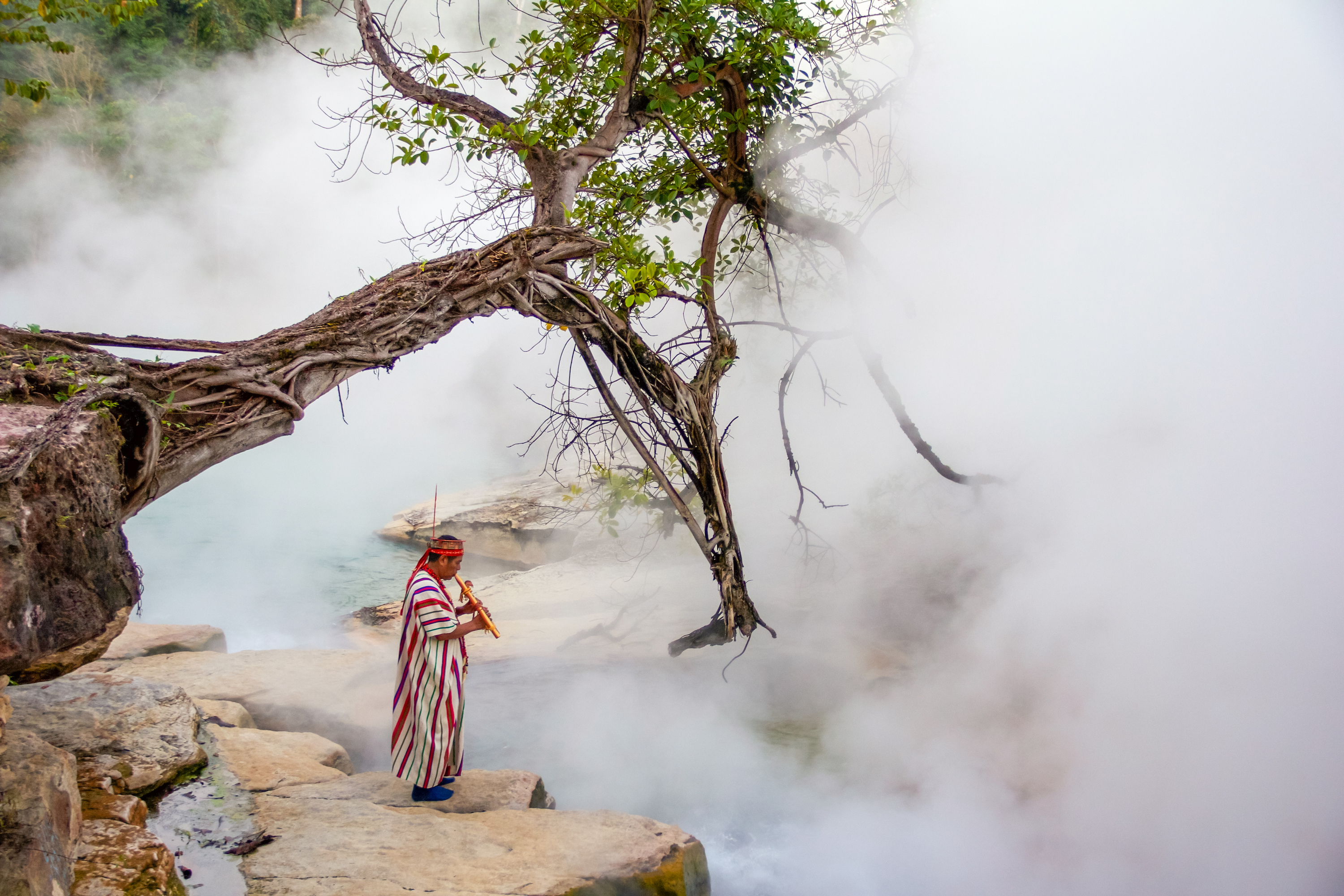
The Boiling River and an Amazonian shaman. Photo by Sofia Ruzo

Thanks once again to Chau Tu at Science Friday’s weekly written article, we’ve learned something new about the natural world, and it sounds like pretty much everyone except maybe a couple hundred people were unaware of its existence too: a steaming-hot river in the Amazon of Peru that isn’t volcanically heated. As Andrés Ruzo, the first geoscientist to study the water body, said in his TED Talk on the subject in 2014 (just released this February), “At a time when everything seems mapped, measured and understood, this river challenges what we think we know. It has forced me to question the line between known and unknown, ancient and modern, scientific and spiritual. It is a reminder that there are still great wonders to be discovered.” Here’s more from Chau Tu on the subject, and make sure to visit the Boiling River Foundation website.

Andrés Ruzo first heard about the Boiling River from his Peruvian grandfather, who shared a legend with him when he was a kid about the Lost City of Gold in Peru. “One of the details of the story was a ‘river that boils,’” Ruzo recalls.

Twelve years later, when Ruzo was studying at Southern Methodist University in Texas to become a geophysicist, he asked colleagues and other experts if they knew anything about a large river that boiled in the Peruvian Amazon. No one had; some scoffed at the inquiry. While thermal rivers do occur on earth, they’re generally tied to active volcanic or magmatic systems—neither of which were known to exist in the Amazon jungle, they said.

Continue reading

Interview with a Jurassic Park Paleobiologist

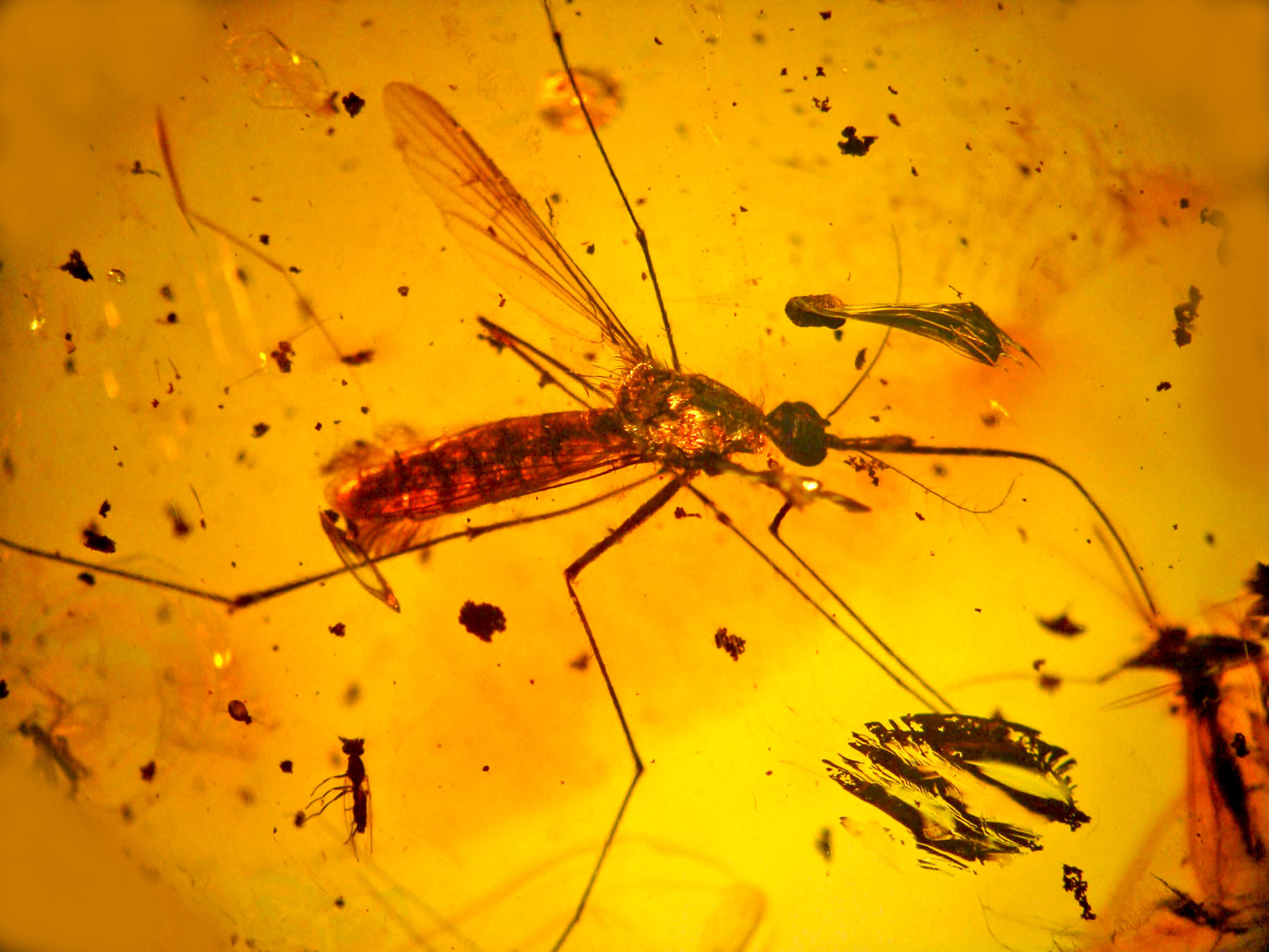
An elephant mosquito from Poinar’s collection. Photo by George Poinar, Jr. via Science Friday.

Many of our readers have likely read or watched Jurassic Park, or one of the sequels of the film, and know that the DNA for the fictionally first-recreated dinosaur came from the blood sample within a giant mosquito trapped inside prehistoric amber. Well, Michael Crichton actually got this idea from a true scientific discovery, although it didn’t revolve around dinosaurs. We’ve discussed de-extinction on the blog before, and actually featured the paleobiologist referred to in this post’s title a couple months ago. Now, Chau Tu at Science Friday has interviewed the scientist, George Poinar, Jr., regarding his experience working with amber-clad specimens from millions of years ago, his thoughts on de-extinction, and more:

Poinar would find, among other specimens, the oldest known bee, the first known bat fly fossil, and the most complete flower from the Cretaceous Period. And just this past February, he co-authored a paper in Nature Plants describing a new species of neotropical flower found in amber from the mid-Tertiary Period.

Science Friday recently spoke with Poinar, 79, now a courtesy professor in the Department of Integrative Biology at Oregon State University, about what led him to investigate specimens trapped in amber, his thoughts on de-extinction, and his inspirations.

Continue reading

Spiral Jetty: Art that Informs

Photo by George Steinmetz, September 2002

In 1970, artist Robert Smithson built a massive sculpture as a piece of land art, or an “earthwork,” that is normally found just below the surface of the water of Great Salt Lake at Rozel Point. In drought conditions, the art piece, titled Spiral Jetty, becomes visible, often with salt encrustations that decorate the basalt spiral formation. Great Salt Lake, in addition to being salty, is also home to microorganisms that live or even thrive in extremely salty conditions and produce pigments that give them a red to orange color, which becomes visible in the water at times. Chau Tu reports for this week’s Science Friday written piece:

Great Salt Lake is known as a terminal basin, meaning its water has no outlet. “Water escapes through evaporation, and everything else stays there,” says Jaimi Butler, coordinator of the Great Salt Lake Institute. At the time the sculpture was built, the water level of the lake was particularly low. But by 1972, the water rose again to near-average levels, submerging the artwork.

“Smithson anticipated that the lake would rise and fall, the residue of salt crystals causing the black rocks to glisten white whenever the water level dropped,” the New York Times Magazine wrote in 2002. And indeed, that very year, regional droughts caused the jetty to reappear “for the first prolonged period in its history,” according to the Dia Foundation, which now owns the sculpture. (The Great Salt Lake Institute partners with the Dia Foundation and the Utah Museum of Fine Arts to oversee the Spiral Jetty.)

Continue reading

Cranberries Covered by Science Friday

cranberry6

Four mature cranberry cultivars (clockwise, from upper left): early black, a Massachusetts native; DeMoranville, a hybrid developed at Rutgers University (named for Carolyn DeMoranville’s father); Stevens, a hybrid from the first USDA cranberry breeding program, released in 1960, and the most widely planted hybrid in the U.S. today; bugle, an unusually shaped Massachusetts native (not widely planted). Photo by Carolyn DeMoranville, UMass Cranberry Station

We’ve featured a post solely dedicated to cranberry bogs in the past, and have also seen some of the classic holiday sauce as part of a Thanksgiving art celebration. Now, with Thanksgiving Day coming up in the United States on Thursday, we’re learning even more about the North American fruit from Science Friday’s Thanksgiving Science Spotlight:

There are certain things that might come to mind when thinking about cranberries: A certain shade of red, a certain small size, and a certain kind of tartness. But these characteristics can differ among cranberry varieties—of which there are more than 100, according to Carolyn DeMoranville, an associate extension professor and station director at the University of Massachusetts-Amherst Cranberry Station.

Continue reading

The Gears in Planthopper Nymph Legs

Igor Siwanowicz’s image of planthopper nymph gears won 9th place in the Olympus BioScapes International Digital Imaging Competition. Photo by Igor Siwanowicz, HHMI Janelia Research Campus, Ashburn, Virginia. Via Science Friday.

In September of 2013, Science published a paper by Malcolm Burrows and Gregory Sutton titled, “Interacting Gears Synchronize Propulsive Leg Movements in a Jumping Insect.” The two British biologists were discussing the fascinating structures they had found in the legs of small insects called planthoppers. At the top joints of each pair of legs, the tiny jumping insects had gears with interlocking teeth that synchronized the kicking motion between the two appendages, so that the planthoppers could jump straight rather than slightly to the left or right if one leg had acted even slightly before the other.

Covering the story back in September, Joseph Stromberg wrote for Smithsonian Magazine that:

To the best of our knowledge, the mechanical gear—evenly-sized teeth cut into two different rotating surfaces to lock them together as they turn—was invented sometime around 300 B.C.E. by Greek mechanics who lived in Alexandria. In the centuries since, the simple concept has become a keystone of modern technology, enabling all sorts of machinery and vehicles, including cars and bicycles.

Continue reading

On the Art of Snowflakes

Snowflake, by Steve Begin/flickr/CC BY-NC-SA 2.0

For those of our readers in the appropriate climates to be receiving snow this time of year, we have some information on snowflake collection/observation that might be of interest; for those in milder or more tropical climes, we have a science experiment to create your own crystal formation in the shape of a snowflake! Let’s start with finding snowflakes in the wild. You can start by watching this Snowflake Safari video from Science Friday, or if you prefer reading, we have excerpts below (also via SciFri) from the book Mama Gone Geek by science writer Lynn Brunelle:

When the snow starts falling, grab your kids, coats and boots, a couple of pieces of black construction paper, and a magnifying glass or two if you have them. As the snow is falling around you, catch a couple of snowflakes on your black construction paper and observe them with your magnifying glass, comparing how the snowflakes are similar and different. Count how many sides or points the snowflakes have and if any snowflakes appear to match.

Continue reading