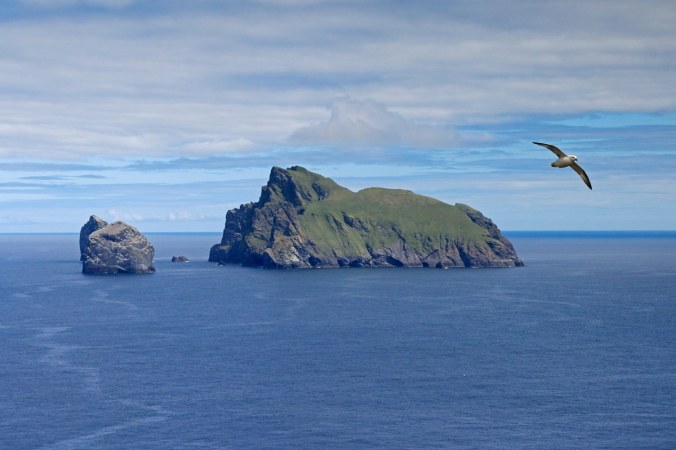
A northern fulmar in flight near Boreray, an uninhabited island in the archipelago of St. Kilda. Photograph by Philip Mugridge / Alamy
A beautiful several minutes of historical reading, thanks to Fergus McIntosh:
A Trip to St. Kilda, Scotland’s Lost Utopia in the Sea
In 1877, George Seton, a visitor to the tiny Scottish archipelago of St. Kilda, observed that the men living there had an unusual physiological characteristic. “The great toes of the cragsmen are widely separated from the others, from the circumstance of their frequently resting their entire weight on that part of the foot in climbing,” Seton wrote. These men with prehensile feet were residents of the most remote settlement in the British Isles, forty miles out in the North Atlantic, where seabirds, garnered from the towering cliffs, formed the major part of their diet. A hundred years after Seton, another visitor wrote that “even today a boat setting out for St. Kilda is by no means assured of reaching its destination.”
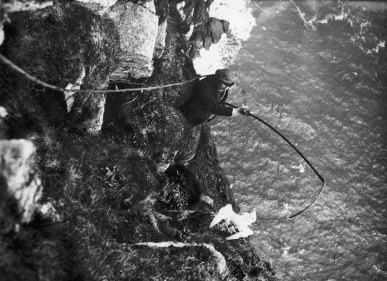
A St. Kildan hunts seabirds on the cliffs of Hirta, May 26, 1923. Photograph by Trinity Mirror / Mirrorpix / Alamy
These were unnerving words to recall as I stood, clad in oilskins and a lifejacket, on the pier at Uig, on the Isle of Skye, at seven o’clock one morning in August. Though the air was cold and still, the sky a smooth overcast, the captain of our small boat assured us that the ocean swell would make the journey to the islands uncomfortable, and that the weather could worsen at any moment. Continue reading
 Organikos