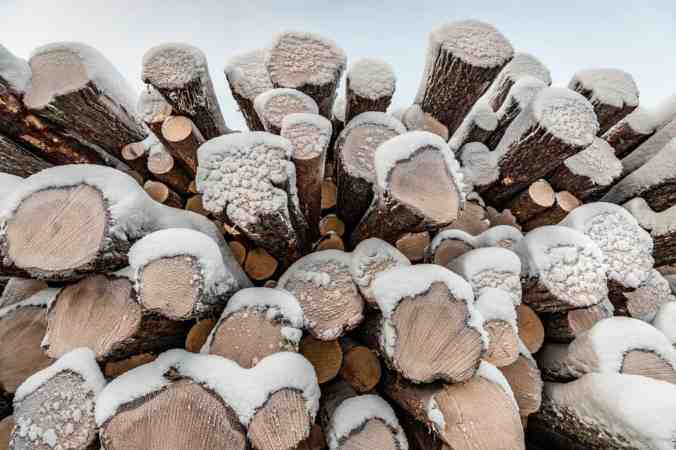
The remnants of an old-growth forest in northern Sweden. Forest biologist Sebastian Kirppu counted over 100 trees more than 150 years old in these piles. Photograph: Marcus Westberg
The Guardian features this gallery of photos with commentary, by Marcus Westberg, to raise awareness; click any image to see the entire collection:
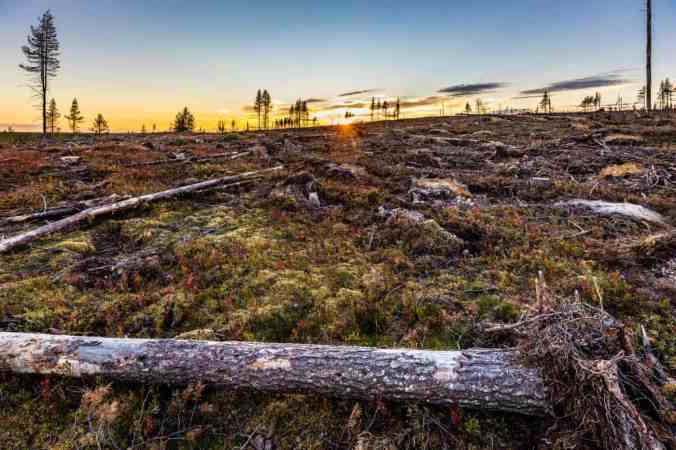
Each year, about 1% of Sweden’s forest is cut down, according to the trade association Swedish Forest Industries, mainly in the northern half of the country. Since 2000, Sweden has lost more than 48,000 sq km (19,000 sq miles) of tree cover, not accounting for replanting, or 17% since 2000, according to Global Forest Watch. It is an area greater than Denmark
‘Forests are not renewable’: the felling of Sweden’s ancient trees
Forests cover 70% of the country, but many argue the Swedish model of replacing old-growth forests with monoculture plantations is bad for biodiversity.
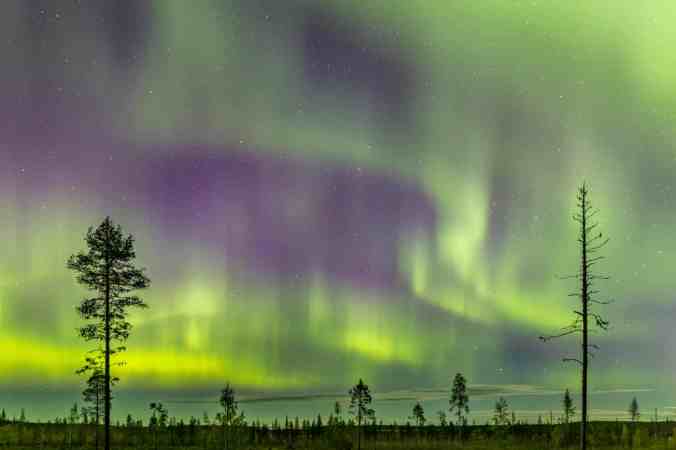
The remains of an old-growth forest are silhouetted against the aurora borealis in Pajala municipality, in Sweden’s northernmost county of Norrbotten



 Organikos