Evolving Our Palates

bitter-master768

Bitter flavors have crept into the contemporary palate. Above, from left, Swiss chard, hops, bitter melon, aloe and wasabi root (all rendered in white chocolate) rest on a turmeric-dusted cube. Credit Photograph by Mari Maeda and Yuji Oboshi. Styled by Suzy Kim. White chocolate 3D food by Peter Zaharatos/SugarCube

Our palates are evolutionarily oriented away from these flavors, but we appreciate the opportunity to decide for ourselves when we might want some alternative sensations:

The Sweet Rewards of Bitter Food

MANY YEARS AGO, I had dinner at a restaurant in Chinatown in Boston — the sort of city where most non-Chinese people seeking Chinese food are in fact seeking what might better be described as American Chinese food: General Tso’s chicken, fried pork dumplings, “house special” lo mein; mild, comforting Cantonese dishes slick with sauce and loud with sugar, salt and the intense umami buzz of MSG. In an attempt to be adventurous, I ordered instead the most unusual thing I could find on the menu: beef with bitter melon. The waitress looked at me, her brow furrowed. “You don’t want that,” she declared. “You won’t like it.”

“I do!” I insisted. “I’ve had it before.” A little while later, she returned with a dish of beef strewn with crescents of a jade-hued, scallop-ridged, firm-textured fruit that looked not unlike oversize celery. The truth was, I’d never had it before. As advertised, it was bitter, in a distinctly vegetal way, with none of the fruity sweetness that the word “melon” would imply. I took a bite, then another, and another — in a different context I might have stopped, but my reputation was on the line. By the time I was finished, the melon hadn’t become more palatable, exactly, but my palate had changed. What had tasted like bitterness now tasted like pride. Continue reading

Prioritizing The Key Variable In Tomato Breeding

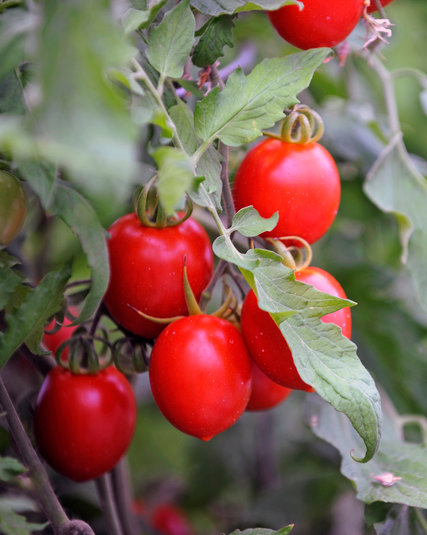
28tomato-blog427We always wondered why, with the selective breeding of tomatoes, experts favored appearance over flavor. We have an answer in “A Genetic Fix to Put the Taste Back in Tomatoes” by Kenneth Chang:

Over the decades, taste has drained out of supermarket tomatoes.

Harry J. Klee, a professor of horticultural sciences at the University of Florida, thinks he can put it back in within a couple of years. Continue reading

Tricking Taste Buds: Easy as Miracle Fruit Pie?

© Getty Images / BBC

p02f6t3k.jpg

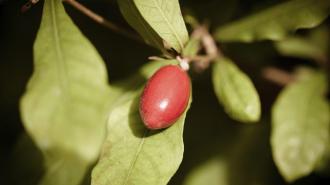
Synsepalum dulcificum, also known as miracle fruit (Thinkstock)

The miracle fruit is one of the many trees that we have incorporated into the edible landscape at Marari Pearl. So we thank Veronique for writing about it in her BBC feature article How to Hack Your Tastebuds. In Kerala we have an abundance of the Indian gooseberry, or amla, which is described as sour, astringent, pungent, and bitter, but also sweet. A weird combination, to say the least. After reading Veronique’s explanation, it is easier to understand that the transition from sour to sweet in one or two bites can be explained through some chemistry that takes place on the tongue:

p02f6t2z.jpg

Tasting orange juice after brushing your teeth can be unpleasant, but why? (Thinkstock)

Your tongue is not a blank slate. What you’ve just eaten can change the flavour of what you eat next – for better or for worse. It’s all because your taste buds respond differently when the environment around them shifts – an effect you can use to go on a little mouth-hacking tour.

Let’s start with an artichoke. Eat one and then drink a glass of water and you might notice that the liquid tastes strangely sweet. Then there’s orange juice. Drink a glass after brushing your teeth with toothpaste, and the normally sweet drink tastes foul instead. And for mind-bending parlour tricks, nothing beats miracle fruit. These little red West African berries make anything sour taste sweet – and it’s a remarkably clean, pure sweetness. Continue reading