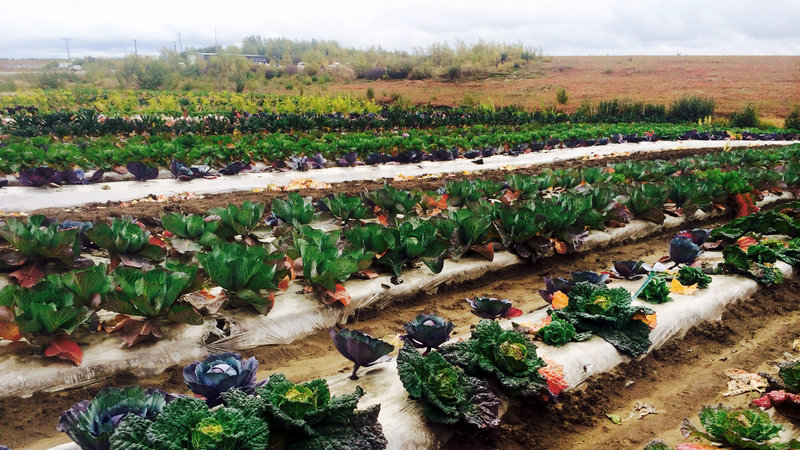
A field near harvest time at Meyers Farm in Bethel, Alaska, can now grow crops like cabbage outside in the ground, due to rising temperatures. PHOTO: Daysha Eaton/KYUK
Farming in the Arctic? Well, it can be done. The reasons are many. For one, the climate is changing: Arctic temperatures over the past 100 years have increased at almost twice the global average.
On a misty fjord in Greenland, just miles from the planet’s second largest body of ice, Sten Pedersen is growing strawberries. Yellowknife, a Canadian city 320 miles below the Arctic Circle, hosted a farmers market this summer. And a greenhouse in Iqaluit, the capital of the vast Canadian Inuit territory of Nunavut, is producing spinach, kale, peppers and tomatoes. The frozen tundra of the Arctic is experiencing something of an agriculture boom. More
 Organikos