Cacti in Trouble from Collectors

Mammillaria herrerae. Photo © Jardín Botánico Regional de Cadereyta

While we have amateur ornithologists, herpetologists, mycologists, and entomologists who contribute to this blog, we haven’t had many botanists around, and therefore we learned something new today about cacti: they’re a group of plants that’s only present in the Americas, apart from one species that grows in Madagascar, Sri Lanka, and South Africa. We also read some bad news from a Cool Green Science blog post by Christine Peterson, which is that 31% of cacti species have a threatened status, a terribly high proportion. Peterson writes,

The smugglers carried their tiny prizes tucked away in suitcases of jalapeños and dirty laundry. The spicy fruit was supposed to deflect inspections. Perhaps they thought the dirty laundry would do the same. Another rare item sat nestled in a new box of Uncle Ben’s Rice. Russians had a hard time finding Uncle Ben’s Rice back home, says Nicholas Chavez, Special Agent in charge of the Southwest Region for the U.S. Fish and Wildlife Service.

From the Los Angeles airport, the six Russian men weren’t carrying precious art or poached ivory. They were smuggling cacti stolen from National Parks and Indian Reservations. Some of the cacti they had were labeled appendix two, which means they aren’t currently “threatened with extinction but may become so unless trade is closely controlled,” according to the Convention on International Trade in Endangered Species of Wild Fauna and Flora.

Continue reading

TNC Building Beaver Dams

View of a series of existing beaver dams downstream of beaver dam analogue restoration reach. Photo © The Nature Conservancy (Kristen Podolak)

Beavers can be highly destructive in the wrong environment, but are keystone species wherever they’ve been around for long enough to have designed their ecosystem. And in areas where for a number of reasons beaver populations have dwindled so much as to see deterioration in the habitat, The Nature Conservancy thinks that adding artificial dams can help restore the land by affecting sedimentation, creating floodplains, and storing water. Kristen Podolak, Rodd Kelsey, Sierra Harris, and Nathan Korb report:

The Nature Conservancy is working like a beaver (Castor canadensis) by mimicking beaver dam building to restore streams and floodplain habitat in Montana and California.

No kidding. Last year we built twelve instream structures that look and act like beaver dams on two streams in Montana and we plan to build six more in a small creek in Childs Meadow, California this fall.

Why try to act like beavers? Beavers are not a panacea and can be a nuisance when they block water diversions or chew down people’s favorite trees, which is why they have been persistently trapped and killed or relocated in many areas across North America.

Continue reading

The American Burying Beetle

American burying beetles. Photo © St. Louis Zoo via Cool Green Science

Beetles, apart from being the most numerous type of insect in the world, comprise the largest group of animals in general, with somewhere between three- and four-hundred thousand species described; and that doesn’t even count the presumably undiscovered ones hiding out in some unexplored corner somewhere. We’ve covered dung beetles before, but also mycokleptic species, and now we’re learning about a very important carrion beetle in North America known as the American burying beetle from Ted Williams at The Nature Conservancy’s Cool Green Science blog:

The shiny black, orange-spotted adults can approach two inches in length. Offspring beg both parents for food, inducing regurgitation by stroking their jaws like wolf pups. They’re federally endangered American burying beetles, largest of the 31 species of North American carrion beetles.

Riding on the adults like oxpeckers are orange mites that keep them and their larval food supply free of fly eggs and microbes.

Continue reading

Antler Awareness

The Conservancy’s Justin Jones rounds up some antlers.  Photo © The Nature Conservancy (Matt Miller)

In Oregon, elk populations have grown so large that they are threatening a key forest tree species: the aspen, whose leaves turn a vivid yellow in the fall and create amazing landscape scenes, particularly in the western United States. To raise awareness of the issue and also generate funds for local children, people near The Nature Conservancy’s Zumwalt Prairie Preserve go out and search for elk antlers that have been shed each spring, then sell the antlers. Matt Miller writes for the TNC blog:

As our vehicles roll to a stop along the muddy track, a postcard-perfect scene stretches before us. Rolling prairie dotted with beautiful wildflowers, with towering snow-capped peaks in the background. But the kids around me don’t notice any of it.

“Antler!” one of them cries, and the group is off, running across the rolling hills. A youngster is soon hoisting an impressive elk antler over his head. His friends look on with admiration, but soon another antler is spotted, and another.

Continue reading

Reforesting the Amazon

NEW VENTURE: Deniston Mariano Dutra and his son Matheus Correia Dutra harvest cacao seeds. After giving up on cattle, the family replanted their farm with these indigenous trees. © Kevin Arnold via TNC

We care deeply about Amazonia, and Brazil is the country with the most deforestation in the river region, specifically from cattle ranching. But good news is coming from The Nature Conservancy in the April/May issue, where, as the article’s subtitle reads, “After decades of turning forests into pastures and fields, Brazilian landowners have begun reversing the trend.” Julian Smith reports for the TNC Magazine:

Lazir Soares de Castro stands amid white and gray Nelore cattle on his ranch in São Félix do Xingu, a remote and sprawling county on Brazil’s northeastern Amazon frontier. Beyond a wooden fence, high grass and scrub brush fade into sporadic trees in the distance.

Still vital at 70, Soares describes how different this area looked when he arrived in 1984, when it was all virgin rainforest. “It was the poorest area. There was no electricity, no telephone, no TV, no roads, nothing.” The military dictatorship then running the country was encouraging settlers to occupy the Amazon in the name of national security. “There was no organized environmental policy,” Soares says.

Continue reading

Swallow-tailed Kite Conservation

Bird of the Day 9/19/15: Swallow-tailed Kite (Reserva El Copal, Costa Rica)

I’ve had the fortune of seeing this long-rumped raptor outside of the United States, where they are now considered rare despite their wide range throughout the Caribbean and Central and South America. And although the population did decrease in the last several decades, the IUCN does now list the species as having an “increasing” population trend. This interesting article in The Nature Conservancy, however, does raise concern over habitat loss and the species’ vulnerability. Ginger Strand reports:

Maria Whitehead yanks her feet out of the water as something crashes into Bull Creek next to the boat. Seconds later, a 10-foot-long alligator surfaces a few yards away. As the prehistoric reptile glides off, leaving a sinuous wake in the tannin-brown river, Whitehead casually retrieves her binoculars and goes back to watching a nest of swallow-tailed kites near the top of a soaring pine.

A project director for The Nature Conservancy in the South Carolina Lowcountry, Whitehead seems unfazed by nearly losing a toe on the job. So does Craig Sasser, manager of the Waccamaw National Wildlife Refuge. Wading into primeval cypress swamps, scaling 100-foot pine trees, paddling up tidal rivers through clouds of insects in triple digit heat: These are all part of researching swallow-tailed kites, a spectacular but poorly understood raptor.

Continue reading

Creative Conservation

White rhinos in South Africa. Photo © Michael Jansen / Flickr via Cool Green Science

From our counterparts at TNC’s blog Cool Green Science comes a second post on the wacky strategies sometimes implemented to save endangered wildlife species. Poisoning rhino horns so people can’t use them for so-called medicine, treating bats for fungus with banana bacteria, killing invasive snakes with acetominophen-filled dead mice thrown from helicopters, the list goes on. Justine Hausheer writes:

Consumers of illegal rhino horn products might be in for a bit of a nasty gastrointestinal shock. In an effort to protect their population of rhinos from poachers, the South Africa’s Sabi Sand Game Reserve is injecting parasiticides and pink dye into their rhinos’ horns. The chemical cocktail isn’t lethal (to humans or the rhinos) but it will send anyone that ingests powdered horn racing for the nearest restroom. Reserve staff have already treated more than 100 rhinos and put up sign warning poachers of the treatment.

Continue reading

Threats to Monarch Butterflies and How We Can Help

A Monarch butterfly caterpillar feeding on the leaves of a milkweed plant. Photographed at the Grapevine Botanical Gardens. Photo © TexasEagle/Flickr through a Creative Commons license, via TNC

We’ve covered monarch butterflies plenty of times in the past, whether it was reporting survey results showing that many households in the US would pay to help create habitat for the species, showcasing a citizen science project by the Xerces Society to count the winged invertebrates during their migration, or simply highlighting the needs of the orange butterfly in general and how to become involved. Now, given increased media coverage of the Monarch, the Cool Green Science blog for The Nature Conservancy is summarizing hazards and helpers of the species:

Twenty years ago, monarch butterflies occupied so much area in Mexico during the winter you could see it from space. It totaled about 20 hectares, or almost 50 acres, with millions if not billions of butterflies clinging to trunks and branches of trees.

Today, that area is around 4 hectares. The previous year had 1.1 hectares, says Brice Semmens, Assistant Professor at the Scripps Institution of Oceanography at the University of California San Diego.

Semmens was the lead author on “Quasi-extinction risk and population targets for the Eastern, migratory population of monarch butterflies” published recently in the journal Scientific Reports. It is one paper in a long line of sobering butterfly news.

Continue reading

Map the Herps You Spot

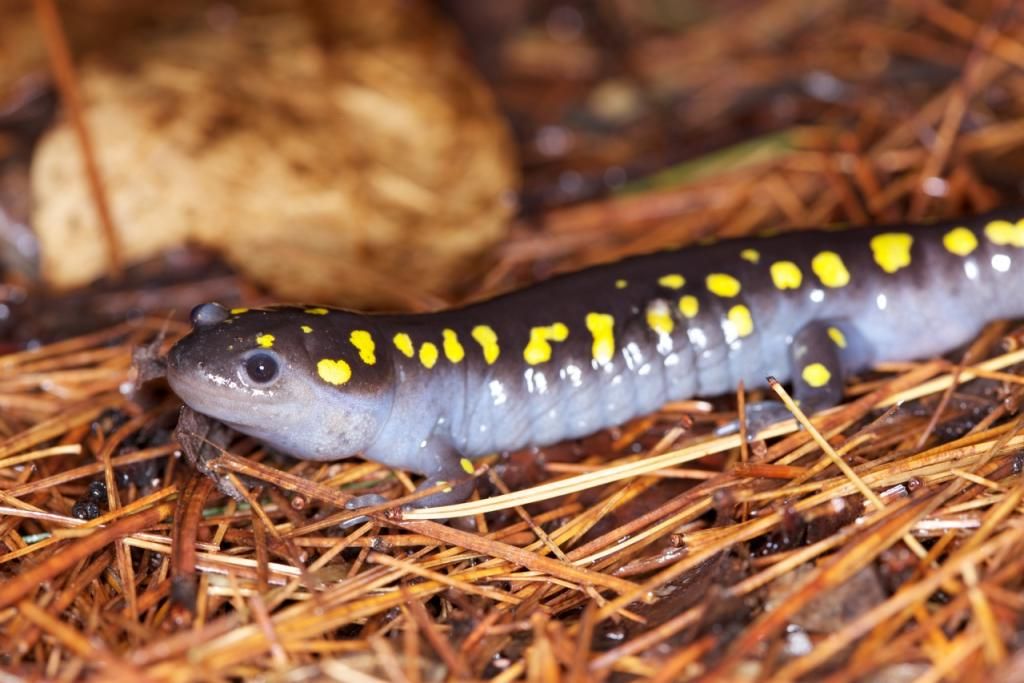
Spotted Salamander by Brian Magnier

In the spring of my penultimate year at Cornell, I took a Herpetology class that introduced me to the world of reptiles and amphibians, or “herps,” as they’re affectionately known. Thanks to that exposure, I was able to enjoy the spring migration of certain salamander species and learn the basics of the main families of frogs, lizards, snakes, and other herps like alligators, crocodiles, and all the other slimy or scaly animals in the classes Amphibia and Reptilia. If I had known of the existence of the citizen science project HerpMapper at the time (it wasn’t released until September of the same year as that salamander migration) I’d have certainly submitted some observations and photos to the organization! From their About page:

HerpMapper is a cooperative project, designed to gather and share information about reptile and amphibian observations across the planet. Using HerpMapper, you can create records of your herp observations and keep them all in one place. In turn, your data is made available to HerpMapper Partners – groups who use your recorded observations for research, conservation, and preservation purposes. Your observations can make valuable contributions on the behalf of amphibians and reptiles.

Continue reading

Hydropower by Design

Itaipu Dam, a binational hydroelectric dam on the Paraná River located on the border between Brazil and Paraguay. The dam is the largest operating hydroelectric facility in terms of annual energy generation. Photo/caption © Erika Nortemann/The Nature Conservancy

Dams, although greener in some senses than coal factories in terms of their electric output, almost always have other serious environmental repercussions in the form of habitat destruction and river flow interruptions that adversely affect fish species. Hydropower from giant dams on rivers has been described as a brute force technology, and the construction of new dams can create public outcry as well as political issues in water distribution. The publication of new research, in part by The Nature Conservancy, shows how hydroelectric projects, often so destructive, can be less harmful if planned thoroughly beforehand to take the whole river basin and water system into account, rather than just a small tract of river. Jeff Opperman reports for TNC in a blog article that describes the elements of concentration, confrontation, and collaboration involved in pairing new hydropower with river conservation:

Concentration.

That’s what makes rivers so valuable — both for fish and for energy.

A river is the concentrated water of a whole region as rain and snow across an entire basin becomes runoff, is funneled into cataracts, creeks and canyons, and collected into the narrow ribbon of a river channel (narrow in a relative sense — even a river channel several kilometers wide is incredibly narrow compared to its basin which may be hundreds of thousands of square kilometers in area).

Continue reading

Concurrent and Coinciding Thoughts on 5000+ Birds

img_7608_zpsgfofu0lt

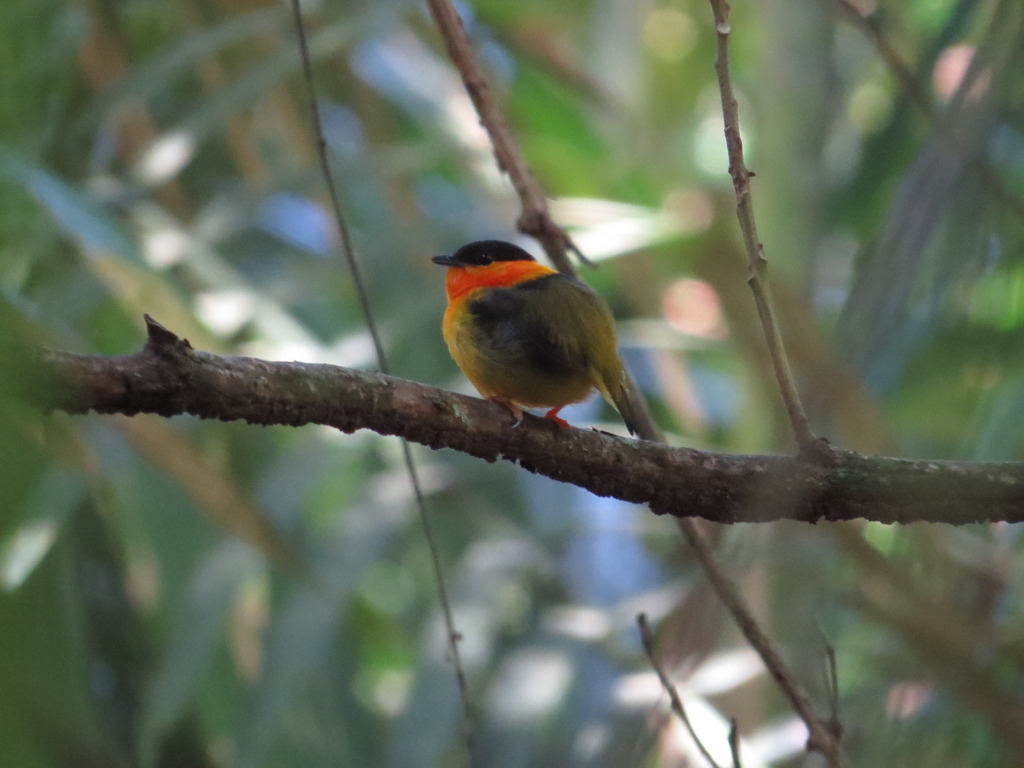
male Orange-collared Manakin seen at Carara National Park, Costa Rica

This week, two birders (one of whom we’ve featured on the blog before, and the other who we should have), Noah Strycker and Tim Boucher, wrote some thoughts on birding and life lists that had much in common, partially because I suspect Boucher’s post on The Nature Conservancy’s blog was inspired by Strycker’s summary of his 2015 Big Year, even though he made no explicit mention of the new world record (6,042 species of bird seen or heard in a calendar year).

Boucher, who saw his 5000th bird at the very end of 2015 (and those 5000 birds are ones he’s actually seen, not only heard), reflects on thirty-four years of birding to achieve his goal. Strycker, on the other hand, summarizes 365 days of straight birding to end up with the biggest big year ever recorded.

Continue reading

TNC: Prairie Restoration with Wild Seeds

closeup_of_baldwin27s_ironweed2c_a_common_tallgrass_prairie_plant_seen_on_the_konza_prairie2c_12c000_acres_of_virgin-_-_nara_-_557190

Closeup of Baldwin’s Ironweed, a common tallgrass prairie plant, by Patricia D. Duncan via WikiMedia Commons. 1974.

The word “restoration” might bring to mind an artistic connotation of preservation and repair, as in a World Heritage Site, but lately where we’ve seen it the most is in an ecological sense: whether it’s wildlife in a forest, algae control in wetlands, or coral health in the oceans. Whole landscapes can be restored to an extent, as in the case of Tianjin, China, where forests and wetlands are being rebuilt while also studying the effectivity of different strategies.

That’s part of what The Nature Conservancy has been doing in the prairies of Minnesota, rebuilding the diverse grasses that used to exist in a landscape that was fragmented and degraded by huge farms during the last century. Justin Meissen and Meredith Cornett, two of the co-authors on a paper recently published in Restoration Ecology, report for the TNC blog:

Glacial Ridge is truly huge — at ~36,700 acres it’s one of the few places on Earth where you can look to all horizons and experience what early American pioneers once called the “sea of grass.”

But it wasn’t always like this. Only a few years ago Glacial Ridge was a patchwork of mostly farm land and a few prairie remnants. So what was the Nature Conservancy’s prescription for bringing this massive landscape back to life? Seeds — lots of seeds.

Continue reading

Potoos in the Tropics

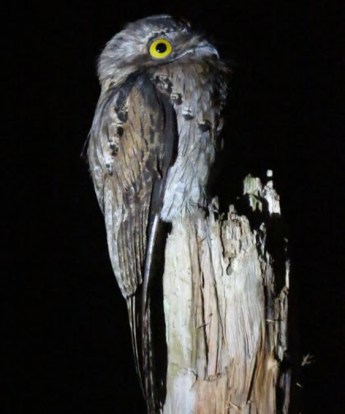
Northern PotooA few days ago, Timothy Boucher, a senior conservation geographer at The Nature Conservancy, shared his choice for his personal “Bird of the Year,” the Rufous Potoo, which he saw in Ecuador and was apparently the 5,000th bird to be checked off on his life list. Potoos, related to the frogmouths of southeast Asia and nightjars elsewhere around the world, are members of a highly cryptic, or camouflaged, family that primarily hunts at crepuscular hours and/or throughout the night.

In his blog post, Boucher describes his trip to Ecuador’s Amazon region, which yielded many exotic bird species, as well as the challenges of travel in the tropics. His excitement at hearing–and the next morning, Continue reading

Lichens: Unlikely Citizen Science Subjects

Photo via gmilburn.ca

We’re avid fans of citizen science, in part because of its breadth of possibilities. People can study historical documents, look for birds, record phenologies in forests, hunt lionfish, count butterflies, and perform dozens of other activities to help discover more about the world around and before us. One thing we didn’t expect to ever see was a citizen science initiative covering something as seemingly — but obviously looks can be deceiving — as lichens. Lisa Feldkamp reports for The Nature Conservancy’s science blog, Cool Green Science, excerpted in parts below:

Welcome to the exciting world of lichens. And no, that’s not oxymoronic.

A lichen is actually a composite organism: algae or cyanobacteria living with a fungus symbiotically. That definition, admittedly, doesn’t help their charisma factor.

But look at them closely and you’ll see a wonderful, colorful tapestry.

Get out a hand lens or microscope and an even more amazing world is revealed.

“One of the cool things about lichens is their ability to survive extremes,” says Tiffany Beachy of Great Smoky Mountains Institute at Tremont. “When it’s dry they shrivel and look like they’ve dried out, but with a drop of water they turn green.”

One of the most unique inhabitants of lichen is the tardigrade (a.k.a. water bear) is the first life-form with a proven ability to survive in the vacuum of space.

However, lichens have an Achilles’ heel: air pollution.

Continue reading

Bambi, or Rudolph?

Woodland caribou in the United States were decimated by overhunting and logging. Now they face additional challenges. Photo: Joseph N. Hall under a Creative Commons license. Via Cool Green Science.

Cool Green Science, The Nature Conservancy’s blog that we have started visiting to find more of our kind of news, has re-run their post from last year on the conflict between populations of caribou and white-tailed deer in North America. Matt Miller reports:

Rudolph-the-Red-Nosed Reindeer versus Bambi: yes, it sounds like a really bad holiday special. Maybe the worst ever.

Don’t worry; that’s not the case here. But along the Canada border in northern Idaho and eastern Washington, a struggle is playing out pitting the real-life counterparts of Rudolph (caribou) and Disney’s Bambi (white-tailed deer).

The quick version: woodland caribou, the rarest large mammal in the “lower 48” states have faced dramatic changes in forest habitat. White-tailed deer, drawn by the new habitat, have moved in and thrived.

The large numbers of deer have drawn more predators, notably mountain lions. And those mountain lions prey on the less wary, easier-to-kill caribou. An already beleaguered caribou population faces what may be its final straw.

In this case, Bambi wins. But there is nothing simple about this story, not really. For conservationists, it raises far more questions than answers.

Continue reading

If You Happen To Be In Ithaca

Not sure what to do this upcoming Earth Day?  If you happen to attend Cornell University here’s a suggestion: If “Nature never stands still”, taking an interdisciplinary approach toward her recovery and restoration seems like a logical step.

We especially like the circular nature of choosing Dr. Kareiva to give the 2013 Iscol Distinguished Environmental Lecture. Kareiva received his PhD in Ecology and Evolutionary Biology from Cornell University in 1981 and after serving on the faculties of Brown University and University of Washington he is now the Chief Scientist for The Nature Conservancy. Continue reading

Prime Directive, Reconsidered

Global climate change will soon be changing ecosystems around the world to such an extent that many species will no longer have proper habitats to survive and reproduce in. Over the past several years, the scientific community has been discussing the possibility of moving such species to new ranges in order to conserve biodiversity and reduce potential for extinction. This controversial process, known as assisted colonization or managed relocation, might be able to save some species from their current state of risk, but it may also prove dangerous for the natives of whatever area the “colonizers” are moved to. By diligently evaluating the perils and uncertainties of relocation and carefully considering the repercussions of leaving species to their shrinking habitats, The Nature Conservancy (TNC), given its mission and vision statements, should determine that in most cases, the costs of assisted colonization outweigh the benefits.

Patagonian mountains

By assisting the colonization of species with limited ability to adapt or relocate, the annual number of species gone extinct might be lowered in the coming decades. There are, however, disagreements as to whether or not humans should meddle with species movement. Continue reading