Precious Plumage

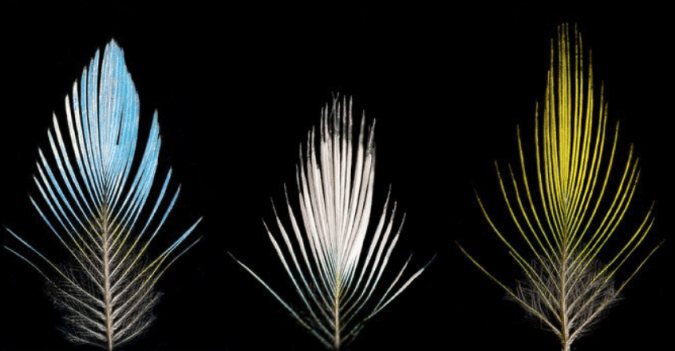
From left, the feathers of an opal-crowned manakin, a snow-capped manakin and the golden-crowned manakin. Credit University of Toronto Scarborough via NYTimes

Out of the roughly 250 bird families in the world, manakins (Pipridae family) are probably my favorite, because they’re like birds of paradise (Paradisaeidae family), except you don’t have to take a helicopter to remote areas of Papua New Guinea to see them. Almost all manakins are colorful––or at least the males are; females normally being a drab green––and they often have interesting behavior as well. I saw my first manakins in Ecuador, where two flashy species had some fun sounds to go along with their calls, but most of my exposure to the family has been in Costa Rica, where I did my best to record a Long-tailed Manakin lek.

Continue reading

The Future Of News

2503_cover_beigeThe purpose of this, where I am typing this just now, is to share information. Sometimes that information comes in the form of a personal story, which is highly subjective but informative about the challenges, the innovations, and accomplishments related to conservation and the wellbeing of communities around the world. We depend on the New York Times for this kind of information every day, and more days than not we link out to stories they publish related to the environment, community, or other topics of interest on this platform; so this story matters to us:

ARTHUR GREGG SULZBERGER doesn’t remember the first time he visited the family business. He was young, he says, no older than 6, when he shuffled through the brass-plated revolving doors of the old concrete hulk on 43rd Street and boarded the elevator up to his father’s and grandfather’s offices. He often visited for a few minutes before taking a trip to the newsroom on the third floor, all typewriters and moldering stacks of paper, and then he’d sometimes go down to the subbasement to take in the oily scents and clanking sounds of the printing press. Continue reading

The Oceans’ Invertebrates, Inveterately Out of This World

Clockwise from top left: a white phantom crab, a fuzzy red-spot crab, a frilled anemone Phymanthus, a red-eye Medusa Polyorchis penicillatus, a tiger cowrie Cypraea tigris and a three-lined nudibranch Flabellina trilineata. Credit Susan Middleton via NYTimes

We are no strangers to the fantastic sights of the deep sea — not only because of shallower personal experience but certainly also due to the wonders of the web. But the images captured by Susan Middleton look to be confirmation of how amazing invertebrate life can be in the oceans. Her new book, Spineless: Portraits of Marine Invertebrates, the Backbone of Life, includes around 250 photographs of these magnificent creatures, and we look forward to exploring them more in person. You can read Dana Jennings’ review of the book for the New York Times below:

As we stand on the thin crust of this watery planet, our gaze tends to roam from horizon to heavens. We often neglect the riot of life that seethes and thrives below us, especially in the still mysterious depths of our oceans.

Continue reading