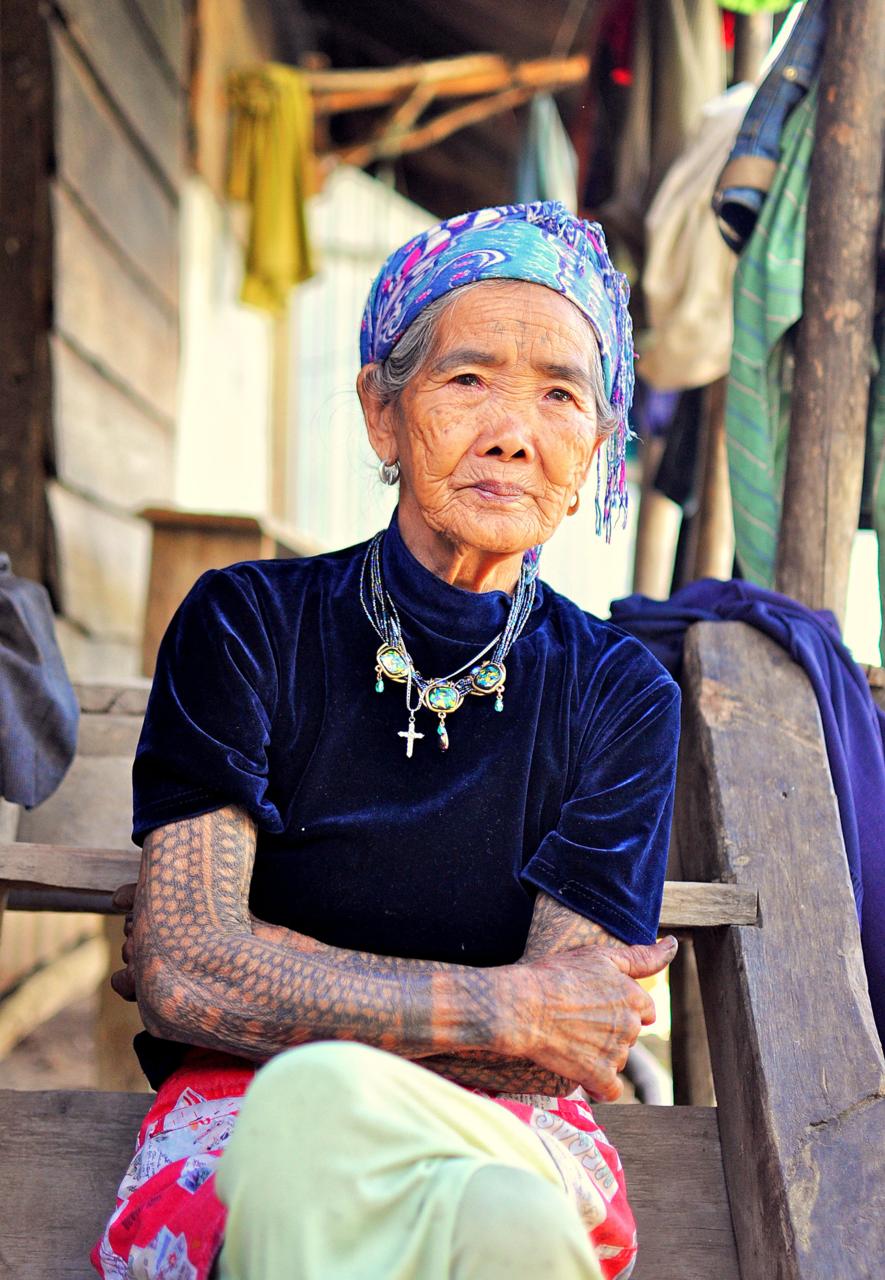
The Master of Filipino Tattoo Art


A dying Filipino tattoo tradition is being revived – and forever changed – by the international travellers seeking to get inked by its last tribal artist, 97-year old Apo Whang-Od. (Credit: Travel Trilogy)

A dying Filipino tattoo tradition is being revived – and forever changed – by the international travellers seeking to get inked by its last tribal artist, 97-year old Apo Whang-Od. (Credit: Travel Trilogy)

Winging it on a cliche, we’ll say tattoos are forever. And in the far flung, rustic town of Kalinga,  Apo Whang-Od prays it continues to be so. As the last tattoo artist in the Kalinga region, she carries forth the 1,000-year tradition of batok. And the pressure to see to it that she bequeaths the legacy to a worthy successor.

Every Kalinga village used to have a mambabatok (a master tattooist) to honour and usher in life’s milestones. When women would become eligible for marriage, they would adorn their bodies with tattoos to attract suitors. When headhunters prepared for battle, an inked centipede would be their talisman, or when they returned with a kill, an eagle would commemorate their victory. “Tattoos are one of our greatest treasures,” Whang-Od said. “Unlike material things, no one can take them away from us when we die.”

Continue reading

Wayanad Natives


Photo credits : Jithin vijay

Photo credits: Jithin vijay

“Tribals,” the term used to refer to native peoples in Kerala/India, have been an integral part of Wayanad for ages. As dense forests and wooded hillsides made way for commercial farming and plantations, Wayanad lost a great part of its quintessential character. Today, around 200,000 tribals belonging to different tribes subsist in isolated pockets, making a living from small land holdings to big plantations. Continue reading

Earliest Inhabitants

Tribals have been an integral part of the Wayanad district for thousands of years. Its earliest settlers were the tribes of Adivasis, which are divided into various sects such as Paniyas, Kurumbas, Adiyas and Kurichyars. It is currently estimated that nearly 400,000 tribal people live Wayanad.  The sects are physically distinguisable with their dark skin and stout builds. Tribal dwellings recreated on the adjoing grounds of the wildlife sanctuary offer a glimpse into their traditional life.

Continue reading