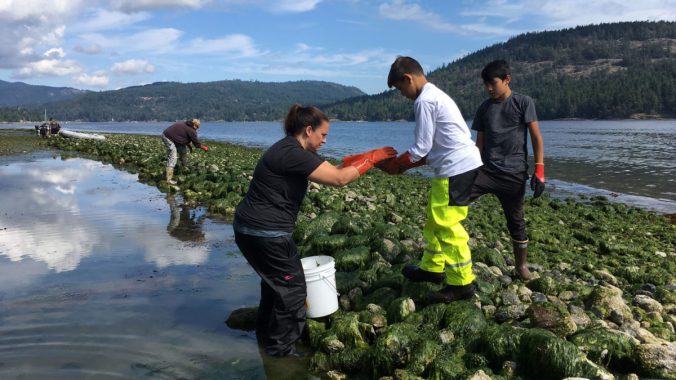
Swinomish tribal members from Washington state participate in a clam garden restoration in British Columbia. PHOTO COURTESY OF SWINOMISH INDIAN TRIBAL COMMUNITY
Thanks to Nicola Jones for this:
How Native Tribes Are Taking the Lead on Planning for Climate Change
With their deep ties to the land and reliance on fishing, hunting, and gathering, indigenous tribes are especially vulnerable to the impacts of climate change. Now, native communities across North America are stepping up to adopt climate action plans to protect their way of life.
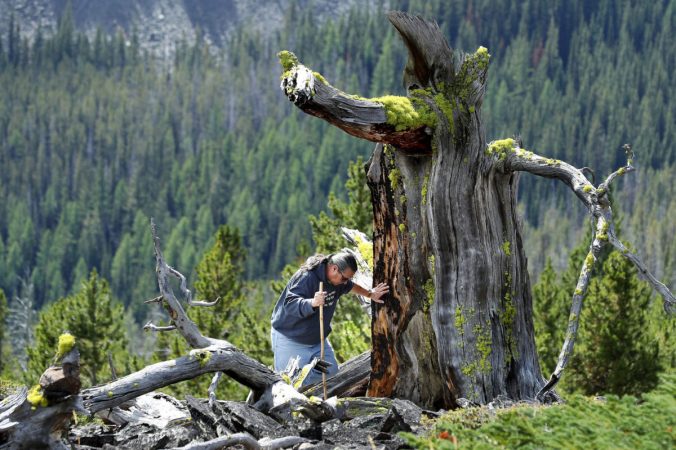
Tribal program manager Mike Durglo Jr. examines what remains of a 2,000-year-old whitebark pine on the Flathead Indian Reservation in Montana, where trees are dying from warming-related diseases. CHIP SOMODEVILLA/GETTY IMAGES
On a hot summer’s day, marine ecologist Courtney Greiner walks the shore of a rocky Washington beach at low tide with a handful of staff and interns. They stake out the ground and hunch down, digging up the top two inches of mud, silt, and gravel looking for baby clams.
For thousands of years, the indigenous peoples of the West Coast would build rock walls at the low tide line, allowing sand to pile up behind them, making the slope of the beach gentler, and expanding the area of the intertidal zone that clams like to call home. These simple clam gardens are effective at boosting shellfish numbers, and have long been used to improve food security for traditional peoples. Continue reading
 Organikos