
The History of Organic Design

organic design

Carl Aubock II [Austrian, 1900-1957] Ashtray, Model No. 3597, 1948. Ashtray Model No. 4736, 1947. PHOTO: CoExist 

What about the world of design is organic? Literally, yes it involves environmental concerns, also the premise of using Nature as the basis for design. Design that grows – inside out – as the elements of Nature. CoExist delves into the history of organic design:

In the 1930s, the central belief of the organic movement was that furniture and architecture should reflect a harmony between people and nature. In furniture design, this meant natural materials like wood, and smooth, rounded forms. The bent plywood furniture of legendary French designer Jean Prouve came out of this period, as did Marcel Breuer and his laminated birch plywood armchair with a calfskin cushion. These designers prided themselves on being dedicated to their craft, and their pieces were painstakingly made and not easily reproduced. “They saw it as a unique work that refers to nature,” says Olshin. “These pieces tend to be unique one-of-a-kind studio work that’s not easily produced in mass quantities.”

Continue reading

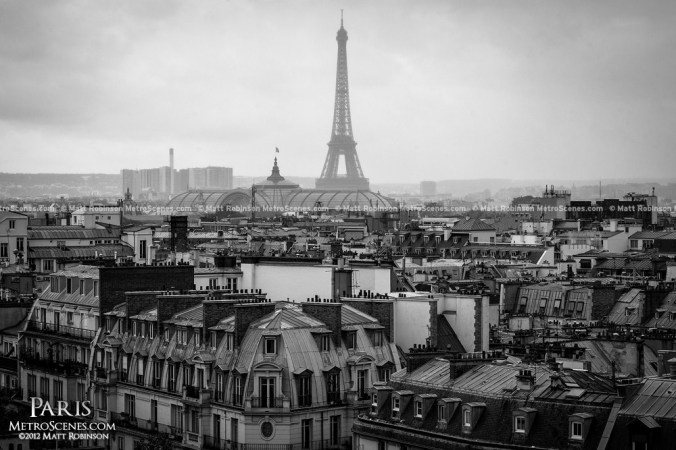
Who Dreamed This City into Being?

paris

In the 19th century, George-Eugene Haussmann completely redesigned and rebuilt the French capital. PHOTO: Matt Robinson

“Paris was a universe whole and entire unto herself, hollowed and fashioned by history; so she seemed in this age of Napoleon III with her towering buildings, her massive cathedrals, her grand boulevards and ancient winding medieval streets–as vast and indestructible as nature itself. All was embraced by her, by her volatile and enchanted populace thronging the galleries, the theaters, the cafes, giving birth over and over to genius and sanctity, philosophy and war, frivolity and the finest art; so it seemed that if all the world outside her were to sink into darkness, what was fine, what was beautiful, what was essential might there still come to its finest flower. Even the majestic trees that graced and sheltered her streets were attuned to her–and the waters of the Seine, contained and beautiful as they wound through her heart; so that the earth on that spot, so shaped by blood and consciousness, had ceased to be the earth and had become Paris.”
Anne Rice, Interview with the Vampire

Literature, history, art, everyday news, talk at a neighborhood cafe – the exquisite and the commonplace are rife with paeans to this city. But how did she come into being?

Continue reading

Carbon Emissions Series: Green Neighborhood Design

With the close of the semester, I’ve had some time to reflect on the classes I took—and which ones provided the most value. One of best courses I took this semester at Cornell was called Green Real Estate, and it was taught by Mark Vorreuter, a passionate LEED AP who was eager to see students of all majors interested in green buildings. The course covered many aspects of LEED (Leadership in Energy and Environmental Design), a certification offered by the Green Building Council for buildings, homes, and neighborhoods that meet a set of criteria. I remembered spending several nights cramming for a practice LEED exam in which I had to acquaint myself with many of its specific criteria, but not until recently was I able to see the real effects of green building and neighborhood design.

Suburbs in Pearland offer large houses, wide roads, and generous land spacing.

Continue reading

High Line Skyline

An aerial shot looking down on the Washington Grasslands section of the park, with Rashid Johnson’s artwork Blocks and Yutaka Sone’s Little Manhattan visible, both 2015 Commissions.

Railroads were one of the most significant early forces of change to the landscape of North America.  They not only moved freight and people but they participated in opening up the newly formed National Parks to visitors with the creation of the now iconic grand hotels.

Some of the railway’s original train tracks were marked and put back in their original locations. You’ll see them throughout the park today. Photo by Rick Darke

But as roads began to rival rails the network underwent a steady decline, and fewer and fewer resources were being put into their maintenance.

Fast forward a century–give or take a decade–and we find railroads, or at least rail corridors, going back to one of their greatest historical traits; as a pathway to nature.

In the 1980s the U.S. Congress passed an amendment allowing the use of soon-to-be-abandoned rail lines for hiking and biking trails.The highly successful “Rails-to-Trails” program has lead to nearly 1,012 rail-trails in the U.S. with a total trail mileage of more than 11,000.

Not just a U.S. phenomenon, there are similar programs in Canada, Mexico, Europe and Australia, to name a few.  (Tasmanian Trail anyone?) Continue reading