Thanks to Yale e360 for this interview that helps us understand the dynamics and differences between mature forests and newly planted forests in terms of carbon sequestration:
Why Keeping Mature Forests Intact Is Key to the Climate Fight
Preserving mature forests can play a vital role in removing CO2 from the atmosphere, says policy scientist William Moomaw. In an e360 interview, he talks about the importance of existing forests and why the push to cut them for fuel to generate electricity is misguided.
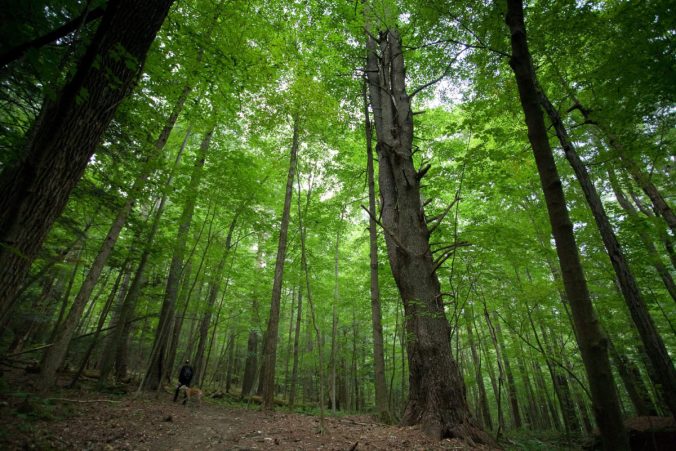
A mature forest in the Berkshire Hills in western Massachusetts. LIZA DALY/FLICKR
William Moomaw has had a distinguished career as a physical chemist and environmental scientist, helping found the Center for International Environment and Resource Policy at Tufts University’s Fletcher School and serving as lead author on five reports of the Intergovernmental Panel on Climate Change (IPCC). In recent years, Moomaw has turned his attention to working on natural solutions to climate change and has become a leading proponent of what he calls “proforestation” — leaving older and middle-aged forests intact because of their superior carbon-sequestration abilities.
While Moomaw lauds intensifying efforts to plant billions of young trees, he says that preserving existing mature forests will have an even more profound effect on slowing global warming in the coming decades, since immature trees sequester far less CO2 than older ones. In an interview with Yale Environment 360, Moomaw explains the benefits of proforestation, discusses the policy changes that would lead to the preservation of existing forests, and sharply criticizes the recent trend of converting forests in the Southeastern U.S. to wood pellets that can be burned to produce electricity in Europe and elsewhere.
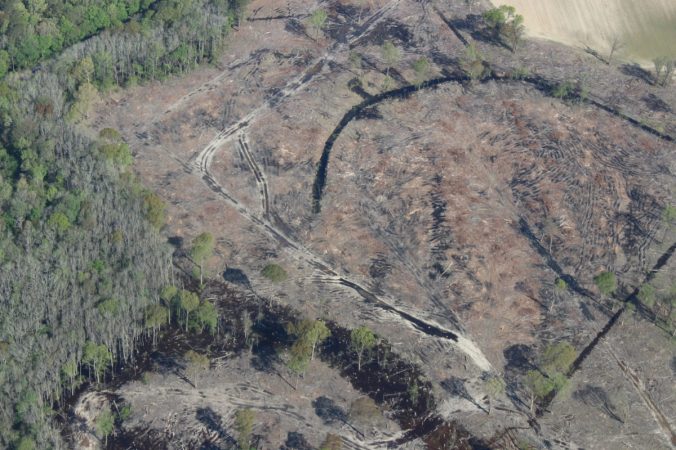
An area of clearcut forest in the Tar-Pamlico River basin in northeastern North Carolina. DOGWOOD ALLIANCE
“The most effective thing that we can do is to allow trees that are already planted, that are already growing, to continue growing to reach their full ecological potential, to store carbon, and develop a forest that has its full complement of environmental services,” said Moomaw. “Cutting trees to burn them is not a way to get there.”
Yale Environment 360: How do you define proforestation?
William Moomaw: So I began looking at some of the data and some of the papers that had come out recently, and I found that if we managed our forests and grasslands in a different way they could be sequestering twice as much carbon dioxide from the atmosphere as they currently do. Continue reading
 Organikos