Building an Empire, A Fish at a Time

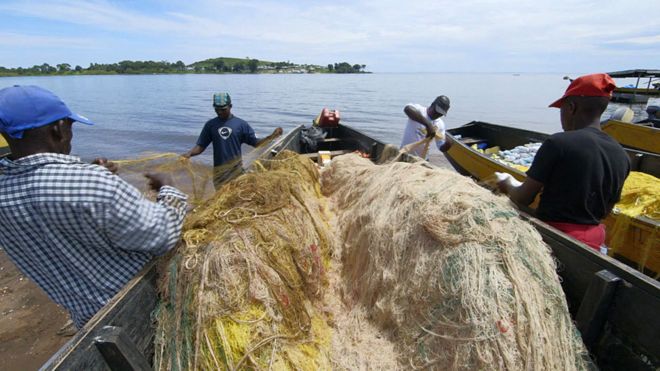
When Mama Sylvia started fishing 27 years ago, all she had was a small canoe, which she paddled with an oar. PHOTO: BBC

When Mama Sylvia started fishing 27 years ago, all she had was a small canoe, which she paddled with an oar. PHOTO: BBC

We talk about sustainable development. Often, the definition is relegated to the environment domain alone and does not cover social and human capital. The United Nations has identified gender equality as one of the key Millennium Development Goals, validating the fact that every small victory is a step forward for the larger good. Like Mama Sylvia’s story.

Gertrude Nabukeera, or Mama Sylvia as she is usually known, stands with her arms resting on her hips as she supervises a handful of men unloading the catch from a fishing boat. It’s early in the morning and the boats are bringing their night’s catch in at the Nakatiba landing site, on the island of Bugala in Lake Victoria, Africa’s largest expanse of fresh water. More than 400m long and lined with motor-driven boats, this landing site is owned and run by Mama Sylvia.There are concrete stalls from which she sells the catch of the day, and to the right an icebox the size of a freight container in which she stores the fish.

It’s unusual for a woman to be the boss of a fishing business in Uganda, or anywhere else for that matter, but even more surprising is the fact that she herself was once a fisherwoman – one fisherwoman among many, many fishermen.
Continue reading

Hunger Games and Peru’s Wachiperi

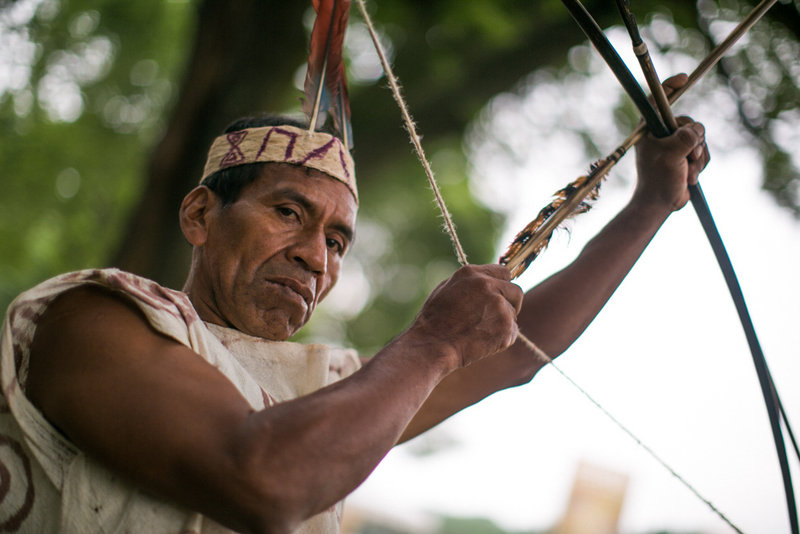
Victorio Dariquebe Gerewa displays his bow and arrow at the Smithsonian Folklife Festival in Washington, D.C. PHOTO:  Ben de la Cruz/NPR

Victorio Dariquebe Gerewa displays his bow and arrow at the Smithsonian Folklife Festival in Washington, D.C. PHOTO:
Ben de la Cruz/NPR

Girls and women in the Peruvian Andes are also asking to learn — but for a different reason. They want to be able to hunt for meat and fish so they don’t have to rely on the men to bring home food.

“The world is modernizing, and women are starting to want to use the bow,” says Sergio Pacheco, a skilled archer who’s part of the tiny Wachiperi community — population estimates range from 90 to 140 — in a remote region of Southeast Peru. “They say, ‘We are just women in the family, so what happens when our father dies? We need to learn this to be able to take care of our families.'”

Continue reading

More of This Fish, Please

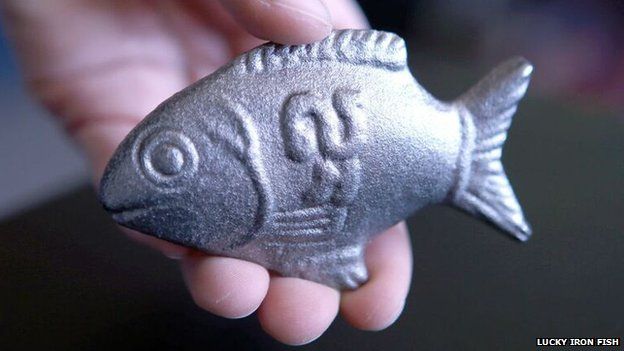
The lucky iron fish, designed by Gavin Armstrong, was based on the iron fish used in Dr Charles' research

The lucky iron fish, designed by Gavin Armstrong, was based on the iron fish used in Dr Charles’ research

Anemia is the most common and widespread nutritional disorders in the world, affecting 2 billion people globally – or over 30 percent of the world’s population. But Canadian scientists have come up with an ingenious solution, and it’s so simple, it fits in the palm of your hand. Meet the Lucky Iron Fish – a chunk of iron that’s thrown into the saucepan and boiled with lemon to give adults 75 percent of their daily recommended iron intake, and close to 100 percent for kids.

And this little fish just won the Product Design Grand Prix at Cannes.

When Canadian science graduate Christopher Charles visited Cambodia six years ago he discovered that anaemia was a huge public health problem. In the villages of Kandal province, instead of bright, bouncing children, Dr Charles found many were small and weak with slow mental development. Women were suffering from tiredness and headaches, and were unable to work. Pregnant women faced serious health complications before and after childbirth, such as hemorrhaging. Ever since, Dr Charles has been obsessed with iron.

Continue reading

Sri Lanka Takes the Ecofeminism Route

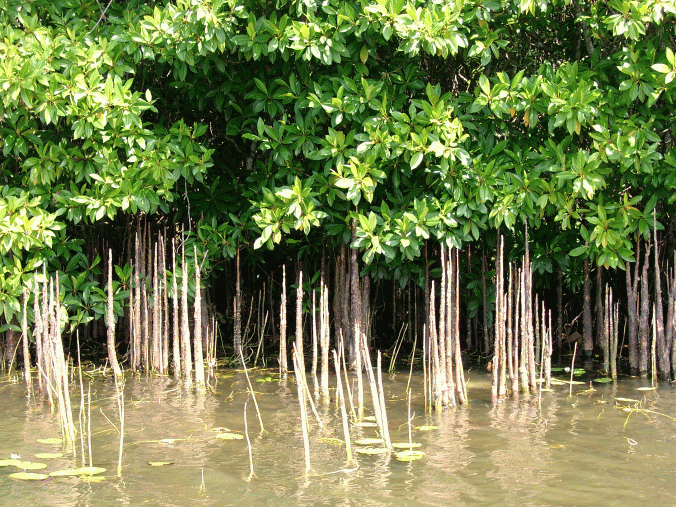
The new national scheme aims to set up 1,500 community groups around Sri Lanka's 48 lagoons, which will offer alternative job training and micro-loans to 15,000 people. The groups will be responsible for the upkeep of designated mangrove forests.

The new national scheme aims to set up 1,500 community groups around Sri Lanka’s 48 lagoons, which will offer alternative job training and micro-loans to 15,000 people. The groups will be responsible for the upkeep of designated mangrove forests. PHOTO: Outdoor Conservation

Big news for the environment: Sri Lanka’s new government just took the unprecedented, historic step to protect all of its mangroves. The move, the first of its kind anywhere in the world, will provide long-term environmental, social and, last but not least, economic benefits to the Indian Ocean island nation, and provide a model for other vulnerable tropical nations to follow. Whose are the champions of this mission? Women.

Started in the 1970’s and gaining in much popularity during the next two decades, ecofeminism seeks to foster a connection between repression of women with the damage caused to nature and natural resources. It is based on the philosophy that both women and nature exhibit the same values and characteristics like nurturing and hence see it as the responsibility of women to undertake ecological causes. One of the most memorable events of ecofeminism occurred in Kenya when rural women planted trees as part of a soil conservation effort to avert desertification of their land as a part of the Green Belt Movement formed by Wangari Maathai. The women of Greenham Common Peace Camp were instrumental in the removal of nuclear missiles there, a fight lasting for over ten years. Sometimes ecofeminism has also been an avenue through which minority and repressed communities like the Native Americans have found their voice. Mohawk women along the St. Lawrence River established the Akwesasne Mother’s Milk Project to monitor PCB toxicity while continuing to promote breastfeeding as a primary option for women and their babies. More.

Continue reading