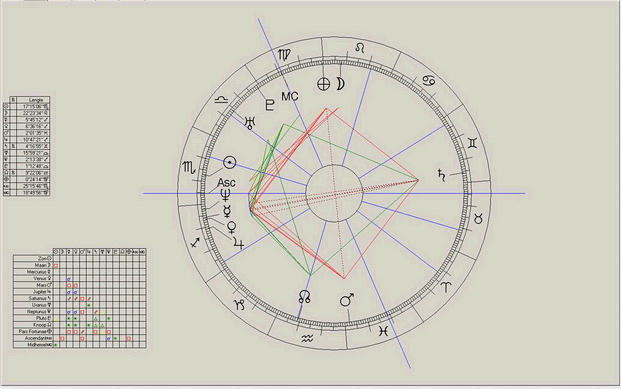
Living in India has really highlighted the cultural differences of things that I have often taken for granted. How we meet our future spouses is most definitely a case in point.
My culture certainly has its fair share of well meaning friends, relatives and co-workers who have the “perfect person” in mind for someone to spend their lives with. Even if one doesn’t wish to avail themselves of this advice, it is often persistently given. Barring that, people meet frequently at school, parties, conferences, libraries, sporting events, airports…the list is endless, and one has to wonder at the statistics of how frequently those serendipitous meetings lead to long term relationships.
In Kerala (and I believe the rest of India as well) there is still a tradition of family involvement in the choice of life partner. Historically there was always an “auntie” (the catch-all name for an older, married woman) who has just the right match for young men and women of their acquaintance. But times are changing and computers and the internet have taken a role in this process, whether it be “on line dating” in the Western world, or “matrimonial sites” here.
I was recently shown a “print out” from an on line matrimonial site based in Kerala. I have no way of knowing where this site falls in the spectrum of popularity, but it was the one of choice for this particular family. Of course I was curious, so I began to ask questions, as well as poke around the site for more information.
The site is organized by religion, not surprisingly, with 7 major religious categories and a drop down menu of 6 additions under the caption “More”. For the membership fee the family will receive some number of suggested matches for them to choose from. In the case of my example, it was the groom’s family who were doing the search, and they’d been given numerous options. The print out that I was shown had a photo, various amounts of data and a horoscope. (I really wish I had read it more closely…) I should state that the family is Hindu, so that is the perspective from which the information was being interpreted. I should also state that there was some level of a language barrier, so I had to keep posing my questions as simply as possible.
What I gleaned from the conversation was that after making a possible choice, the information would be passed on to a well trusted Astrologer, who will look at the specifics (date of birth, time of birth, place of birth) to see if the match would be auspicious and recommended. This apparently is the most important detail, the “deal breaker” so to speak.
Okay. I was clear on that part. But the part I kept trying to clarify was how the family themselves came to make a choice, from all the choices, of which one to give to the astrologer. There is a charge for that service, so they wouldn’t just hand over a stack of print outs. They would have made some of their own distinctions first. So what were the variables that informed those choices?
With enough questioning, I succeeded in getting “the list”. The position of importance shifted occasionally, but I think I can say this is more or less the order, after the horoscope of course.
- #1 Family: I take that to mean the cultural definition of a “good family”, social standing, etc.
- #2 Age: Apparently it is optimal for the groom to be 3-4 years older than the bride.
- #3 Height: Ditto for height, although I doubt the size difference need be so precise, as long as he’s taller.
- #4 Job: This is from the perspective of the groom’s family mind you. So the bride’s job was less important than what it would likely be if I were discussing the same with a daughter’s spousal search.
So, according to Suraj, that’s all that was required. I was incredulous and kept asking questions. “What about being pretty?” I asked. Isn’t that taken into account? He smiled. Apparently pretty helps.


Pingback: “Horoscope not matching, that lady…” « Raxa Collective
Pingback: Humans Read Stories For Perspective « Raxa Collective