Another session of Michael Pollan‘s course at UC Berkeley brings us back to the colorful, and colorfully clad, storyteller Peter Sellars, alluded to nearly one year ago. Intensely bracing. Give it the full 90 minutes it deserves (halfway through he begins making references to pre-vedic texts in India about food’s sacred role in life, and the importance of sharing it; at minute 56 he begins a very interesting discussion of Coca Cola in Kerala, and thereafter many references to wonderful phenomena in south India).
Month: September 2012
Mattupetty
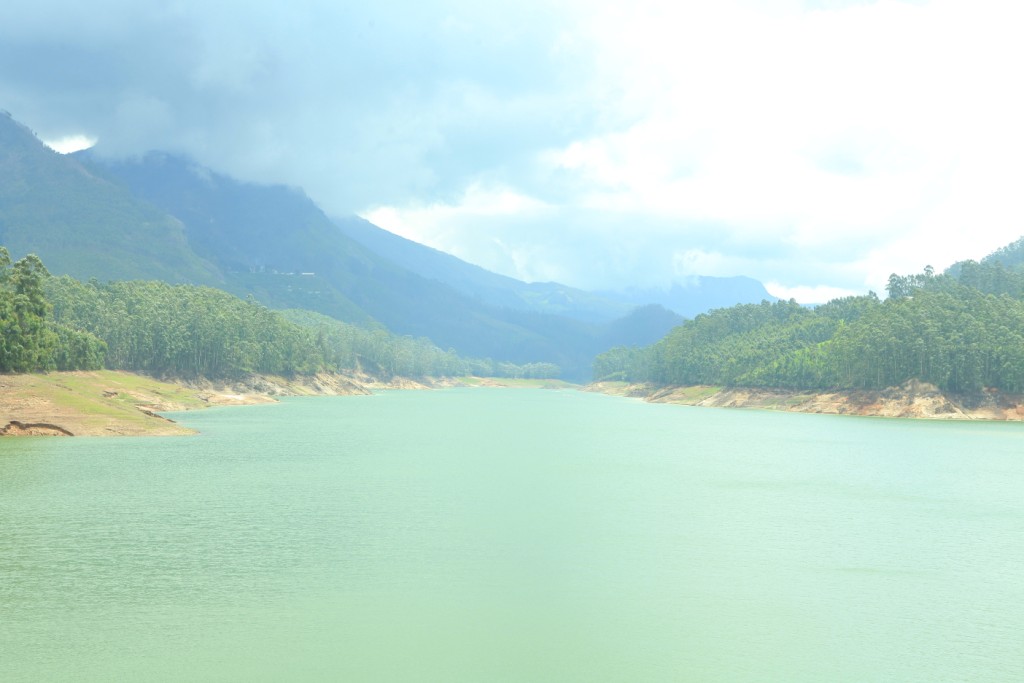
Mattupetty Dam
Near Munnar and at an altitude of 1700 meters above sea level, Mattupetty is a favorite haunt of weekend picnickers due to the temperate climate. The beautiful Mattupetty lake, created by the small hydro electricity dam, is flanked by steep hills and woods. Continue reading
Evolutionary Biology Unhinged

From last week’s New Yorker, a book review about the challenge to the dominant strain of science related to how mental traits evolved, saying it makes no practical difference. This is the stuff science is made of, starting with stories:
When Rudyard Kipling first published his fables about how the camel got his hump and the rhinoceros his wrinkly folds of skin, he explained that they would lull his daughter to sleep only if they were always told “just so,” with no new variations. The “Just So Stories” have become a byword for seductively simple myths, though one of Kipling’s turns out to be half true. Continue reading
Bird of the Day: Clapper Rail
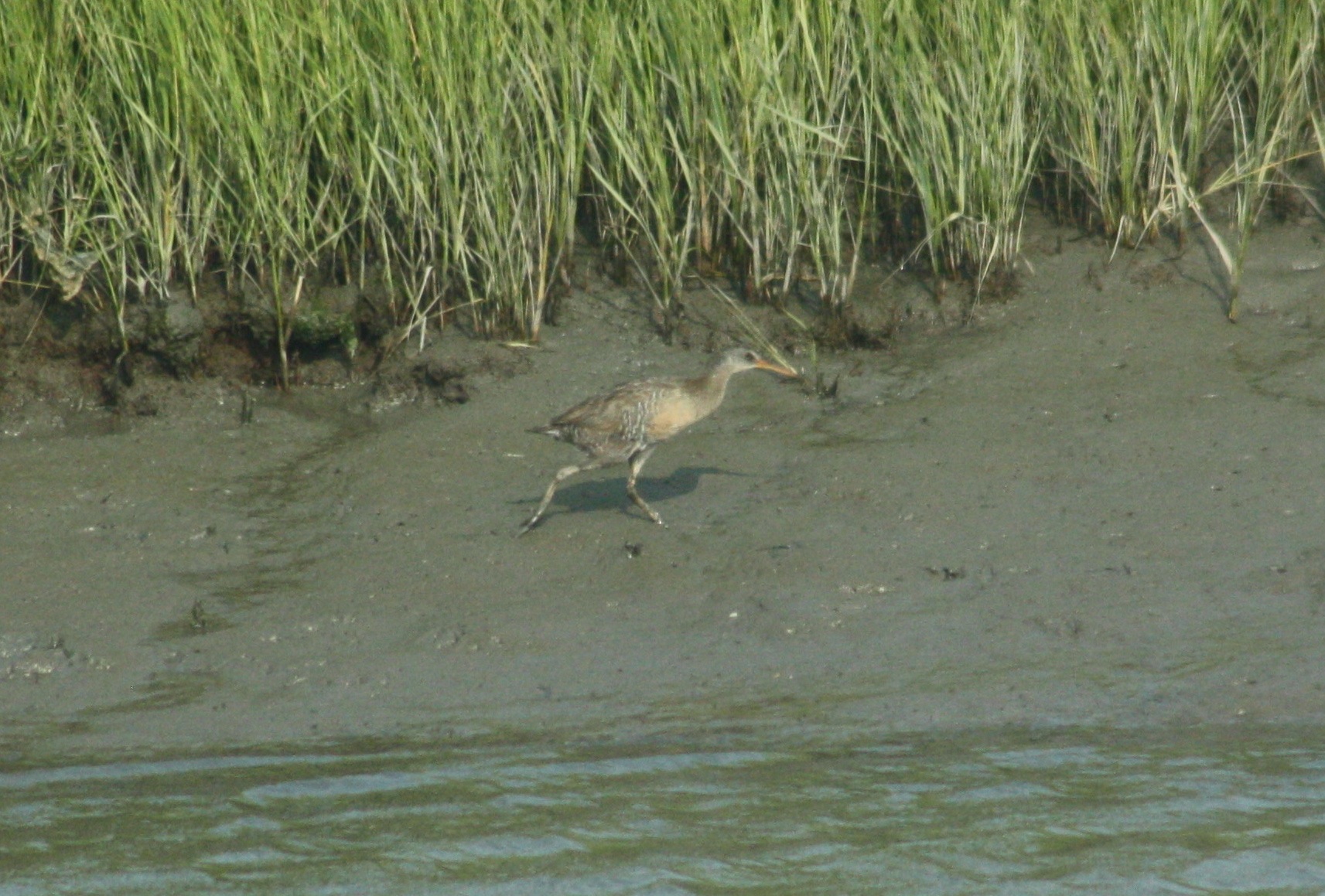
Edwin B. Forsythe NWR, NJ
Socially Responsible Investing: An Ineffective Struggle or a Powerful Tool?

Barbara Krumsiek, President and CEO of Calvert Investments, has led the company for 15 years.
Two summers ago, I had the pleasure of working at Calvert Investments, a Bethesda-based socially responsible investing (SRI) firm. The words “socially responsible investing” would often raise eyebrows as I attempted to concisely describe to other hotelies at Cornell what exactly Calvert does. Socially responsible investing is broadly defined as a holistic approach to investing that considers both the economic and social/environmental returns of your money. Although SRI accounts for less than five percent of all general investment funds, it is a growing field with potential. Cornell’s business school has had some interesting takes on this asset class.
So what does SRI look like? There are many different approaches, so I’ll just describe what Calvert tries to do. From Calvert’s view, it is an extensive process of research, indexing, and investing. First, we perform research on firms that we potentially want to invest in or that our clients are asking us to invest in. The research is comprehensive and looks primarily at environmental, social, and governance (ESG) issues for a specific company. For example, imagine that we’re considering to invest in BP. Some of the research we might do would ask these types questions (again, these are hypothetical, and they only skim the surface):
- Environmental factors: How many oil spills have there been in the past year? What environmental remediation plans are in place? Is in-depth environmental training provided for employees? Does the firm mine/drill in high-risk areas?
- Social factors: Are workers paid a living wage? Does the firm employ child labor overseas? What human rights violations has the company committed?
- Governance factors: What proportion of women make up the board of directors? Has the company been investigated for anti-competitive activities? Has the firm been investigated by the SEC for trading violations? Have there been attempted hostile takeovers?
Papa Was Here
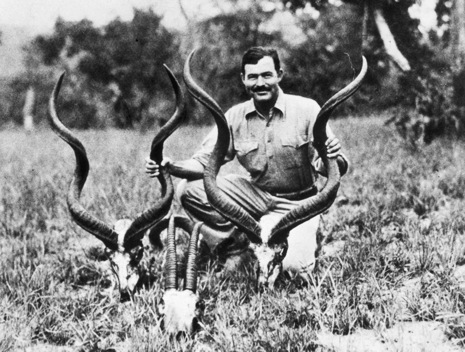
1937: American writer Ernest Hemingway (1899 – 1961) kneels while holding a pair of antelope horns during a safari, Africa. (Photo by Hulton Archive/Getty Images)
From The New Yorker‘s Page Turner series we highlight the last paragraph of a short comment by writer Brad Leithauser (click the image above to go to the source):
At his best, Hemingway creates a terrain where he is no longer breaking any rules of grammar or codes of good writing. In this particular territory, the codes no longer apply. After all his travels, he has taken the ultimate step and fabricated his own landscape, and those who come to inhabit it are his followers, abiding by his rules. They are legion. Turn any which way. Welcome to Hemingway country.
From Behind the Wheel: An “Official” Horn

Kundanoor Junction, Ernakulam
Wild Tulip (Tulipa turkestanica)

Michael Pollan, Food Activist In Journalism Professor’s Clothing
Thanks to The Edible Schoolyard Project and UC Berkeley, Michael Pollan‘s course about the challenges and opportunities of our food system is offered for all of us to share in. Course Description:
As the costs of our industrialized food system—to the environment, public health, farmers and food workers, and to our social life—become impossible to ignore, a national debate over the future of food and farming has begun. Telling stories about where food comes from, how it is produced—and how it might be produced differently—plays a critical role in bringing attention to the issue and shifting politics. Each week, a prominent figure in the debate explores: What can be done to make the food system healthier, more equitable, more sustainable? What is the role of storytelling in the process?
Bird of the Day: Black-winged Kite

Uda Walawe, Sri Lanka
Rousseau on American Democracy
 Jean-Jacques Rousseau, writing in mid-18th century Geneva, discusses in The Social Contract several types of government and societies that depend on them, scorning and praising elements of each. Overall, he seems rather cynical about the possibilities of a decent society existing where the people and the government maintain an optimal state of equilibrium, but takes care not to criticize or admire one political system too closely–partly, perhaps, to avoid controversy and imprisonment or exile (which didn’t work, by the way) but also to keep his arguments logical and well-formed. He always emphasizes the generalizations, exceptions, or complexities associated with particular systems (e.g. monarchy), and rarely mentions contemporary examples when Sparta or Rome will suffice.
The Social Contract was published in 1762, and Rousseau passed away in 1778. His ideas were purportedly influential in the 1789 French Revolution (although the majority of the participants were illiterate), and it is typical to wonder what Rousseau would have thought of the execution of King Louis XVI, the formation of the National Assembly, and the rise of Maximilien Robespierre (himself an ardent supporter of Rousseau’s theories). During this year’s turbulent political season in the United States, I find myself wondering if Rousseau (who most of the Founding Fathers undoubtedly read) would have endorsed the system Americans have been so proud of.
Elephant Diet
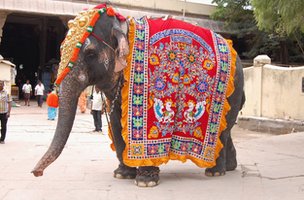
Cuisine and wellness, topics we think about mainly in the context of resort operations in India, also have a role to play in the life of a particular group of elephants, as this BBC story (click the image to go to the source) illustrates:
In parts of India, elephants are kept in temples for religious reasons – taking part in ceremonies and festivals.
Efforts are on in the South Indian state of Tamil Nadu to get these over-pampered tusked animals to slim down, officials have told the BBC. Continue reading
Aster (Alpine aster)

Asters, a charming spring-flowering plants with one flower head per stem, are widely growing in the High Ranges of Kerala. The flowers are mainly used for floral decorations.
Bridging Humans And Nature

Photo by Lauren E. Oakes: Basil, tomatoes, and glass floats from the outer coast at a home in Gustavus, Alaska
An excellent recent post in Green Blog (click the image above to go to the source) begins:
Basking in a surprise dose of early morning sun, we sat together on a bench made from yellow-cedar at the Gustavus Forelands Preserve, a landscape of spruce and cottonwood forests and beaches overlooking the Icy Strait waters. We were staring at a diagram on a piece of paper I had handed to Hank Lentfer, a lifelong Alaskan and longtime resident of the tiny town of Gustavus. Continue reading
Bird of the Day: Osprey with Dinner (Sanibel Island, FL)

Photo credit: Stephen Crafts
The Wind Power Debate Gets More Interesting
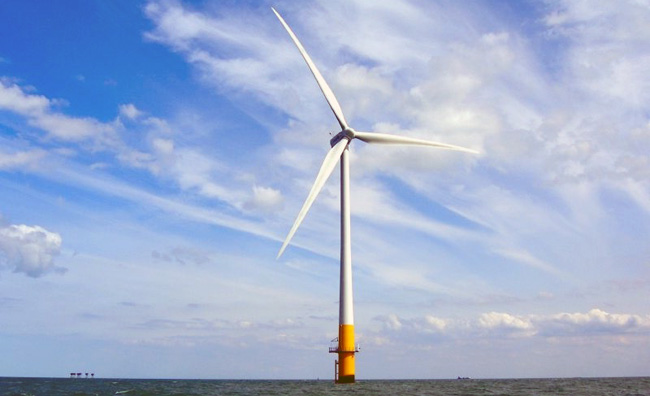
An offshore wind turbine, part of the London Array wind farm site, located in the outer Thames Estuary, about 70 miles east of London. Image: phault via flickr
An article in Inside Science (click the image above to go to the article) discusses new research demonstrating that wind power might be able to generate all the world’s electricity needs without large atmospheric effects:
There is enough energy for people to reap from the wind to meet all of the world’s power demands without radically altering the planet’s climate, according to two independent teams of scientists.
Wind power is often touted as environmentally friendly, generating no pollutants. It is an increasingly popular source of renewable energy, with the United States aiming to produce 20 percent of its electricity by wind power by 2030. Still, there have been questions as to how much energy wind power can supply the world, and how green it actually is, given how it pulls energy from the atmosphere. Continue reading
Wild Periyar: October 14, 2012
Our guests Mr.& Mrs. Brayan shared some of their wild life experiences from their visit to Periyar National Park.
Fighting Fire With Fire
This isn’t the first time we’ve applauded local libraries taking a stand to protect their place in public service. But the particular example above is prime in terms collective action lassoing social media. Kudos to Leo Burnett/Arc Worldwide agency for campaigning the hoax, and hurray for yet another library with the backbone to publicly roar.
Troy Public Library would close for good unless voters approved a tax increase. With little money, six weeks until the election, facing a well organized anti-tax group who’d managed to get two previous library-saving tax increases to fail, we had to be bold. We posed as a clandestine group who urged people to vote to close the library so they could have a book burning party. Public outcry over the idea drowned out the anti-tax opposition and created a ground-swell of support for the library, which won by a landslide.
Bird of the Day: Yellow Bittern
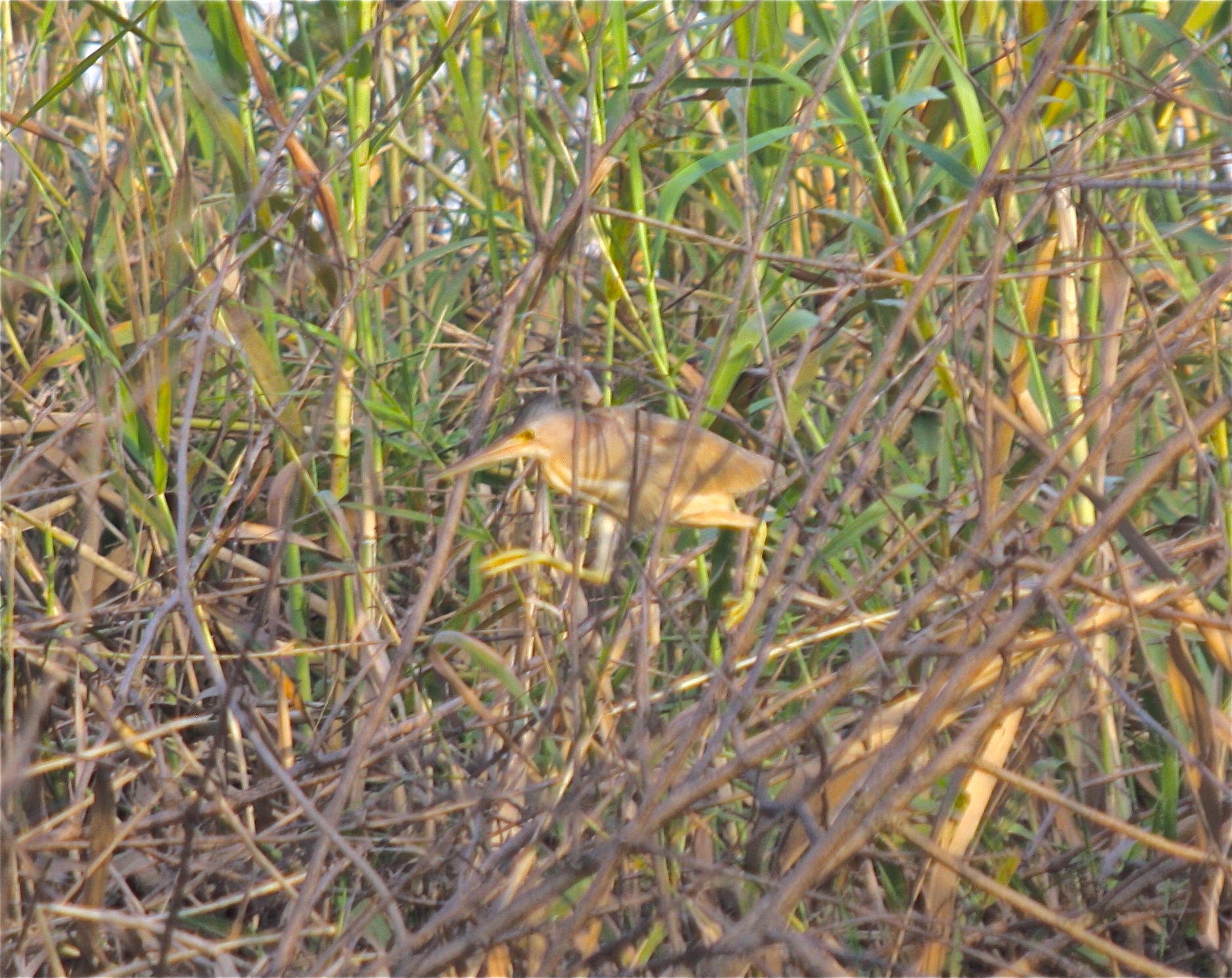
Kerala Backwaters, India
From Behind the Wheel: Batman Says “Sound Horn”

Vyttila Junction, Ernakulam
 Organikos