Ancient Activist Pastime

Click the banner above for this article in which Rebecca Solnit discusses urban agriculture, aka gardening, as a revolutionary act of enormous import for our modern times:

We are in an era when gardens are front and center for hopes and dreams of a better world or just a better neighborhood, or the fertile space where the two become one. There are farm advocates and food activists, progressive farmers and gardeners, and maybe most particular to this moment, there’s a lot of urban agriculture. Continue reading

One Day in Jaipur, Rajasthan

Now that I’m back at Cornell, crunching numbers once again for my Finance classes, I have to look back on my trip to Jaipur, Rajasthan to remember that freedom that I already miss. For everybody who misses traveling, here is something to keep you happy.

This slideshow requires JavaScript.

Cheers!

Saying Something Well

Thanks to Alberto Yanosky, leader of Paraguay’s most important conservation organization, for bringing this old clip to our attention.  Fitting tribute to the man in the clip who, according to INTELLIGENT LIFE magazine, September/October 2012 is celebrating an amazing milestone:

When David Attenborough joined the BBC, 60 years ago this September, Britain had only one television channel. Cameras had to be wound up like a clock and could only film live or in 20-second bursts. There was no way to capture sound and vision at the same time, or to broadcast from anywhere but the studio. Attenborough, like most people, did not own a television set; he thinks he had seen only one programme in his life. Continue reading

Story of a Stream (Lakkom)

The Lakkom Stream forms 7300 feet above sea level in the watershed region of the Eravimala Plateau and flows into Eravikulam National Park, the fragile home land of the Nilgiri tahr and the mysterious Neelakkurinji (a flower which blooms once in 12 years). Continue reading

Saying Nothing Well


Click the banner to the left to go to Paul Griffiths’ review:

I have nothing to say, and I am saying it.” The line, probably John Cage’s most famous statement, appears three times over in his book Silence, which Wesleyan University Press has reissued in a smart fiftieth anniversary edition that also coincides with the centenary of the author’s birth. Continue reading

Birds, Book, Bother

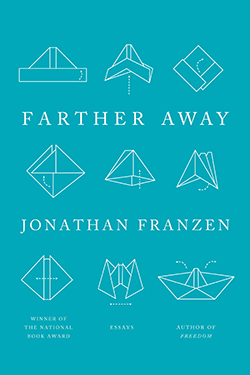
From the review in Smart Set (click to book image to go to the source) it is clear that we will enjoy this collection, whose title we had already seen in another context, from a writer we already had reason to admire for his attention to birds:

A novel is a bird. I learned this from Jonathan Franzen. It is the underlying message of his newest collection of essays, Farther Away.

Franzen became a bird watcher many years ago. He is almost apologetic about that fact, realizing that — in the opinion of most normal human beings — the birdwatcher is a slightly pathetic if otherwise harmless individual. In his commencement address at Kenyon College, “Pain Won’t Kill You,” Franzen writes: Continue reading

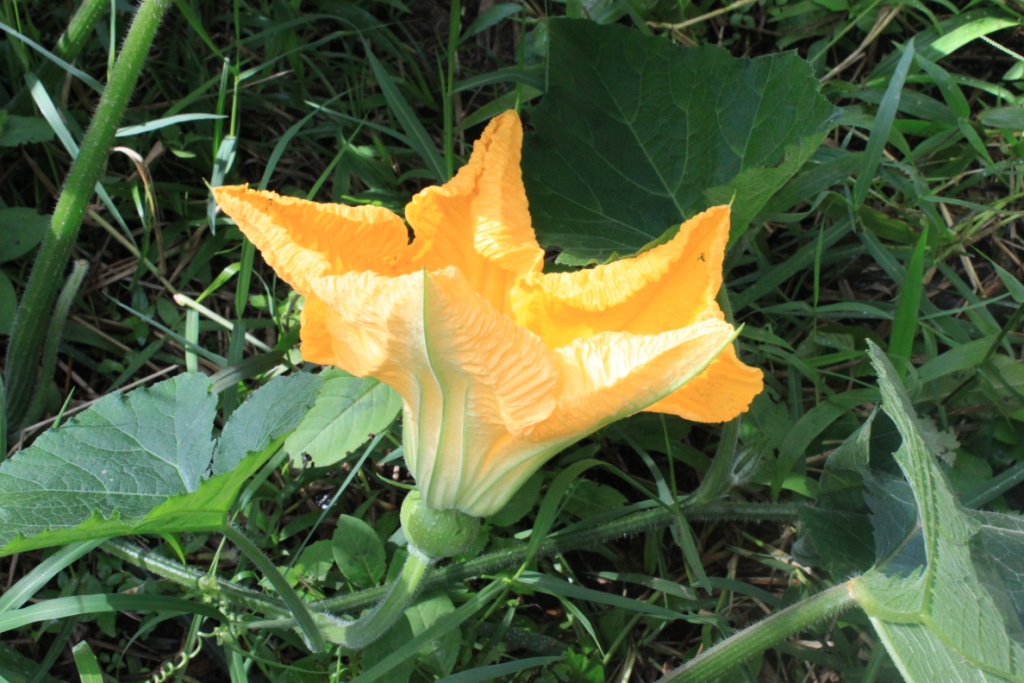
Pumpkin (Cucurbita maxima)

Although originally native to North America pumpkins are now widely growing all over the world as one of the largest vegetables. This gourd-like squash belongs in the botanical family Cucurbitaceae. In India they are commonly farmed in hill station ecosystems.  Continue reading

Conservation Crossroads, Asia

Click the headline above to go to the story:

On Sept. 1, 1914, the last passenger pigeon on earth died in captivity at the Cincinnati Zoo. The species, once numbering in the billions, had been hunted to extinction.

Around the same time, another iconic North American species, the bison, was also being hunted past the point of no return. But the bison didn’t die off steadily until the last one perished in an enclosure. Continue reading

“The Wheelchair Is A Portal…”

In coordination with the 2012 Paralympics British performance artist Sue Austin has revised her 2008 project “Portal” into “Creating the Spectacle!”, a piece that literally sends ripples across the divide between spectator, audience, galleries and stage.

The focus of the project has shifted from being about transforming preconceptions about the wheelchair to a more global perspective that we all have issues to transcend… Continue reading

Why Organic?

Click the banner above for the press release from Stanford University’s Center for Health Policy on the results of a new meta-analysis published in the Annals of Internal Medicine:

They did not find strong evidence that organic foods are more nutritious or carry fewer health risks than conventional alternatives, though consumption of organic foods can reduce the risk of pesticide exposure. Continue reading

Guinea Balsam

This slideshow requires JavaScript.

Guinea Balsam is a beautiful flower which was introduced from New Guinea. Also known as Impatiens,it is bushy, soft wooded-plant widely growing in Kerala especially in the hill stations. Balsam’s wide range of colors from red, purple, orange, white, and violet make a popular ornamental in many gardens.

Essential Reading & Listening

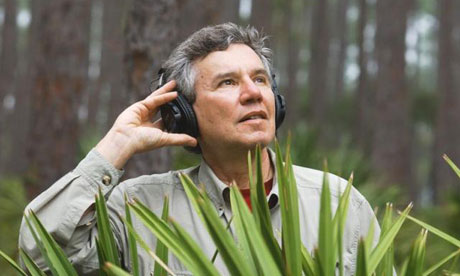
Musician and naturalist Bernie Krause has spent 40 years recording over 15,000 species in many of the world’s pristine habitats. Photograph: Courtesy of Hachette Book Group

Click his photo for the story.  Never heard of him.  But we have certainly heard his sounds:

Krause, whose electronic music with Paul Beaver was used on classic films like Rosemary’s Baby and Apocalypse Now, and who worked regularly with Bob Dylan, George Harrison and The Byrds, has spent 40 years recording over 15,000 species, collecting 4,500 hours of sound from many of the world’s pristine habitats.

But such is the rate of species extinction and the deterioration of pristine habitat that he estimates half these recordings are now archives, impossible to repeat because the habitats no longer exist or because they have been so compromised by human noise. His tapes are possibly the only record of the original diversity of life in these places.

Click the image below for the bigger story. Continue reading

Art & Nature Or Art + Nature

Bravo to the good folks of Australia for their public spiritedness, and for sharing it on vimeo.  Also thanks to the commenters (search on Goldsworthy and Australia and you will see there was lots of outcry on this) far and wide who shared their opinions.  Like it or not, this is where we are: less and less nature, more and more people who want to do/say something about it.

Onam Celebrations At Thekkady

This slideshow requires JavaScript.

Celebrations in Kerala are never focussed on the individual; they are about the land, the people and the society. The state’s most famous festival, the Harvest Festival of Onam takes place during the time when granaries overflow. In contemporary Kerala in addition to traditional customs there are exhibitions and sales across the state with music and dance events, flower shows and food festivals. These are some of the Onam festival pictures from Thekkady, which are organized by the Tourism department and Grama Panchayat (the local municipality).

You Probably Will Not Believe It

The Atlantic‘s website for mobile devices has run an article with the graphic above under this headline:

Why Does Canada Have a Strategic Maple Syrup Reserve?

Yes, difficult to believe. So click the image above to get the full story:

On Friday, news broke that thieves had stolen $30 million dollars worth of Quebec’s strategic maple syrup reserves. Much as the United States keeps a stock of extra oil buried in underground salt caverns to use in case of a geopolitical emergency, the Federation of Quebec Maple Syrup Producers has been managing warehouses full of surplus sweetener since 2000. The crooks seem to have made off with more than a quarter of the province’s backup supply. (I personally suspect these guys.)