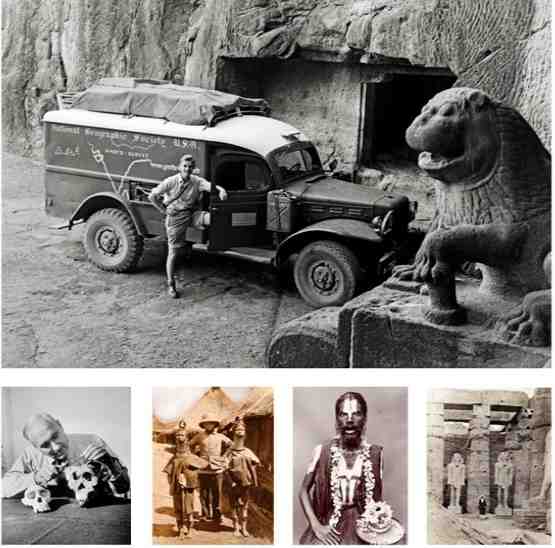
The consistently superb essayist Adam Gopnik, who often writes about topics unrelated to the themes of our blog, in this week’s New Yorker writes on a topic close to our heart (click the image above to go to the article, subscription required):
Magazines in their great age, before they were unmoored from their spines and digitally picked apart, before perpetual blogging made them permeable packages, changing mood at every hour and up all night like colicky infants—magazines were expected to be magisterial registers of the passing scene. Yet, though they were in principle temporal, a few became dateless, timeless. The proof of this condition was that they piled up, remorselessly, in garages and basements, to be read . . . later.
When I was a child, two piles of magazines, pillars of this misplaced faith in a leisurely reading future, rose in adjacent basements. In our house, Scientific American, dense with Feynman diagrams and unplayed mathematical games, accumulated, month after month; in my grandparents’, it was National Geographic, yellow-bordered, and with a bright, unpredictable photograph—as likely an Afghan child as a space shuttle—on its cover. Though occasionally theScientific American pile got upturned by an eleven-year-old searching for science-project material, as far as I could tell the National Geographic pile was never disturbed by its owners, and was there merely to ascend, ever higher. At times, down with measles or mumps, I would leaf through the issues, a little hypnotized; I recall being stopped once by an illustration of what had happened in an Alaskan earthquake, with an entire family, openmouthed, suddenly divided, on either side of a gaping split in their otherwise normal street, the drawing made more frightening by being so densely illustrative, detailed and unlurid—merely inspecting this alarming nation, merely geographic. . . .
Read the whole article here.
 Organikos
Pingback: The Darien Gap, Panama | Raxa Collective
Pingback: Emerging Photographers , Subscribe |