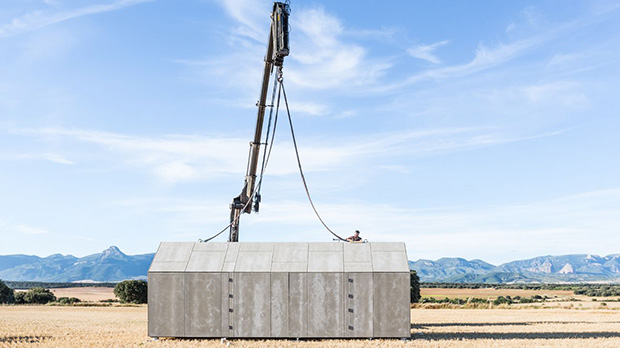
Casa Transportable ÁPH80 by Ábaton is one of the Atlas choices
Thanks to Phaidon for their attention to architecture that not only moves users, but which users can move:
Regular Phaidon readers will already be familiar with our recently launched Online Atlas, the dedicated resource website for architects, students and true lovers of architecture .
The site, which features over 130,000 images, 3,079 projects from 1,537 architects in 115 countries around the world is an invaluable aid to anyone who works in the industry and needs to know who did what, where – and, of course, how.
The Atlas editors have a regular feature in which they focus on a specific, occasionally left field aspect of architecture or an architectural project each week. It’s called Editors’ Focus and the first one was all about small buildings; a more recent post dwelt on nine of the hardest to construct buildings listed. This latest round-up takes in portable architecture.
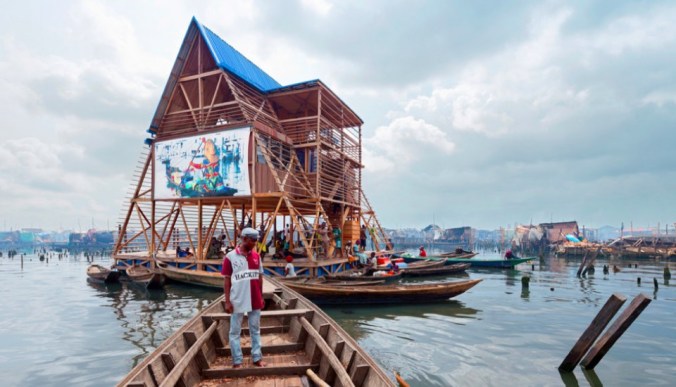
the Makoko Floating School, by Nlé architects
As the Atlas explains, this isn’t an architectural gimmick, but often an answer to a genuine design need.
“These buildings offer solutions in situations where static construction would be difficult if not impossible,” it argues. These might include refugee areas, flood zones and deprived communities.
Take the Makoko Floating School, built by Nlé architects for a lagoon on the outskirts of Lagos. “It has taken an innovative approach to address the community’s social and physical needs in view of the impact of climate change and a rapidly urbanizing African context,” the Atlas explains.
The list also includes the Moving School in Thailand by Amadeo Bennetta and Dan Larossa which the Atlas calls: “a modular school for a displaced community of refugees, constructed by community members with a demountable steel frame.”
The building remains footloose by foregoing concrete foundations, and instead uses reclaimed tyres and gravel to keep it in place…
Read the whole article here.

