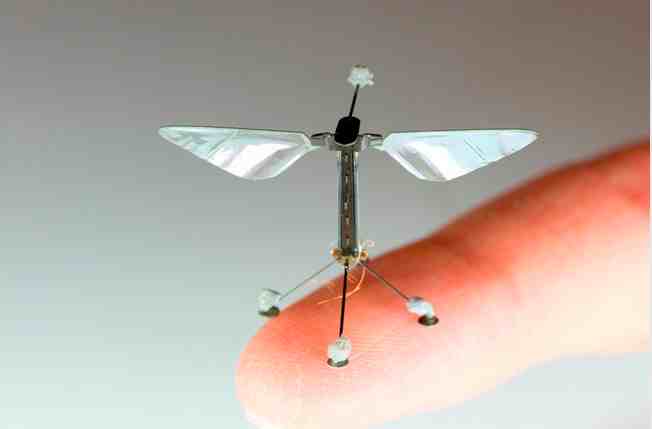
PHOTO COURTESY OF KEVIN MA AND PAKPONG CHIRARATTANANON
At RAXA Collective we’re often writing about the birds and the bees within the context of ornothological and entomological biodiversity, as well as the agricultural health of the planet. The impact of CCD, or colony collapse disorder, is significant enough that the Obama administration has challenged scientists with the same force of urgency as Kennedy’s 1962 appeal for a moon landing before the decade was over.
Food attorney and National Geographic contributor Mary Beth Albright writes:
To stay optimistic on this planet I have to believe that most agree that saving honeybees is vastly preferable to replacing them but an interesting alternative is coming out of Harvard. On its website a research team led by engineering professor and National Geographic Emerging Explorer Robert Wood states “we do not see robotic pollination as a wise or viable long-term solution to Colony Collapse Disorder. If robots were used for pollination—and we are at least 20 years away from that possibility—it would only be as a stop-gap measure….”
Stop gap measure or no, the long history of bio-mimicry in science and engineering is impressive and may be the key to solutions to major environmental problems in the future.
Read the entire blog with reference links and video here.
 Organikos
Reblogged this on BLOGTENDI.
i don’t know if i like this. but i like how the writer acknowledged that everyone would prefer this not to be an option we’d need to one day take.
Hi. We agree that the technology can be viewed with concern, and its use is suboptimal to actually finding a solution to the environmental distresses that are impacting bee populations. But it’s also good that we can have science working on the Earth’s side. Cheers, and stop by again soon!