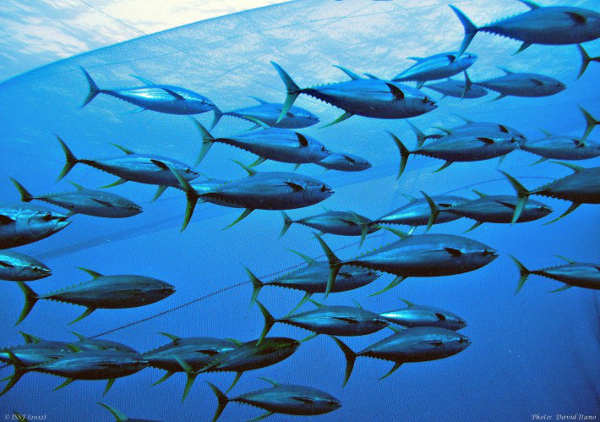
Seafood companies are responding to the public’s increased interest in whether fishing practices deplete tuna populations. Photo credit: David Hano/International Sustainable Seafood Foundation
Thanks to Ecowatch for the updated primer on better canned tuna shopping criteria:
Canned tuna is one of the world’s most popular packaged fish, but it has also long been controversial. Between issues of overfishing resulting in fishery depletion and bycatch that threatens other species including the much-publicized incidental capture of dolphins by tuna fishermen, it has gotten a bad name. With the increased awareness of the harm tuna fishing can cause, companies have stepped up to try to reassure consumers that they are paying attention to the health of our oceans.
San Diego-based Chicken of the Sea, one of the largest U.S. distributors of packaged seafood, recently issued its corporate sustainability report. The company boasted numerous ways it has increased its commitment to corporate sustainability—decreasing waste through recycling, cutting water use, becoming more energy efficient at its facilities, reducing its carbon footprint through better transportation logistics and continuing to evaluate its packaging for its environmental impact. It announced a series of goals it plans to meet by 2020.
“While we’ve made good progress, looking ahead, we face very real challenges in several of our key areas,” said David Roszmann, the company’s COO and leader of its sustainability efforts. “On the environmental front, we must be aggressive about identifying and implementing new technologies and behaviors to improve our energy efficiency. We must also continue to pay close attention to our supply chain and its impacts.”
Those include the impact of fishing on the ocean’s ecosystem. Its commitment to sustainable fishing practices receives less emphasis in its report than its energy-efficiency and waste-cutting measures. It promises to more aggressively audit its suppliers for their procurement practices, setting a goal of auditing 90 percent by 2020 and working toward increasing the amount of fish it sources from sustainable fisheries.
“As a founding member of the International Seafood Sustainability Foundation (ISSF), Chicken of the Sea strongly supports all of the foundation’s initiatives,” the company says.
The ISSF was formed in 2009 by scientists, environmental activists and players in the seafood industry such as Chicken of the Sea. It works directly with fisheries to upgrade their practices to protect the health of marine ecosystems, reduce bycatch, eliminate illegal fishing practices and maximize catch while conserving marine species. It offers information on fishing methods and updates on fishing stocks and conservation efforts. It’s one of the groups working to push for commitment to sustainable fishing practices from all players along the marine food business chain.
Another is UK-based, international nonprofit organization Marine Stewardship Council (MSC), which sets standards for fisheries and offers a label for products to display to let customers know that the product has been traced to sources that use sustainable fishing practices…
Read the whole article here.
 Organikos