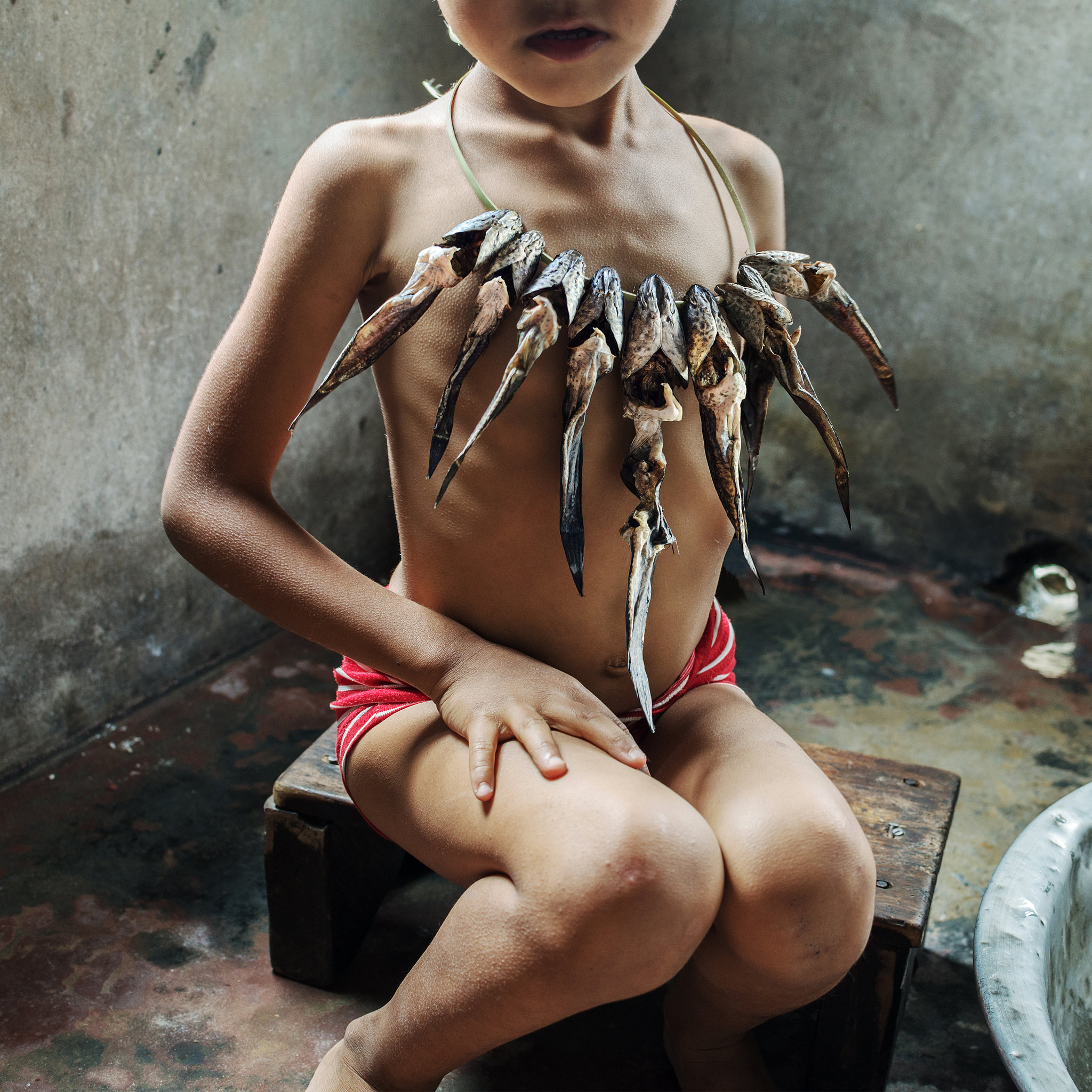
In the small hilly Indian state of Meghalaya, a matrilineal system operates – but some men are campaigning for change PHOTO: Karolin Kruppel
What does the north-eastern Indian state of Meghalaya and a valley on the border of Yunnan and Sichuan provinces of China have in common? They are home to a couple of the handful matrilineal communities that still exist. In an age where most important offices of power are held by men, it is critical to evaluate how these communities hold on to a way of life unchanged for thousands of years. Not to forget the challenges they face in continuing to look at women as the driving force and the soul of their existence.
When early European settlers first arrived in Meghalaya, they nicknamed it “the Scotland of the East” on account of its evocative rolling hills. Not far from here, the village of Cherrapunji once measured 26.5m (87ft) of rain in one year, a fact still acknowledged by the Guinness book as a world record. And the state’s other claim to fame are the Khasi people, who number about 1 million and carry on the matrilineal tradition. The youngest daughter inherits, children take their mother’s surname, and once married, men live in their mother-in-law’s home.
And there are murmurs now. From men who want to “reform” family structures and who think they are “natural” leaders. From those who want to do more than “play the guitar, sing, take to drinking and die young”. From men who probably feel “diminished in their manhood”. This intrigue surrounding the Khasi people is what drew Berlin-based photographer Karolin Kruppel to Meghalaya. Through her photography series titled Mädchenland or Kingdom of Girls, she defies expectations of young Khasi girls, captures the freedom they enjoy. And the series is only set to grow with her visit to the ‘Kingdom of Women’ in China, to study the other matrilineal (often bordering on matriarchal, yes there’s a difference) community of the Mosuos.
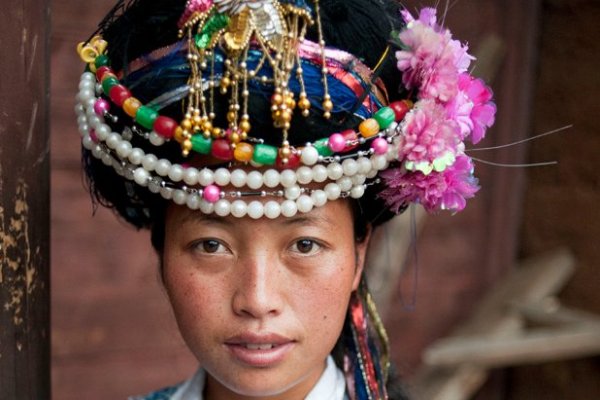
La Chuo Zhu Ma, 27, in traditional dress before a fire dance in Xiaoluoshui, a village on the edge of Lugu Lake. Each night, around 400 tourists are charged 30 CNY (around $5) to attend these spectacles. Profits are evenly distributed throughout the surrounding villages. (Dave Tacon)
Here, the women are in charge and there are no words to express the concepts of “father” or “husband”. Women here make most major decisions; they control household finances, have the rightful ownership of land and houses, and full rights to the children born to them. Their practice of ‘walking marriage’ is what sets them apart. And they find themselves facing the burgeoning tourism in the region.
The Chinese government is keen to market and monetize the Mosuo to Chinese tourists, even installing a toll booth charging $5 to enter the area from the newly laid main road. Curious and frisky visitors are lured in by the suggestion that the Mosuo women offer free sex – hotels, restaurants, casinos and karaoke bars have been built, and sex workers shipped over from Thailand dress in Mosuo traditional dress in the “capital village”, Luoshu.
Will these women continue to be in charge or will men be ‘brought up’ to their level? Time and commerce will tell.

