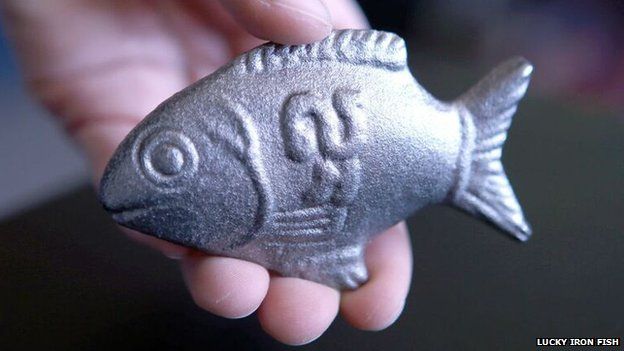
The lucky iron fish, designed by Gavin Armstrong, was based on the iron fish used in Dr Charles’ research
Anemia is the most common and widespread nutritional disorders in the world, affecting 2 billion people globally – or over 30 percent of the world’s population. But Canadian scientists have come up with an ingenious solution, and it’s so simple, it fits in the palm of your hand. Meet the Lucky Iron Fish – a chunk of iron that’s thrown into the saucepan and boiled with lemon to give adults 75 percent of their daily recommended iron intake, and close to 100 percent for kids.
And this little fish just won the Product Design Grand Prix at Cannes.
When Canadian science graduate Christopher Charles visited Cambodia six years ago he discovered that anaemia was a huge public health problem. In the villages of Kandal province, instead of bright, bouncing children, Dr Charles found many were small and weak with slow mental development. Women were suffering from tiredness and headaches, and were unable to work. Pregnant women faced serious health complications before and after childbirth, such as hemorrhaging. Ever since, Dr Charles has been obsessed with iron.
Inspired by previous research which showed that cooking in cast iron pots increased the iron content of food, he decided to put a lump of iron into the cooking pot, made from melted-down metal. Shaped like little smiling fish – a symbol of luck in Cambodian culture – these inexpensive iron lumps are about 7.5 centimetres long and weigh 200 grams. What makes them special is that when they’re heated up in a pan, they release iron at exactly the right concentration to provide the majority of the local’s recommended daily iron intake. The recipe is simple: boil the fish in water or soup for 10 minutes, remove from the heat, and add a generous dash of lemon juice to foster iron absorption.
Read more on the fish that is making the difference, here.
 Organikos