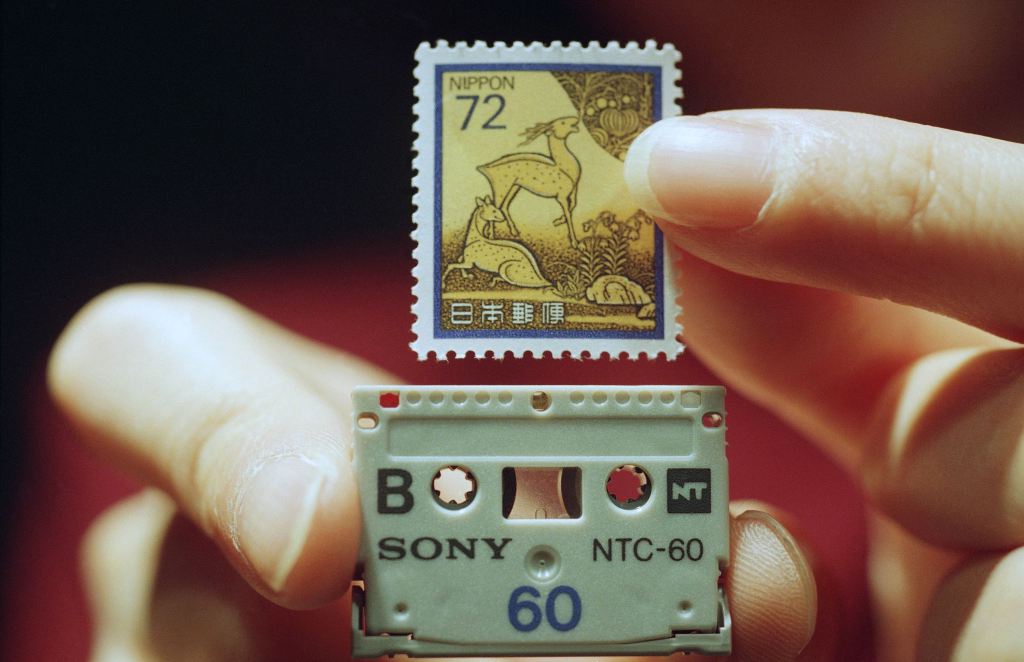
A cassette tape—the origin, incredibly, of how batteries are made.(AP Photo)
Since about 2010, a critical mass of national leaders, policy professionals, scientists, entrepreneurs, thinkers and writers have all but demanded a transformation of the humble lithium-ion cell. Only batteries that can store a lot more energy for a lower price, they have said, will allow for affordable electric cars, cheaper and more widely available electricity, and a reduction in greenhouse gas emissions. This is where Yet-Ming Chiang enters the picture. A wiry, Taiwanese-American materials-science professor at the Massachusetts Institute of Technology (MIT), Chiang is best known for founding A123, a lithium-ion battery company that had the biggest IPO of 2009.
The reason battery factories are so huge—and why Chiang’s business model seems to have substance—goes back to a chance event at the birth of lithium ion.
The rise of lithium-ion chemistry in the early 1990s owes a lot to the peak and slow decline of two big consumer technologies—magnetic audio tape and nickel cadmium batteries. These two collided in the Camcorder, Sony’s entry into the nascent market for lightweight video cameras. Sony realized that, if video cameras were to take off, they needed both to shrink—to more or less fit snugly into a consumer’s hand— “We got sidetracked by a historical accident and a reluctance to switch to something that works (better)”—Yet-Ming Chiang and to last longer on a single charge. The only way to accomplish that was to find a far more powerful, smaller battery.
The result was the first lithium-ion cell, which Sony commercialized in 1991. Two years later followed the TR1 8mm Camcorder, the first lithium-ion-operated video camera. Both were blockbuster commercial products for Sony, and ignited furious competition. But Sony also had to quickly figure out how to manufacture this new kind of battery on a commercial scale. Providence stepped in: As it happened, increasingly popular compact discs were beginning to erode the market for cassette tapes, of which Sony was also a major manufacturer. The tapes were made on long manufacturing lines that coated a film with a magnetic slurry, dried it, cut it into long strips, and rolled it up. Looking around the company, Sony’s lithium-ion managers now noticed much of this equipment, and its technicians, standing idle.It turned out that the very same equipment could also be used for making lithium-ion batteries. These too could be made by coating a slurry on to a film, then drying and cutting it. In this case the result isn’t magnetic tape, but battery electrodes.This equipment, and those technicians, became the backbone of the world’s first lithium-ion battery manufacturing plant, and the model for how they have been made ever since. Today, factories operating on identical principles are turning out every commercial lithium-ion battery on the planet.For Sony, the idle magnetic tape machines were a piece of good fortune. But Chiang regarded them as an ungainly legacy. The machines were big, and their process was slow and expensive. They were a large part of the reason batteries couldn’t compete with gasoline. It was time to correct that mistake and figure out a new way to make the battery. “We got sidetracked by a historical accident and a reluctance to switch to something that works (better),” Chiang said.
 Organikos