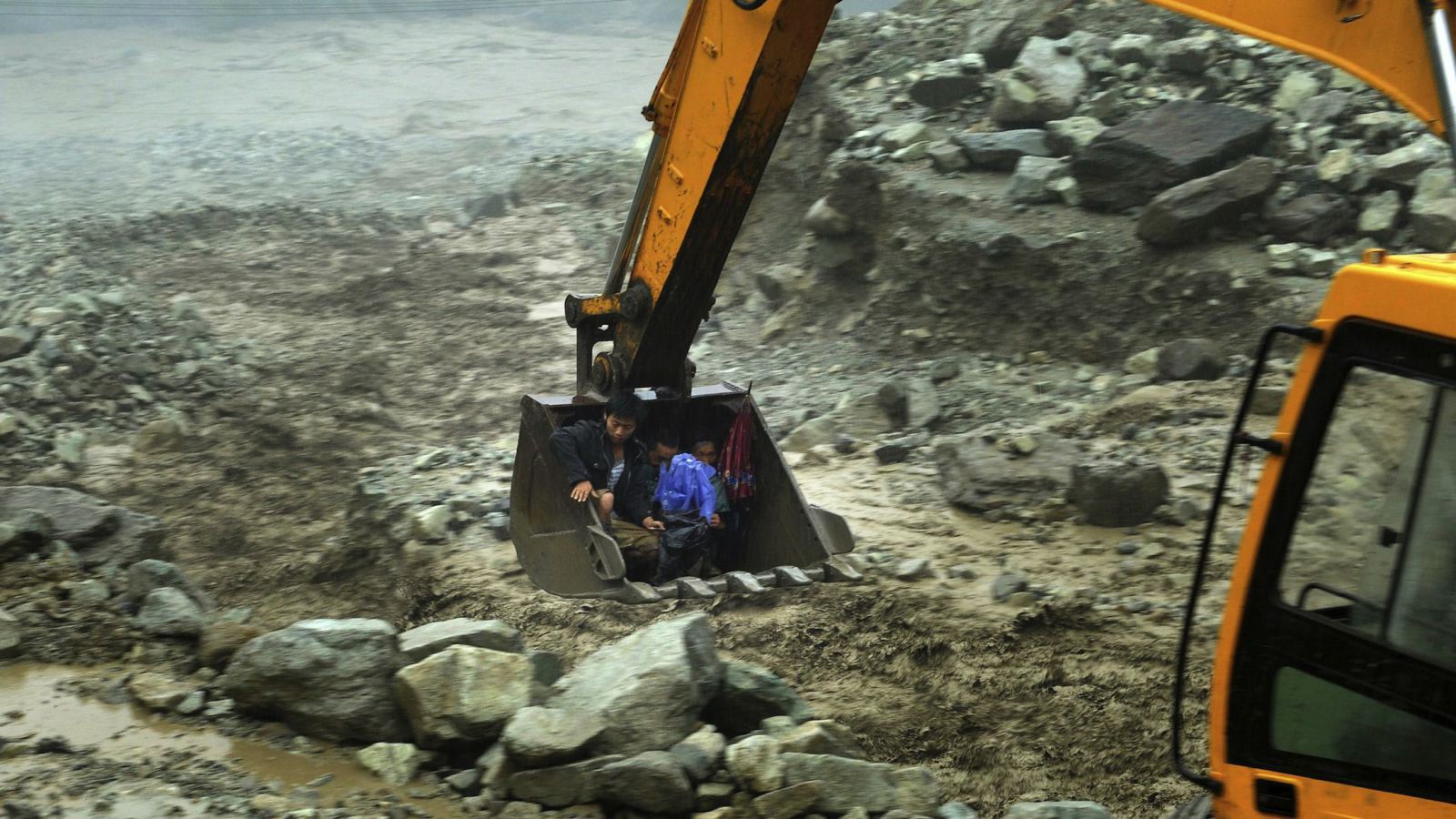
An excavator moves villagers away from a flooded area in Sichuan province in July, 2013. PHOTO: Reuters
Soot and air pollution may have caused China’s worst flood in 50 years, according to a recent study. In July 2013, a mountainous region in the Sichuan province was pounded by 94 cm of rain over the course of five days, floods that left 200 dead and 300,000 others displaced.
Researchers led by Jiwen Fan from Pacific Northwest National Laboratory in Richland, Washington simulated the atmosphere over the heavily industrialized Sichuan basin with varying levels of emissions and found that had it not been for the amount of smoke, greenhouse gases, and aerosols spewed from factories in the area, rainfall of the storm would have been 60% less. Other researchers have also pointed to potential connections between air pollution and weather. Air pollution may be causing monsoons to hit South and East Asia earlier and harder. Others have linked aerosols in the atmosphere to the intensity of tornadoes and tropical cyclones. (Some studies, though, have found that air pollution may have suppressed hurricanes from forming over the Atlantic Ocean.)
Read more here.
 Organikos