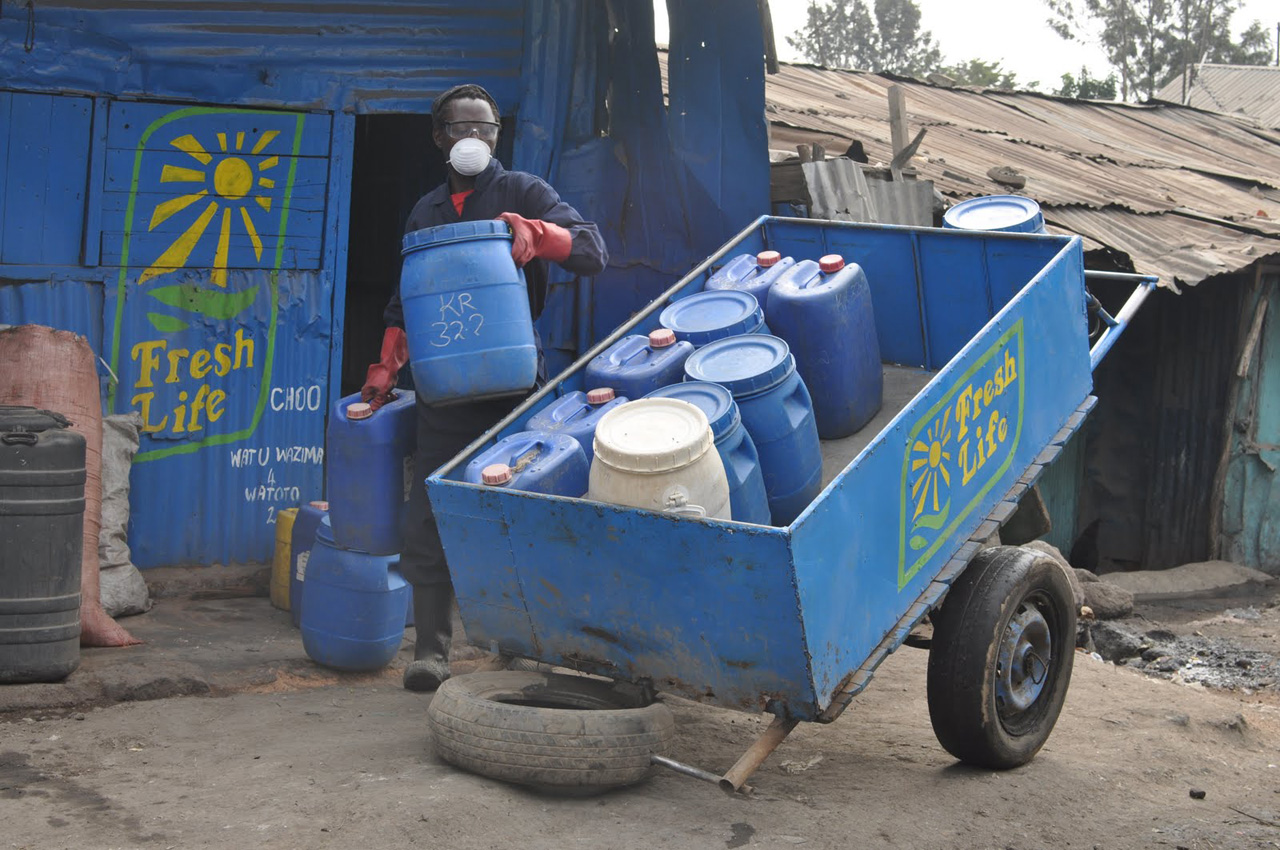
Sanergy builds healthy, prosperous communities by making hygienic sanitation affordable and accessible throughout Africa’s informal settlements.
Innovations are intriguing, ones with the power to change lives more so. Add development of communities, better health and dignity of life to the equation and you can’t say no to knowing more. We are talking toilets. Do you know Caltech engineers and Kohler designers are testing a self-cleaning, solar-powered toilet that turns human waste into hydrogen and fertilizer? Then there’s Peepoople making ‘toilet bags’. Inside are chemicals that break down human waste into fertilizer, offering alternative sanitation in slums and refugee camps. Then there’s what Sanergy is doing in Kenya.
2.5 billion people lack access to hygienic sanitation. Inadequate and unhygienic sanitation is the second largest cause of disease in the world. It leads to contaminated waterways and food supply, as well as infections like diarrhea, caused by direct contact with human waste.
Diarrheal disease kills nearly 1.6 million children each year. Children under age 5 suffer more from diarrheal diseases than HIV/AIDS, malaria, and tuberculosis combined. This affects not only individual families, but entire economies. Developing countries lose ~2% of GDP each year due to lost worker productivity from sanitation-related diseases.
The problem is particularly acute in slums, where over 1 billion people live. By 2030, this population will double to over 2 billion people worldwide. The high population density in slums, combined with the lack of physical space, infrastructure, and resources exacerbates the sanitation crisis. Kenya’s 8 million slum residents are forced to rely on unsanitary options such as “flying toilets” (defecating into plastic bags that are then tossed onto the streets) and pit latrines that release untreated human waste into the environment.
These sanitation solutions are not only undignified, but also cause immense environmental damage. Pit latrines are emptied every few months by poorly trained and equipped service employees. These ‘frogmen’ jump into the pits of human waste, manually empty the pit latrines using buckets, and then haul the overflowing buckets of waste through the community to the nearest waterway or field, where the buckets’ contents are released into the environment. In sum, 4 million tons — or 90% — of faecal sludge from Kenya’s slums are discharged into waterways and fields every year.
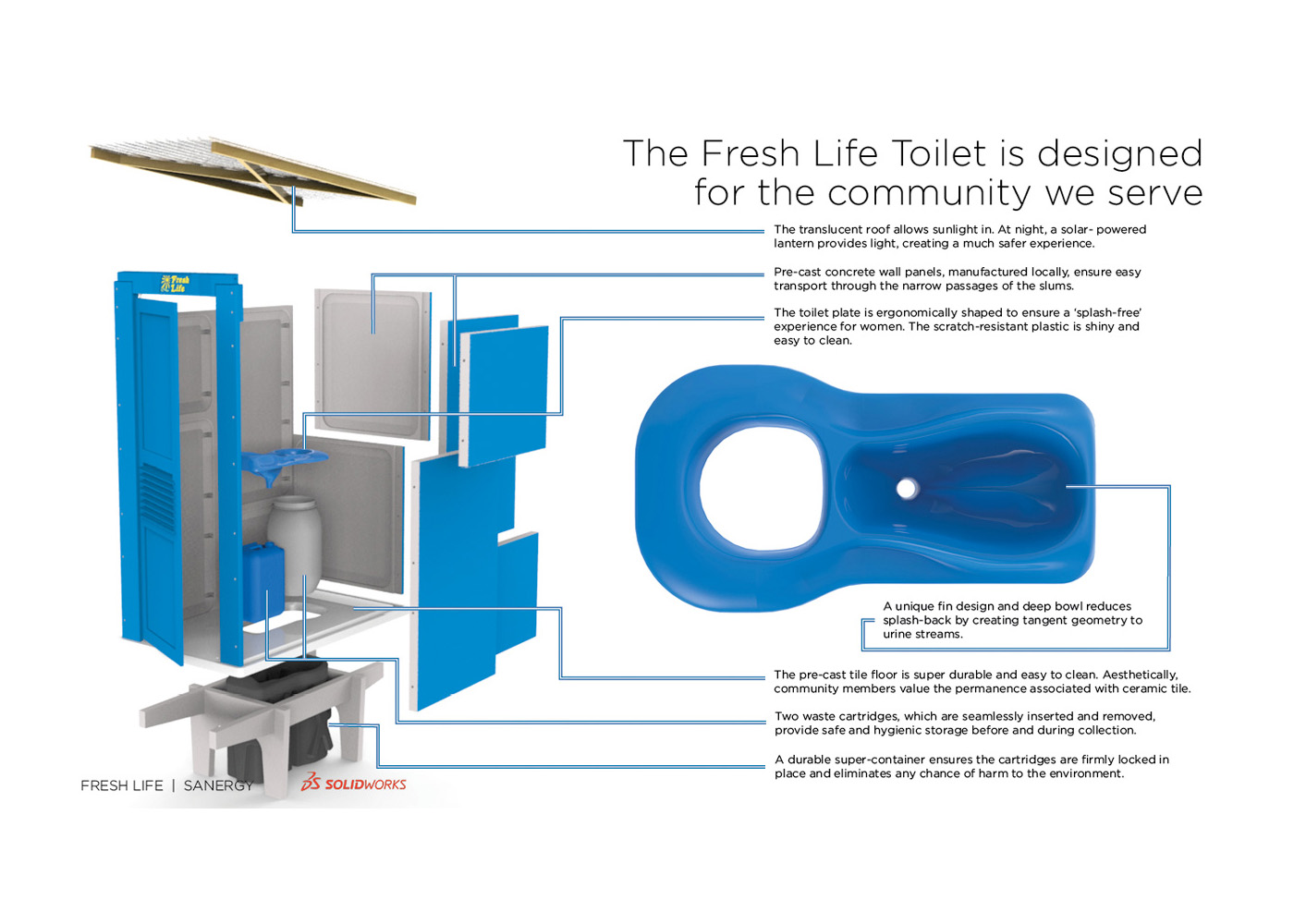
A model of Sanergy’s ‘Fresh Life’ toilet
Sanergy is a social enterprise that’s building out a sanitation network in Nairobi, Kenya. It designs its own toilets, franchises them out to entrepreneurs (who charge people to use them), then converts the waste into fertilizer that it sells to farmers. Started by MIT graduates, Sanergy takes a business approach, based on the premise that people will pay to use toilets if you make them clean and sturdy enough.
The toilets come with “cartridges” that collect the waste, which are then swapped out as they become full. The waste is transported to centralized facilities, where Sanergy adds agricultural waste like sugar cane husks and rice husks, as well as microorganisms that break down the matter. The fertilizer is ready in about six months. You sometimes hear that farmers don’t want to deal with fertilizer derived from human excrement. But Auerbach says they’re convinced once Sanergy can show that the product comes pathogen-free and increases crop yields, often by as much as 30%.
Read more here.
 Organikos
Pingback: Cleaning Kenya’s Slums Through a Toilet Franchise | For The Love of Art