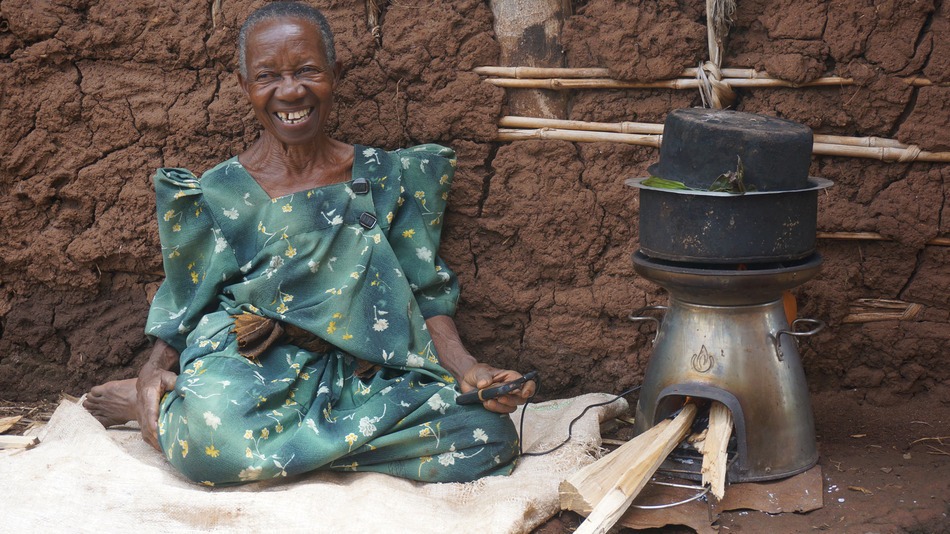
In addition to eliminating 94% of the smoke and 91% of the carbon dioxide emitted by open fires, the HomeStove can save households as much as $8 to $10 per week just on fuel. PHOTO: Biolite
According to the WHO, 4.3 million people die prematurely every year from illnesses attributable to household air emissions from cooking with solid fuels, which kill more people every year than malaria, HIV and tuberculosis combined. Women and children, who spend the most time near open flames in developing countries, are most at risk. And the gravity of the dangers of indoor air pollution pushed product developers Alec Drummond and Jonathan Cedar to maximize the use of the off-the-grid stove they were initially designing for campers.
“We’d seen that by blowing air in a particular place in a wood fire, you can really improve combustion and turn a rudimentary fuel into a super hot, controllable, clean combustion process,” Cedar tells Mashable. “We were fascinated by this idea that you could take waste product and turn it into a useful energy source.”
“The question was: How do you do that without batteries, which still tie you back to the grid?” he says.
The pair’s solution was to affix a thermoelectric generator inside a wood-burning stove, so a portion of the waste heat from the fire can be converted directly into useable electricity. The newly created electrical energy then powers an internal battery and a fan, which increases the stove’s combustion, creating a cleaner, nearly smokeless fire.
“A regular cooking fire contains something like 3,000 to 5,000 watts of thermal energy,” Cedar says.
“We needed one watt of electrical energy to power a fan that would completely change the combustion dynamics of the system. Thermoelectrics were a great way to do that.”
With permission from Smart Design, the design consulting firm where they worked at the time, Drummond and Cedar spent many of their nights and weekends building out a clean-burning, self-generating stove prototype in Smart Design’s workshop.
By 2008, they were ready to bring that prototype to an advanced wood combustion conference in Seattle. There, the co-workers discovered that most of the event’s attendees, unlike them, were designing stoves to be primarily used in the developing world, where three billion people, according to the World Health Organization, cook and heat their homes using open flames or stoves that burn wood, coal or animal and crop waste.
IMAGE: BIOLITE
These crude, indoor cooking methods, aside from releasing nearly 1 billion metric tons of carbon dioxide into the atmosphere every year, expose billions of people who live in poorly ventilated homes to air pollutants that cause a litany of diseases and outcomes like pneumonia, stroke, coronary artery disease, chronic obstructive pulmonary disease and lung cancer.

 Organikos