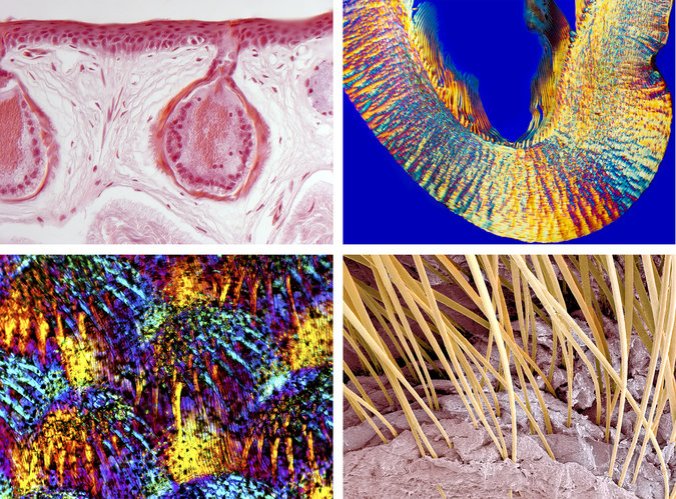
The long tail of diversity’s many intrigues, as Mr Zimmer seems uniquely capable of summoning up with such clarity:
Narwhals and newts, eagles and eagle rays — the diversity of animal forms never ceases to amaze. At the root of this spectacular diversity is the fact that all animals are made up of many cells — in our case, about 37 trillion of them. As an animal develops from a fertilized egg, its cells may diversify into a seemingly limitless range of types and tissues, from tusks to feathers to brains.
The transition from our single-celled ancestors to the first multicellular animals occurred about 800 million years ago, but scientists aren’t sure how it happened. In a study published in the journal eLife, a team of researchers tackles this mystery in a new way.
The researchers resurrected ancient molecules that once helped single-celled organisms thrive, then recreated the mutations that helped them build multicellular bodies.
The authors of the new study focused on a single molecule called GK-PID, which animals depend on for growing different kinds of tissues. Without GK-PID, cells don’t develop into coherent structures, instead growing into a disorganized mess and sometimes even turning cancerous.
GK-PID’s job, scientists have found, is to link proteins so cells can divide properly. “I think of it as a molecular carabiner,” said Joseph W. Thornton, an evolutionary biologist at the University of Chicago and a co-author of the new study.
When a cell divides, it first has to make an extra copy of its chromosomes, and then each set of chromosomes must be moved into the two new cells. GK-PID latches onto proteins that drag the chromosomes, then attaches to anchor proteins on the inner wall of the cell membrane. Once those proteins are joined by GK-PID, the dragging proteins pull the chromosomes in the correct directions…
Read the whole article here.
 Organikos