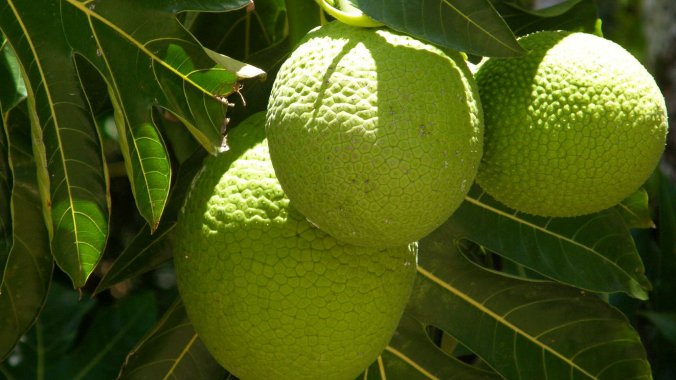
Breadfruit is a protein and nutrient-rich staple in Hawaii and other islands in the Pacific Ocean. Malcolm Manners/Flickr
We have had these trees growing all around us in more than one tropical zone where we operate, but had not realized just how high their nutritional value is, nor their potential for doing more to alleviate hunger (thanks to the folks at the salt, National Public Radio USA):
Productive, Protein-Rich Breadfruit Could Help The World’s Hungry Tropics
Packed with nutrients, easy to grow and adaptable to local cuisines, this tropical superfood could bring more food and cash to poor farmers around the world.
On a muggy morning on Kauai’s south coast, ethnobotanist Diane Ragone inspects a dimpled bright green orb, the size of a cantaloupe. She deems the fruit mature, at its starchy peak. Perfect for frying or stewing.
“You can eat breadfruit at any stage,” says Ragone, who heads the National Tropical Botanical Garden’s Breadfruit Institute. “When it’s small and green, it tastes like an artichoke. When it’s starchy and mature, it’s the equivalent of a potato. When it’s soft and ripe, it’s dessert.”
A traditional staple in Hawaii, breadfruit is sometimes called the tree potato, for its potatolike consistency when cooked. Except breadfruit has higher-quality protein and packs a healthy dose of vitamins and minerals.
That’s why Ragone has spent years trying to cultivate this nutrient-rich staple for poorer, tropical parts of the world, where the majority of the world’s hungriest people live.
Breadfruit offers several advantages over other staples, says Ragone. The fast-growing perennial trees require far less labor, fertilizer and pesticides than crops like rice and wheat. They’re also more productive. A single tree yields an average of 250 fruits a year and can feed a family for generations.
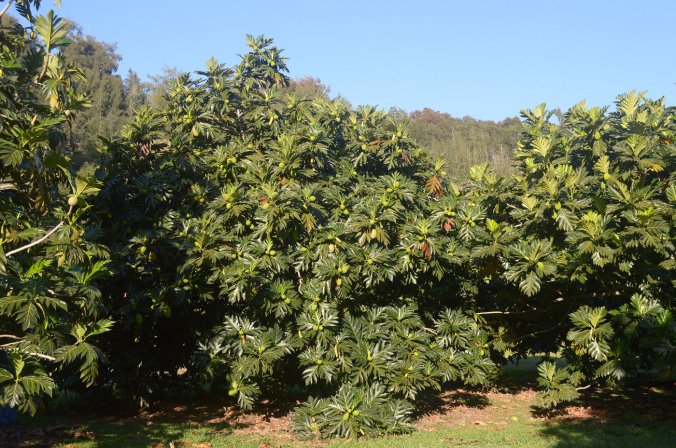
Breadfruit trees in fruit at the National Tropical Botanical Garden in Hawaii, where scientists have developed newer, hardier varieties of breadfruit. Diane Ragone
If mass produced, breadfruit could provide a steady source of nutritious food for farmers and their families, and supplement their incomes.
That’s already starting to happen. Farmers in countries like Samoa, Haiti and Nigeria are already growing some of the varieties developed by Ragone’s team.
The wild ancestor of breadfruit is native to New Guinea and cultivated throughout the Pacific Islands, where it has been a staple for as long as people can remember. It’s part of a diet that helped residents avoid malnutrition, obesity and diabetes until a few decades ago, when people abandoned their traditional foods.
Ragone has collected hundreds of varieties of breadfruit throughout the Pacific archipelagoes and is selecting ones with the best flavors, nutritional profiles and longest growing seasons…
Read the whole article here.
 Organikos