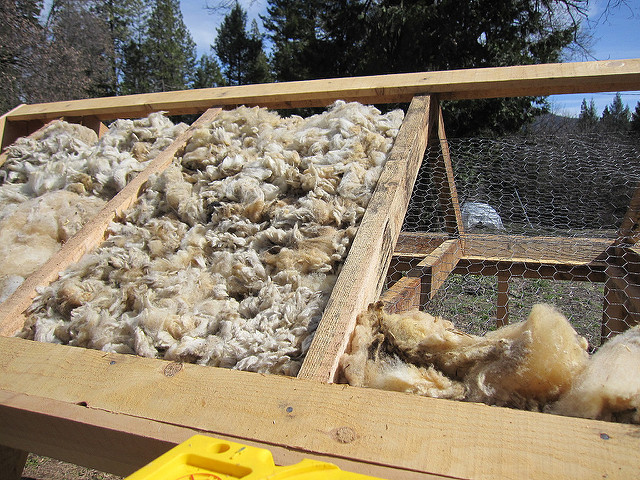
All images from triplepundit.com
Sheep’s wool has long been proclaimed as one of nature’s best insulators, and San Francisco startup Havelock Wool, LLC has taken advantage of this property of wool to use it as a sustainable insulation product to meet the growing demand of higher efficiency buildings and homes. Although wool is typically known for keeping things warm, the company is also using the material for homes in warm and sunny environments:
The company recently tried out its products on a 17,000 foot mansion in Newport Beach, a destination harbor town in the middle of Southern California’s coastline. As with most insulating products, the material’s ability to lock out cold temps also gives it the ability to insulate homes during hotter weather. It absorbs moisture, drys out naturally and doesn’t become moldy.
But its most appealing quality is its environmental benefits.
Unlike foam insulation, wool can be grown and harvested without exposure to chemicals. The old system of dipping the sheep in chemical baths that help ward off parasites had a purpose, but the costs to the environment and to those exposed to the wool often outweighed the benefits. Havelock Wool says it raises and harvests its wool naturally without chemical additions.
It’s also highly fire resistant, which means no need for chemical retardants. Borax is used in some cases to increase its retardant capabilities.
There has been increasing effort in California in recent years to encourage furniture manufacturers to migrate away from chemical materials like foam, which are often used in baby mattresses. Havelock’s success in the insulation sector is further evidence that natural sources can replace chemical ones. According to the Healthy House Institute, wool insulation actually has a higher R-rating than fiberglass, cellulose or other synthetic materials.
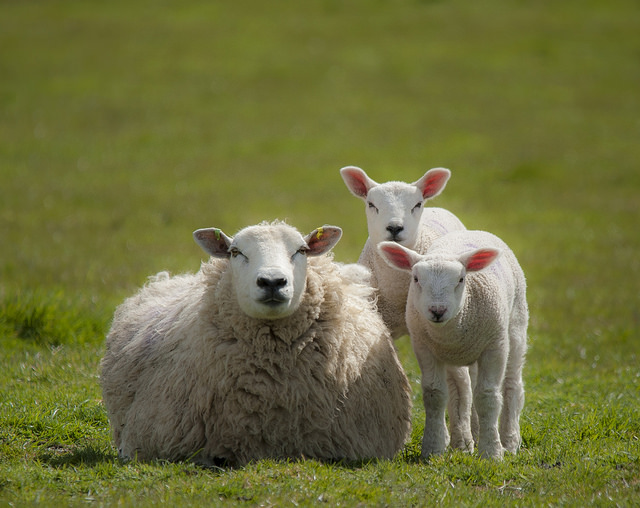
Havelock is one of a growing list of companies that now offer environmentally friendly insulation for construction. The company offers two products: Loose fill insulation that can be added to walls with the help of an insulation blower (without the increased risk of respiratory complications from inhaling fiberglass) and batt insulation. Loose fill is often used for acoustic properties (wool makes a great sound barrier), while batt insulation can be installed easily by hand. It has great insulating properties as well and often can be installed without professional assistance.
On behalf of all those who already have this wool insulation at home or are considering to get it, thank the sheep for keeping us warm the winter and cool in the summer!
Read the full article here.
 Organikos