Recently, I drove to a distant corner of Toronto in search of rosewater-scented phyllo. The destination was Crown Pastries, a two-year-old Syrian bakery wedged between a Subway and an adult-video store. Founded by two brothers who emigrated from Aleppo in 2009, Crown Pastries—though located in a city with no shortage of baklava—is renowned for its Middle Eastern sweets.
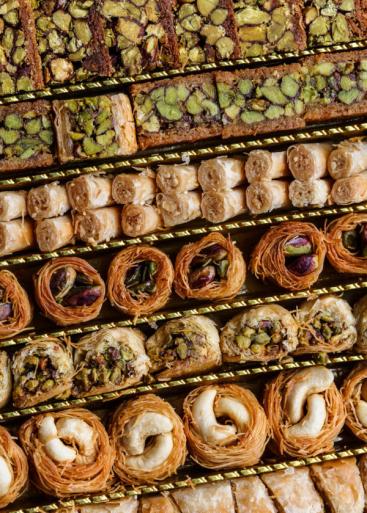
Crown Pastries is small: a narrow rectangle with a long counter behind glass planes, where precise trays of more than a dozen different pastries are on display. A young Yemeni woman, dressed in a matching purple shirt and head scarf, cut little samples of each sweet, explaining the differences between the cashew-filled Kol o Shkor Baklava and the Esh Al Ashfour, a “bird’s nest” of fried vermicelli wrapped around a clutch of sweetened pistachios and cashews. She quickly filled a box that cost less than twenty dollars, and sent me away with a recommendation for a nearby falafel joint.
What triggered my hunger for Crown Pastries was the same force that stands opposed to its existence: the rising tide of anti-immigrant populism in the United States and much of the Western world. Canada may present itself as a place immune from the closed-door nationalism of Trump’s America, but we have our xenophobes advocating for curbs along religious lines, who have no use for the people who make the delicious sweets at Crown Pastries.
Since the White House ordered its first travel ban on immigrants from some Muslim-majority countries and also started its more aggressive deportations of undocumented immigrants, many in the U.S. (as well as Canada) have rallied to defend the benefits of immigration, culturally, economically, and in terms of innovation (many people noted the number of successful companies founded by immigrants).
But for me, an equally compelling argument is lunch. American cuisine is decidedly global, a polyglot of constantly evolving ingredients, flavors, and ideas from every possible corner of the globe. During past bouts of American ethnic populism, immigrant foods were attacked as a symbol of foreign invaders. Japanese restaurants faced discrimination and boycotts decades before Pearl Harbor. Italian immigrants were derisively called “garlic eaters.” During the World Wars, sauerkraut was renamed “liberty cabbage” and hamburgers were dubbed “liberty steaks,” as a protest against their German geographic and linguistic origins. Indians were slandered for the pungency of their spices. Champions of the Chinese Exclusion Act, which barred immigration from China from 1882 to 1943, often cited the weakening effect of Chinese food on the American worker. Labor leader Samuel Gompers wrote a pamphlet titled “Some Reasons for Chinese Exclusion: Meat versus Rice, American Manhood against Asiatic Coolieism: Which shall survive?”…
 Organikos