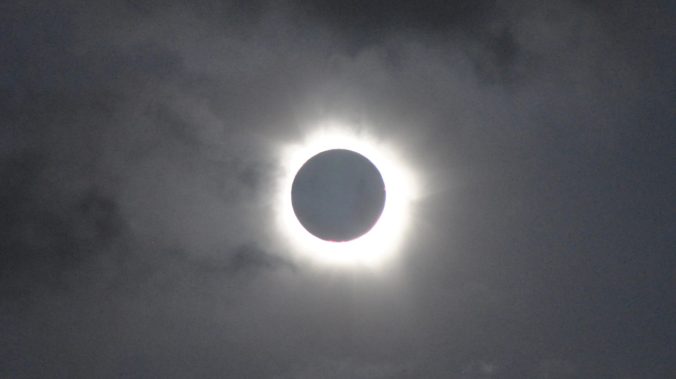
Solar eclipse of November 13, 2012 as seen from Australia. Photo © Romeo Durscher on NASA Goddard Space Flight Center / Flickr through a Creative Commons license
Thanks to Cool Green Science for this set of instructions for North American viewing of the sun’s near-disappearance:
Where will you be on August 21, 2017 when the solar eclipse passes through North America?
Here’s a guide to viewing opportunities, including Nature Conservancy preserves where you can catch the spectacle in beautiful surroundings.
Solar eclipses can be viewed from the earth’s surface about two to four times a year, but they aren’t viewable from all parts of the earth’s surface and the path of totality (the places on Earth from which viewers can see the total eclipse) is only about 50 miles wide. Eclipse 2017 stands out because the path of totality cuts a wide swath through the United States and all of North America will have views of a partial eclipse.
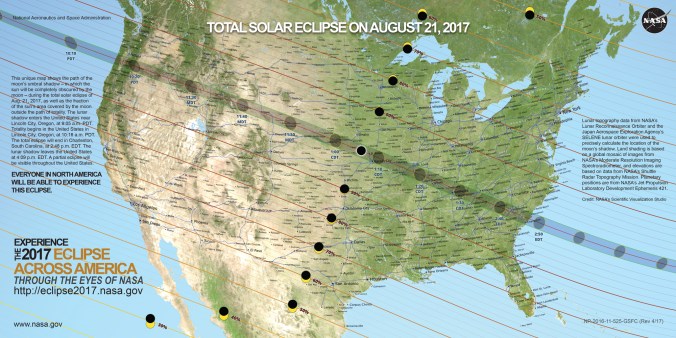
If you don’t have plans yet, explore NASA’s Total Eclipse site for loads of great information on eclipse events, science, safety and more. Not everything about solar eclipses is known. Citizen science projects will be collecting data on topics ranging from how the eclipse changes atmospheric conditions on Earth to revealing the plasma dynamics of the inner solar corona to documenting how animal behavior changes during the eclipse.
State and national parks are a popular choice for eclipse viewing. Unlike other astronomical events, light pollution is not a concern for viewing the solar eclipse because it takes place during the day when people have fewer outdoor lights on and it is very bright (so bright that viewing a solar with the naked eye at any time other than the total phase can permanently damage your eyes) and very brief (the total phase of the August 21 solar eclipse will last a maximum of 2 minutes and 43 seconds, depending on your viewing location)…
Read the whole article here.
 Organikos
good article sir
Reblogged this on Mix Bag of Interest and commented:
Solar eclipse update…