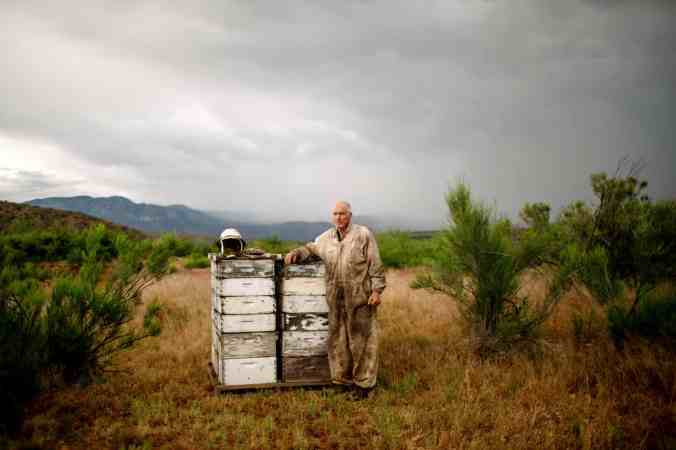
Dennis Arp stands for a portrait near a colony of honeybees outside Rye, Arizona. Photograph: Caitlin O’Hara/The Guardian
Bees are not finding the near future any brighter than the recent past. Thanks, as always, to the Guardian for keeping us apprised on this topic:
‘Like sending bees to war’: the deadly truth behind your almond-milk obsession
Bees are essential to the functioning of America’s titanic almond industry – and billions are dying in the process
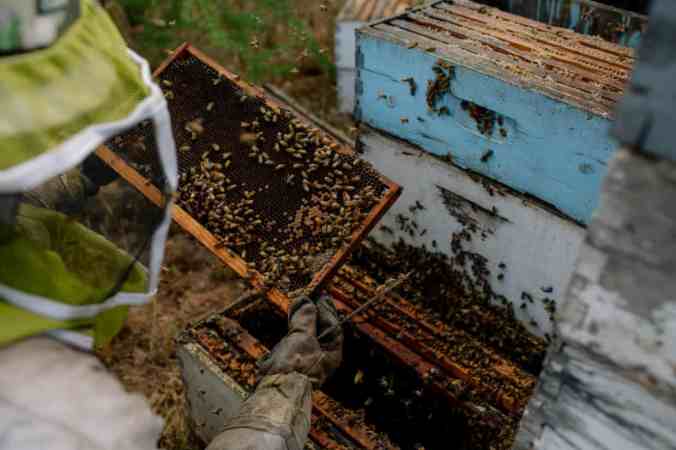
Adam Arp, Dennis’s son, works outside Rye on 8 May 2019. Photograph: Caitlin O’Hara/The Guardian
Dennis Arp was feeling optimistic last summer, which is unusual for a beekeeper these days.
Thanks to a record wet spring, his hundreds of hives, scattered across the central Arizona desert, produced a bounty of honey. Arp would have plenty to sell in stores, but more importantly, the bumper harvest would strengthen his bees for their biggest task of the coming year.
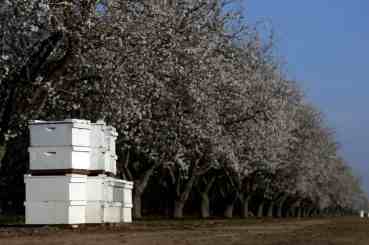
Beehives stand stacked along a blooming almond orchard near Shafter, California. The bees pollinate many crops, including almond trees in February, and are essential to the food chain. Photograph: Ann Johansson/Corbis via Getty Images
Like most commercial beekeepers in the US, at least half of Arp’s revenue now comes from pollinating almonds. Selling honey is far less lucrative then renting out his colonies to mega-farms in California’s fertile Central Valley, home to 80% of the world’s almond supply.
But as winter approached, with Arp just months away from taking his hives to California, his bees started getting sick. By October, 150 of Arp’s hives had been wiped out by mites, 12% of his inventory in just a few months. “My yard is currently filled with stacks of empty bee boxes that used to contain healthy hives,” he says.
This shouldn’t be happening to someone like Arp, a beekeeper with decades of experience. But his story is not unique. Commercial beekeepers who send their hives to the almond farms are seeing their bees die in record numbers, and nothing they do seems to stop the decline.
A recent survey of commercial beekeepers showed that 50 billion bees – more than seven times the world’s human population – were wiped out in a few months during winter 2018-19. This is more than one-third of commercial US bee colonies, the highest number since the annual survey started in the mid-2000s…
Read the whole story here.
 Organikos