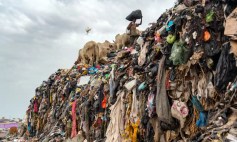
Some of the 6m items of clothing that arrive at Kantamanto Market each week. With the rise of fast fashion in the west, more is discarded as the quality drops. Photograph: Muntaka Chasant/Rex
When the clothes cast off by the wealthy are cast on to those less wealthy, it should be done so according to the golden rule:
Stop dumping your cast-offs on us, Ghanaian clothes traders tell EU
With 100 tonnes of clothing from the west discarded every day in Accra, ‘fast fashion’ brands must be forced to help pay for the choking textile waste they create, environmentalists say
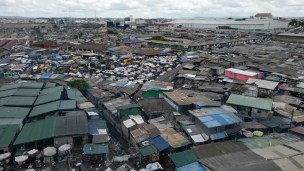
An aerial view of Kantamanto market in Accra, where 100 tonnes of secondhand clothing a day are discarded. Photograph: Misper Apawu/The Guardian
A group of secondhand clothes dealers from Ghana have visited Brussels to lobby for Europe-wide legislation to compel the fashion industry to help address the “environmental catastrophe” of dumping vast amounts of textiles in the west African country.
The traders from Kantamanto in Accra, one of the world’s largest secondhand clothing markets, met Alice Bah Kuhnke, an MEP with Sweden’s Green party, environmental organisations and representatives from the European Commission and the European Environment Bureau to argue that proposed extended producer responsibility (EPR) regulation should ensure Ghana receives funds towards managing the 100 tonnes of clothing discarded at the market every day.
Producers are obliged by EPR policies to contribute to the disposal of waste generated by their products. France is currently the only country in Europe with an EPR that covers the textile industry.
Critics say the policy does little for “end-of-line” countries such as Ghana – because the fee paid by clothing producers is low at just €0.06 (5p) for each item, and the funds raised do not “follow exports” to countries such as Ghana, which are suffering the consequences of over-production and consumption in wealthy countries.
The Kantamanto traders want the draft EPR policy – due to be submitted in June – to increase the fee to a minimum of €0.50 cents for each item, and to guarantee a fair portion of the money goes to the countries where the secondhand clothes end up, including at least 10% towards an environmental fund to clean up previous damage…
Read the whole article here.
 Organikos