Reporting from Niger, the Economist offers a glass-half-full consideration of a daunting topic (the podcast version of this story is excellent), and pulls it off:
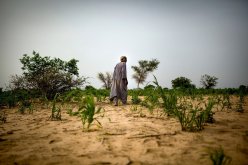
image: josh haner/the new york times/redux/eyevine
The surprising upside of climate migration
To adapt to climate change, people will move. The results will not be all bad
On the outskirts of Niamey, the capital of Niger, it looks as if the countryside has moved to the city. Clusters of dome-like wooden huts have popped up. Cows and goats are tethered in the shade. Waves of rural folk have arrived, largely because of climate change.
“The seasons are not good like they used to be. It is hotter and the rains often fail,” says Ganso Seyni Ali, the chief of a group of herders from rural Niger. He has moved permanently to the city with half of his home village—over 150 families.
To a visitor from a rich country, their settlement looks grim. They have no right to the land they occupy and are periodically evicted. But the city is safer than the countryside, where herders and farmers clashed constantly over dwindling pasture and water. Mr Ali describes deadly battles fought with guns, arrows and machetes. In the city such strife is rare, in part because life is less desperate.
Mr Ali’s group have swiftly adapted to their new environment. They take their cows outside the city to graze, and find extra forage by knocking on doors to ask for vegetable scraps. They find it easier to sell milk, with so many customers close by. Mr Ali offers your correspondents a steaming bowlful, fresh from the udder.
Many of his group have also found jobs. “It’s better here. There’s work,” says Ali Soumana, an ex-herder who now makes bricks. Back in the village he did not have enough to eat; now he does.
An obvious move
When flames approach and you don’t have a fire extinguisher, you move. By the same token, as parts of the Earth grow less habitable, people will migrate. The rich will find it easier to adapt to higher temperatures or rising sea levels, since they can afford air-conditioning and flood defences. The poor have fewer options.
How many will move because of climate change is impossible to say. In “Nomad Century”, a book published last year, Gaia Vince wrote that if the world grew 4°C hotter by 2100 (an apocalyptic scenario), regions currently inhabited by 3.5bn people would become uninhabitable. Extreme forecasts like this are often seized on for political reasons. Green groups have cited the threat of “billions” of climate refugees to lend urgency to their calls to curb emissions. Nativists in rich countries use imagined hordes of climate migrants to justify ever stricter policing of borders.
Cooler thinking is required. More plausible numbers come from a modelling exercise by the World Bank known as Groundswell, the findings of which were first published in 2018 and updated in 2021. It uses a “gravity model” to simulate how changes to things like water availability, agriculture and sea level might push people out of some areas and into others. It predicts that by 2050 between 44m and 216m people in Africa, Asia, eastern Europe, Latin America and the Pacific islands could be on the move within their own countries (see chart).
Read the whole article here.
 Organikos
Read the whole article, thanks for sharing this, I found it very interesting and thought provoking.