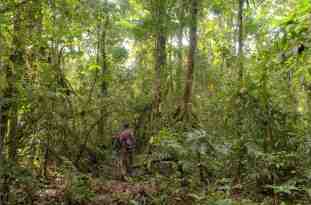
Sapo National Park in Liberia. Under a deal now being negotiated, Blue Carbon would sell carbon credits from the park. EVAN BOWEN-JONES / ALAMY STOCK PHOTO
For the decade during which the market for carbon credits has been on our radar, concerns about credibility have been lurking. Now this:
In New Scramble for Africa, an Arab Sheikh Is Taking the Lead
A company established by a Dubai sheikh is finalizing agreements with African nations to manage vast tracts of their forests and sell the carbon credits. Critics are concerned the deals will not benefit Africans and will just help foreign governments perpetuate high emissions.
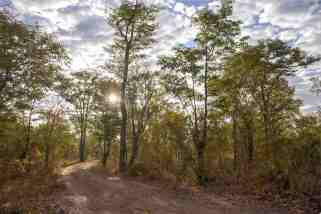
A forest in Mbire, Zimbabwe that is generating carbon credits. Blue Carbon has signed a memorandum of understanding with Zimbabwe to sell carbon credits from its woodlands. CYNTHIA R. MATONHODZE / BLOOMBERG VIA GETTY IMAGES
A prominent sheikh in the oil-rich Gulf state hosting this year’s UN climate negotiations, COP28, is heading a new rush to capture and sell carbon credits by managing tens of millions of acres of forests across Africa. Sheikh Ahmed Dalmook Al Maktoum, a member of the royal family of Dubai, which is part of the United Arab Emirates (UAE), wants to sell those credits to rich governments in the Gulf and elsewhere, so they can offset their carbon emissions to help them meet their carbon pledges under the 2015 Paris Agreement.
The deals on offer could in theory be a boon to forest conservation across Africa. But the rules for the trades that the Sheikh Ahmed envisages have yet to be set. And there is growing concern that the potential carbon gains may prove bogus, undermining the Paris Agreement.
“There is a scramble for Africa’s forest carbon,” says Saskia Ozinga, co-founder of Fern, a European environmental justice NGO. “But these deals risk defrauding the countries, the forest communities, and the climate, and appear to be negotiated by African governments who don’t understand carbon markets or are personally benefitting from the deals.”
The forests and farm woodlands of Africa are increasingly being recognized as an important store of planetary carbon. They currently capture more atmospheric carbon dioxide than the Amazon rainforest. Their protection is vital to curbing climate change. But they are mostly in very poor countries.
So, their governments have long seen selling carbon credits derived from protecting forests as a way to fund their conservation. Their Africa Carbon Markets Initiative launched at last year’s COP27 in Egypt envisaged that by 2050 carbon trading could unlock more than $100 billion in investment for credits, much of it from forests.
To date however, few African countries have developed forest management projects with demonstrable carbon gains for sale. So, there is excitement in many capitals about a new wave of proposals from foreign carbon entrepreneurs that could fast-track finding revenues for conservation.
The most active of these new companies is Blue Carbon, set up last fall by Sheikh Ahmed, whose other business activities include power plants and trading in the Gulf’s oil and liquefied natural gas. After the launch, he promised: “The core of our work is to enter into bilateral agreements with governments and private entities across the globe so that, together, we can boost investments in [nature-based] carbon projects.”
To that end, his company has since signed memorandums of understanding (MOUs) with governments in Liberia, Tanzania, Zambia, and this month Zimbabwe, to manage some 60 million acres of their forests, an area the size of the United Kingdom, and sell the carbon credits that the management generates. A recent resolution of the Liberian Cabinet supporting the deal said it would allow the country to “leverage the carbon potential of its vast forest resources … to generate revenue.”…
Read the whole article here.
 Organikos