
Year 2015 was special for Shashank Dalvi. It was his “Big Year” – a birder’s personal challenge to identify as many species as possible within that time period. I had the opportunity to bird with him and learn from him earlier in the year. He is truly devoted to nature and fills up your brain with tonnes of useful and jaw-dropping information on all creatures in the wild. He decided to wrap the year finding the Nicobar Megapod and was travelling to the Andaman and Nicobar Islands. He managed to obtain permission with several Government departments for himself and our group of 8 birders to travel to Central and Great Nicobars before closing the year in Gujarat.
We were to leave for Port Blair on 15th December, and the timing couldn’t have been worse. Chennai and the east coast of India was drowned in rains. Ominous clouds moved in fast-forward mode. It was like watching a horror movie.
Nature’s fury rendered people and their deities helpless. Bridges and dams tumbled down. People were stranded in higher floors. More than 15 feet of water covered the low-lying residential areas. The expedition was 5 days away.
I googled the weather pattern over Andamans and Nicobars. I could not see a bit of land. Just purple swirls. The first ever trip with legal documents to travel to any of the islands of Central and Great Nicobar might get washed out due to rains.
Scholarly information on universal weather patterns only increased our worries- Strong warm winds from Australia traveling at great speeds, rushing towards the subcontinent. And, cold winds traveling from Bhutan heading towards south will cause a period of seemingly endless storm.
This information rattled the cool-as-ice Shashank – but Shashank, being Shashank, regained his calm in no time. He remained silent in his own thoughts. After what seemed endless silence he signed off with a brusque “Let’s wait and watch. Whatever trick nature has up its sleeve, the expedition is on: over and out”. It was not easy to roger that.
The rains abated two days before the trip, leaving the Chennai coast clear. But the purple swirls on the monitor had not. The animation was down to a loop.
The team arrived in Port Blair by batches under perfect weather. Actually, throughout the expedition, the rains never bothered us except for one downpour while we slept outdoors in Galathea Bay.
Shashank had already taken a helicopter two and half hours south towards Great Nicobars. Clear weather with regular bursts of rain during the morning hours.
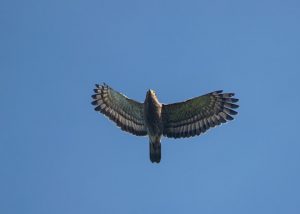
His sightings and reports were encouraging. Our time in Port Blair was usefully spent in grand sightings of owls and the expected species. But on his cue we flew out in batches of two people each day.

Our persistence en route was rewarded by seeing a giant leatherback turtle laying her eggs.
As we were gathering our gear in ultra light packs we were struck by the realization that weather wasn’t nearly the only challenge. We had tents, we had heavy equipment. Upon arrival we had to traverse ditches and goat paths.
Neither Tsunami swallowed roads, rocky shorelines, nor crocodile crowded rivers could keep us from our goal of reaching the bamboo platforms left behind by bird researchers from a previous year. Our team members who reached the spot a day earlier made the platforms more effective with a slightly raised addition to hold backpacks and gear.
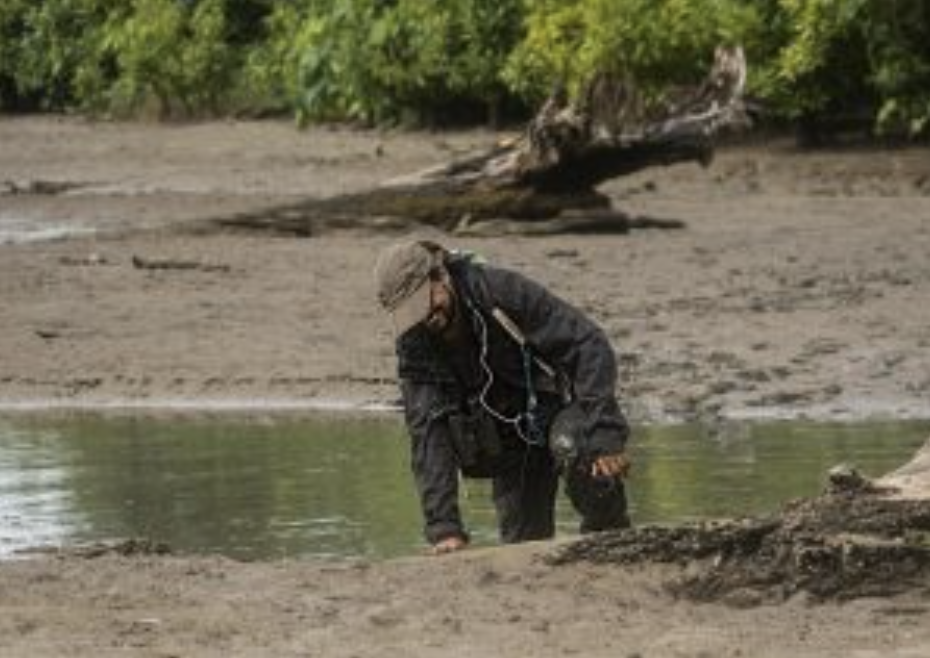
Shashank Dalvi
Shashank Dalvi – Scientist in the true spirit. A fine naturalist and a gentleman. He wears several other hats. And under each hat the rabbits breed by the dozens per minute. By now, I hope my readers will be aware of his talents and wisdom. In the end, we did find the Nicobar Megapod, the bird that formed the crown jewel of the 1128 species covered during his Big Year of 2015.
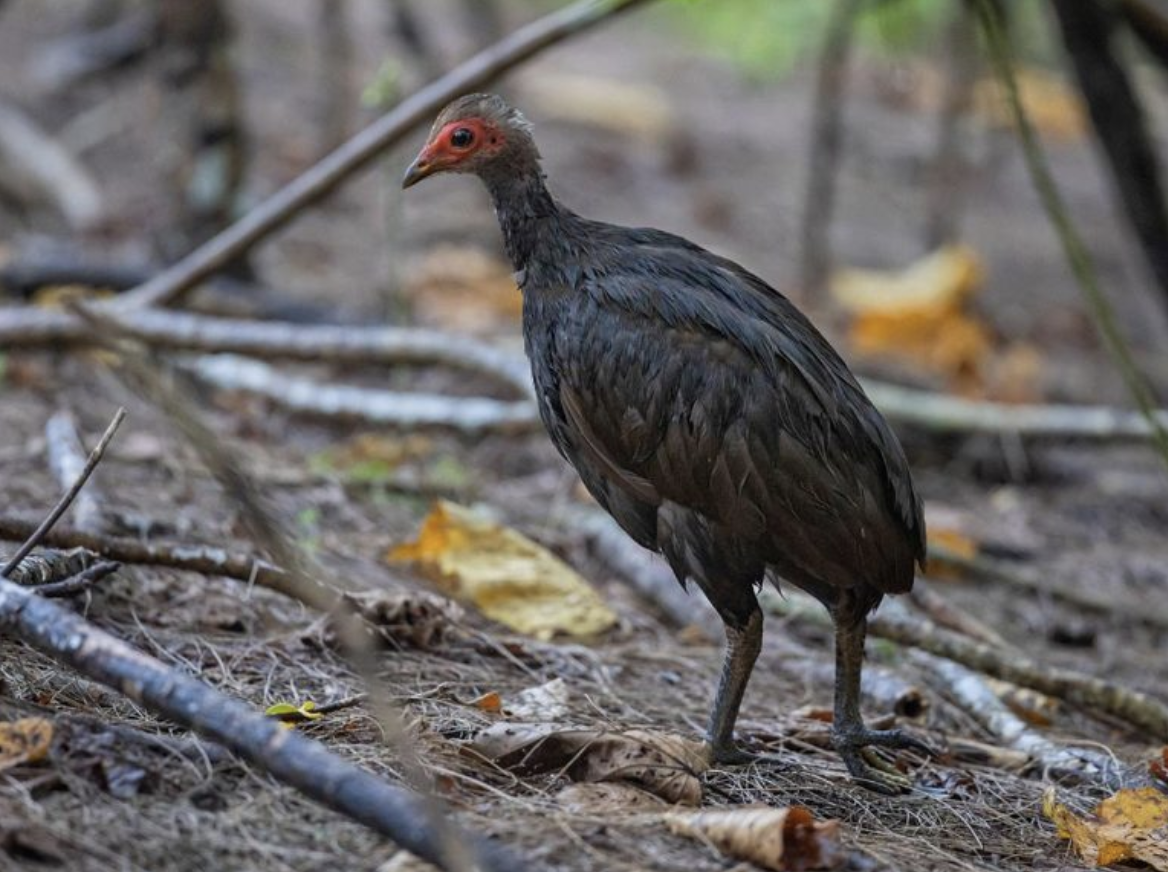
Nicobar Megapod
*I have been mentioning Mr. Shashank Dalvi in several of my posts. For people who are interested to know more about him, please follow this link. I really hope that every one gets a chance to bird alongside him and experience the joy of birding and learning.
 Organikos
Storytelling is an effective way of communication, especially about the ongoing climate crisis. Thank you 🌍🙏