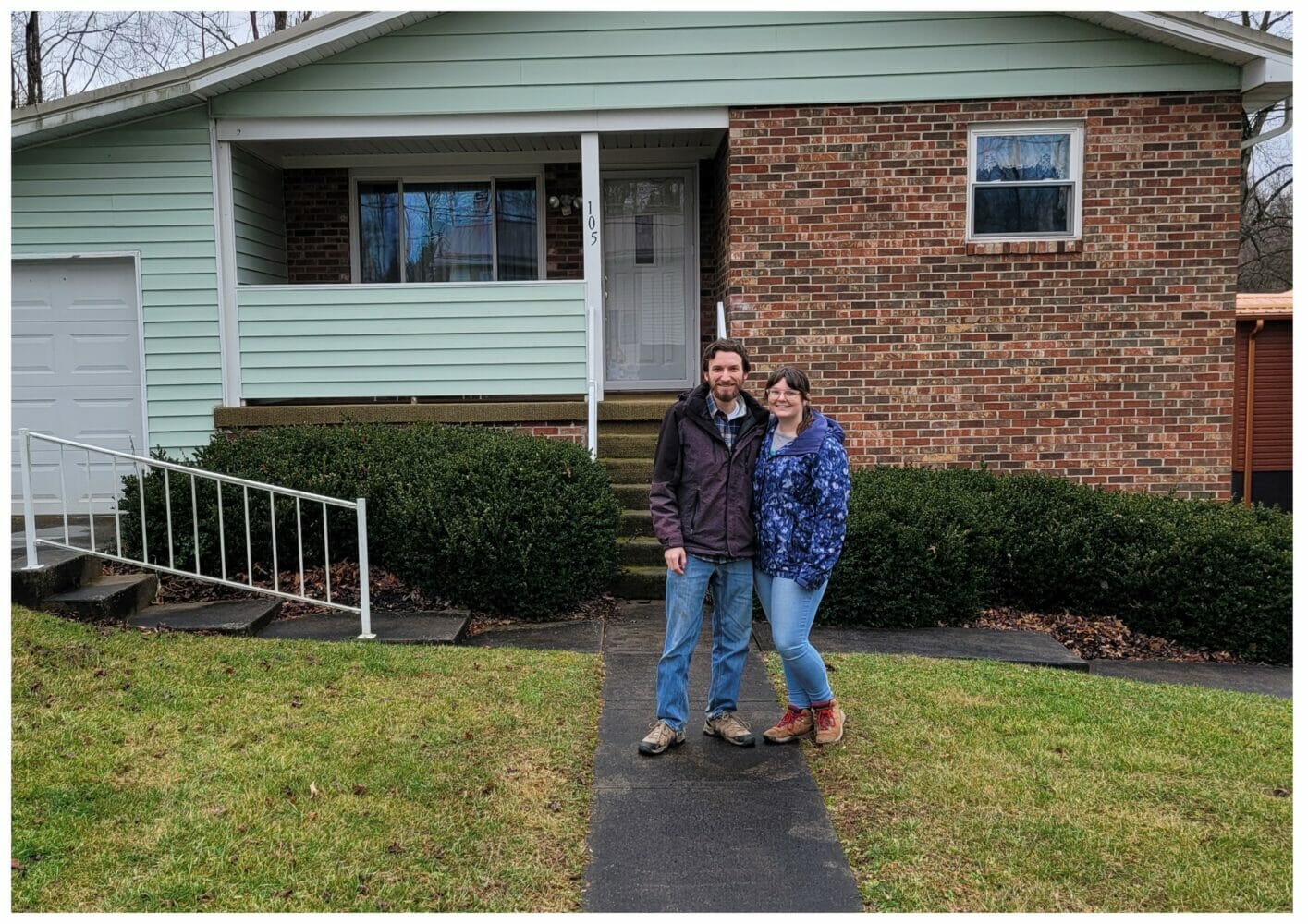
The author in front of her new home. Photography courtesy of Jessica Andreone.
Lawns are not the only option for yards, and sometimes removing grass is the first step to improvement. Jessica Andreone’s story, on the Modern Farmer website (too long since our last link to that great resource), about alternative land improvement resonates with my own project over the last five years:
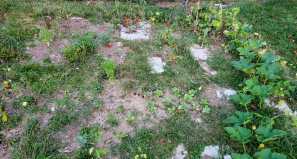
Crop plants growth is stunted from compacted soil.
We Bought a Home with a Sterile Suburban Yard. Our Journey To Bring Life Back is Just Beginning
When we bought our first home, we had grand plans to create a productive and pollinator-friendly oasis. Then the reality of poor soils and extreme weather hit.
My husband and I bought our first home in a small West Virginia town in January 2023. The bright green dwelling sits in the middle of a dead-end street where retirees claim most homes as the original dwellers. From 1978 until now, our house had only one homeowner. So, for the past 45 years, the yard has been a neatly mowed lawn with a single tulip tree.
We had grand plans to install a curated pollinator garden in the front and a vegetable garden with a managed meadow in the back. Since I started my career in the environmental sector, I have preached to anyone who looked in my direction about planting native plants. I boasted about how indigenous flowers would aid pollinators that suffer from habitat loss, store greenhouse gasses and create a buffer against drought and heavy rains. I knew that the US’s 40 million acres of lawns contribute to greenhouse gas emissions through consistent mowing and drink up to nine billion gallons of water daily. If I kept the non-native lawn, not only would I be going against my convictions, I would have to step down from my soapbox and admit to being a fraud.
However, practicing is different from preaching. When we started the quest to revitalize our property, we did not know the extent that our soil was compacted and how climate change was affecting our new town.
When I was younger, I helped my mother with her vegetable garden. I found joy in the feeling of dirt in the creases of my hands and the flavors of homegrown produce that embedded in my memories. We had to fight clay each year, but we still produced a hefty bounty. I wanted to continue the tradition at my first house, and I had no worries when I noticed clay on my new property. However, my childhood garden bordered a wildflower-speckled knoll and the upstate New York wilderness. Now, I am in a suburb dominated by mowed lawns with low plant diversity.
While my husband and I were prepping a plot of land for growing vegetables, it was rare to find roots that spanned more than two inches deep. We would pull up mats of sod to reveal clay that lacked deep-running shoots from nearby plants. The solid mass proved impenetrable to the new growth and my trowel—now bent at an obtuse angle from my efforts. The plants that did penetrate seemed to be struggling due to the lack of drainage and air pathways…
Read the whole story here.
 Organikos