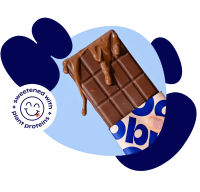
 In our extended family there are several cases of diabetes that have made me interested in sugar and its alternatives. Stevia came to my attention while working in Paraguay, when honey was my primary interest, because stevia is native to that place. Stevia is a taste of place product as much as any other we have come to share in our current work.
 But neither stevia nor have any other so-called sugar alternatives have featured in our work. Still, this article by Yasmin Tayag in The Atlantic fits perfectly as a theme in our pages:
Illustration by Ben Kothe / The Atlantic
A New Sweetener Has Joined the Ranks of Aspartame and Stevia
Unfortunately, it’s still nothing like real sugar.
A few months ago, my doctor uttered a phrase I’d long dreaded: Your blood sugar is too high. With my family history of diabetes, and occasional powerful cravings for chocolate, I knew this was coming and what it would mean: To satisfy my sweet fix, I’d have to turn to sugar substitutes. Ughhhh.
Dupes such as aspartame, stevia, and sucralose (the main ingredient in Splenda) are sweet and have few or zero calories, so they typically don’t spike your blood sugar like the real thing. But while there are now more sugar alternatives than ever, many people find that they taste terrible. The aspartame in Diet Coke leaves the taste of pennies in my mouth. And in large amounts, substitutes are bad for you: Last year, the World Health Organization warned that artificial sweeteners could raise the risk of certain diseases, singling out aspartame as “possibly carcinogenic.”
But last week, I sipped a can of Arnold Palmer with a brand-new sweetener that promised to be unlike all the rest. The drink’s strong lemon flavor was mellowed by a light, unremarkable sweetness that came from brazzein, a sugar substitute green-lighted by the FDA last month. Oobli, a California-based company that sells the lemonade-iced tea and manufactures brazzein (which occurs naturally in West Africa’s oubli fruit), has billed it as a “revolution in sweetness.” Yet like everything that came before it, brazzein is far from perfect: To help mask its off taste, the can had some real sugar in it too. For now, Eric Walters, a sweetener expert at Rosalind Franklin University, told me, brazzein is just “an alternative” to the many options that already exist. None has come even close to the real deal.
The ideal sugar alternative is more than just sweet. It must also be safe, taste good, and replicate the distinct way sugar’s sweetness develops on the tongue. In addition to aspartame and other synthetic sugar alternatives that have existed for more than a century, the past two decades have brought “natural” ones that are plant-derived: sweeteners made with stevia or monk fruit, which the FDA first approved in 2008 and 2010, respectively, can now be readily found in beverages such as Truly hard seltzer and Fairlife protein shakes. Stevia and monk fruit have been used “for hundreds of years by the people who live in the regions where they grow, so I don’t have huge worries about their safety,” Walters told me.

Read the whole article here.
 Organikos