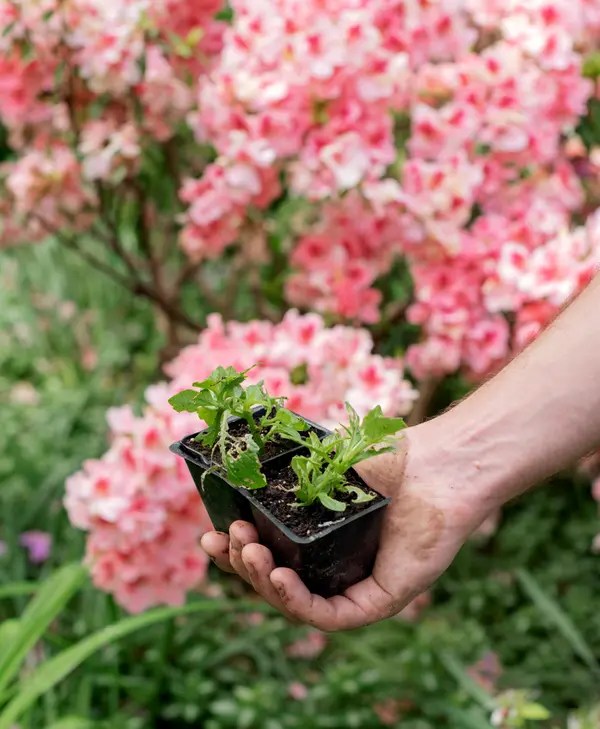
Gardening can provide people with a sense of meaning and purpose. “When you’re working with plants, you’re the nurturer,” said Emilee Weaver, the program manager of therapeutic horticulture at the North Carolina Botanical Garden. Jasmine Clarke for The New York Times
This is good reading following my morning routine in recent weeks, now that the rains have returned. Thanks to Dana G. Smith, who reported this story from Plant Hardiness Zone 8a for the New York Times:
Why Gardening Is So Good for You
Digging holes can be a workout and mood booster all rolled into one.
Last Saturday, I was covered in dirt, my back ached, the scream of a trillion cicadas rang in my ears, and, despite my best efforts, a sunburn was developing on the back of my neck.
I was in heaven.
Many gardeners say that when they get their hands in the soil, they feel stress “roll off their shoulders,” said Jill Litt, a professor of environmental health at the University of Colorado at Boulder. Ike Edeani for The New York Times
Over the course of the day, I planted my summer haul of annuals (a riot of reds, purples and yellows), transplanted some fall-blooming mums and pulled a Montauk daisy that had grown too big for the space. A neighbor took the daisy off my hands, and in return gifted me some iris and lamb’s ear that he needed to thin out of his yard.
For me, gardening is a workout, meditation and opportunity to socialize with my neighbors all rolled into one. And while I’m admittedly biased, research backs up some of my observations that gardening can have real benefits for your mind and body.
Gardening gets you moving.
Shoveling mulch, pulling weeds and lugging around a watering can all qualify as moderate-intensity physical activities. And gardeners tend to report higher levels of physical activity overall, compared with non-gardeners.
In one recent study conducted in Colorado, for example, people who joined a community garden logged nearly six extra minutes a day of moderate-to-vigorous physical activity compared with people who were on the waiting list for a plot. That may not sound like a lot, but it added up to about 42 extra minutes per week, said Jill Litt, a professor of environmental health at the University of Colorado at Boulder, who ran the trial.
“That’s almost 30 percent of the way to meeting the federal recommendations” of 150 minutes of moderate-intensity physical activity per week, Dr. Litt said. “People talk about it as a way to meet these goals and be more active but not having to get on a treadmill.”
There is also some evidence that gardeners, possibly because of this increased activity, have better cardio-metabolic health. One study of older adults found that, compared with those who don’t exercise, people who gardened as one of their main physical activities had lower rates of heart attack, stroke, diabetes, high cholesterol and high blood pressure.
Some of the more vigorous gardening activities, like digging, raking and hauling bags of potting soil, can also serve as a strength workout, challenging muscles in the arms, legs and core…
Read the whole article here.
 Organikos