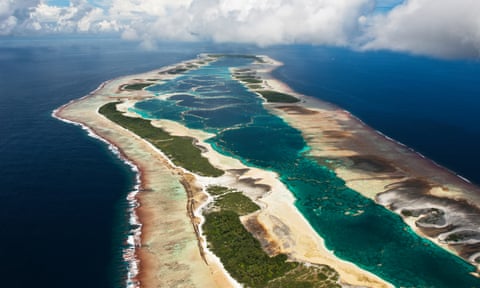
The Millennium Atoll in Kiribati, the Pacific state that is sponsoring Michael Lodge for re-election as ISA leader. Photograph: Mauricio Handler/Getty
Before we leave the subject of oceans, back to the question of how their protection is managed, and by whom.
We are learning today that some of the planet’s smaller nation states have a potentially significant, and clearly long overdue influence on how the oceans surrounding them will be protected:
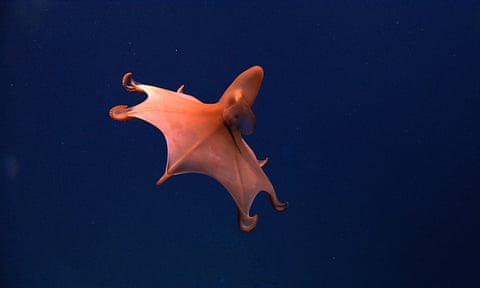
The rare dumbo octopus (Cirrothauma murrayi) is one of many creatures potentially at risk from deep-sea mining. Photograph: NOAA
Inside the battle for top job that will decide the future of deep-sea mining
Marking a pivotal moment for the fate of the barely known ecosystems on the ocean floor, 168 nations will decide this week who will head the International Seabed Authority
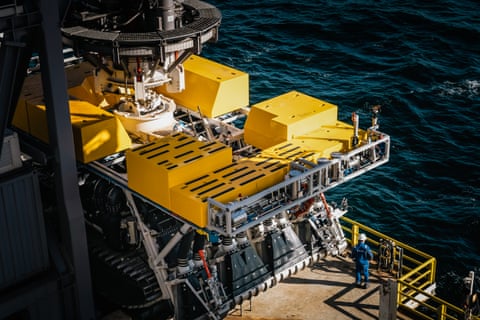
Deep-sea mining exploration trials under way in the Clarion-Clipperton Zone of the Pacific Ocean between Hawaii and Mexico. Photograph: Richard Baron/The Metals Company
Leticia Carvalho is clear what the problem is with the body she hopes to be elected to run: “Trust is broken and leadership is missing.” Later this week, at the headquarters of the International Seabed Authority (ISA) in Kingston, Jamaica, nations negotiating rules governing deep-sea mining face a critical vote that could impact the nascent industry for years: who should be the next leader of the regulatory body?
Carvalho, sponsored by Brazil, is in the running against the current secretary general, Michael Lodge, a British lawyer, who is being sponsored by Kiribati, a small Pacific state.
The battle for leadership might sound to the average person like a remote, technical concern. But the election of the authority’s secretary general comes at a pivotal moment for deep-sea mining and therefore for the future of the world’s oceans.
Calls for a pause on exploitation of the seabed are intensifying, with 27 nations now arguing that there is not enough data to begin mining.
If deep-sea mining goes ahead, scientists warn of large-scale, severe and irreversible harm to global ocean ecosystems that are already threatened by the climate and biodiversity crises.
The ISA is governed by 168 member states, plus the EU, and has a dual mandate: to authorise and control mining “for the common heritage of all mankind” and to protect the marine environment from harmful impacts.
During his eight-year tenure, Lodge has been accused of closeness to the mining industry, overstepping his neutral role and of presiding over an authority that lacks transparency. A New York Times piece published earlier this month also accused him of pushing countries to accelerate the start of deep-sea mining. He denies these claims…
Read the whole article here.
 Organikos