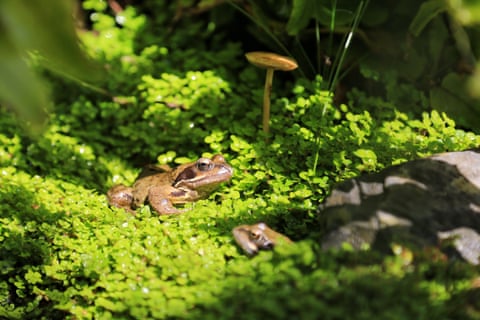
Common frogs and other amphibians will spawn in the most modest of garden ponds. Photograph: Brendan Allis/Getty Images/iStockphoto
There are many variations on the theme of garden as haven in our pages over the years. The common thread is that at the scale of a garden, there is much that the individual can do to support conservation. Thanks to Jules Howard for adding to the theme:
The frogs may be gone, but life goes on: how I regained my faith in gardening for wildlife
Gardens allowed to grow a little wild can be a lifeline for struggling pollinator populations – in rural as well as urban areas. Photograph: kirin_photo/Getty Images/iStockphoto
The extremes of the climate crisis mean it’s harder than ever to provide a garden haven for birds, insects and other animals. Some gardeners are questioning whether trying to do the right thing is time well spent
More than two decades ago, I had the honour of running the world’s last (possibly only) frog telephone helpline. No, this is not a set-up for a punchline. It was a real service. Gardeners would grab the Yellow Pages, dial the frog helpline number and physically manifest, using their voice, sentences most of us would type into Google today: “If I dig a pond, will frogs come?” callers would ask, or: “How can I make my garden more attractive to amphibians?”
My role was simple. I was to fire these callers into action, offering realistic guidance on how gardens could be made more suitable for wildlife, especially frogs. Froglife, the charity that owned the helpline, saw in gardens a way for more amphibian habitats to be secured, away from the countryside which was then (and is still) being ravaged by pollution, land-use changes and more. And so, paid a minimum-wage salary, I spoke to 9,000 callers over a period of about three years.
It was perhaps the best job I ever had. In my spare time, I turned our small concrete backyard into a nature oasis, with two ponds for amphibians. In the years that followed, barely a day would go by when I wouldn’t see a frog stirring or hear the distinctive “plop” of one diving for cover as I walked past the pond. Some years, we had 15 frogs at a time; in spring, the bigger pond became a theatre for raucous, slimy sex. It was like a seasonal soap opera.
Until it wasn’t. Because, as of 2024, all the frogs are gone and no frog helpline can save me from despair. As far as I can tell, the cause of this mass-mortality event was twofold: first, many frogs locally were hit by the heatwave of 2022, which saw temperatures soar to 40C; then came Storm Noa in April 2023, which washed countless blobs of neighbourhood spawn, pairs of frogs still coupling, downstream in a deluge of broiling turbidity. The frogs are gone. And so, naturally, I find myself in a reflective mood. Bluntly, I wonder, was it all worth it? Did my little wildlife garden ever really help, in the long term, frogs and other local wildlife? Were my efforts futile?…
Read the whole opinion here.
 Organikos