Pico Iyer: Global Soul

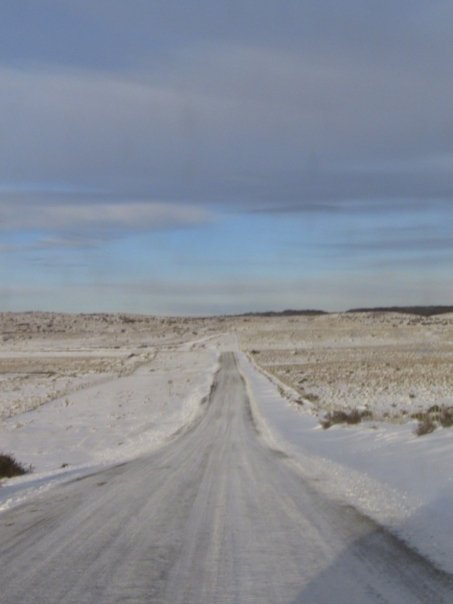
Deserted road on Tierra del Fuego

For me the whole point of travel is to leave yourself behind, to leave your assumptions behind, to become cleared out and to step into another person.

–Pico Iyer

Sometimes I have to wonder what kind of rock I live under.  I mean, really!  Despite my peripatetic lifestyle I seem to be strangely illiterate in “travel writer” terms.  Busy “doing” perhaps?  Perhaps.

So when I received an email from Diwia with a video link and the short note: “Great listening Amie, watch the first 15 mins – you’ll be hooked to the very end”.  I clicked with the clear mind of the uninitiated. Continue reading

The Eye of the Beholder

Chris Jordan, Caps Seurat, 2011

Seattle based photographer Chris Jordan has been making visual statements about mass consumption for over ten years. Using the “artist’s eye” to be able to step back from the overwhelming truths of societies’ excesses, he simultaneously breaks down that mass consumption into its smallest part and its incomprehensible whole.

Jordan uses  commodities  that are discarded daily–plastic and paper cups, newspapers, electronics–as the “brushstrokes” to illustrate the wastefulness  in cultures of consumerism. His photographs place both conscious and unconscious behaviors under a microscope, which is often unsettling, and always thought provoking. Continue reading

Crunch

Hans Gigginger photo from The New Yorker

I consider myself a pretty adventurous eater.  In fact, I will easily go so far as to call myself a “foodie”.  I’ve spent my adult life living on various continents, trying to understand the history and culture of the cuisine wherever I was living.  I’ve patiently explained my dinner party plans to vendors at Parisian fromageries (in hopes they will approve and allow me to complete my purchase).  I’ve “mastered” what I like to call Kitchen Croatian, or a knowledge of food nouns in that language, to be able to market and somewhat communicate recipes to kitchen staff while living there.  Malayalam still totally eludes me, but it is one of the world’s most difficult languages after all, so please don’t hold that against me.

But to the best of my knowledge, I’ve never eaten a bug Continue reading

Wind, Water, Light

Janet Echelman, Her Secret is Patience, Phoenix, AZ, U.S.A. 2009

American artist Janet Echelman has worked in numerous mediums throughout her career and has a long history of working collaboratively with communities outside of her own culture, whether it be Balinese textile artisans or Indian bronze castors.

A Fulbright lectureship about painting brought her to Mahabalipuram, India, a fishing village in Tamil Nadu famous for sculpture. But it was watching the millennia-old craft of weaving and working with nets that ultimately inspired the work that now defines her art. When she watched the men making piles of nets on the shore she began wondering if the material was “a way to create volumetric form without heavy, solid materials.”   Continue reading

Bambouzle

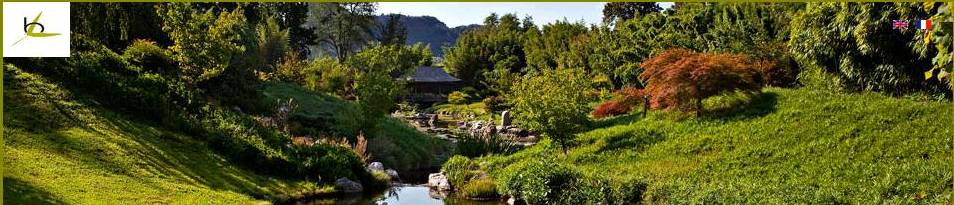
France has a horticultural history that goes back centuries, from the forested hunting grounds to the formal gardens of kings.  But “Liberté, égalité, fraternité” leads to parks for the people, offering countless opportunities for visitors to fulfill their desires to commune with nature.

Continue reading

Le Vélo Bambou? Le Wow!

Bicycles are ubiquitous forms of transportation in my part of the world.  Previously I’ve posted how they can mean more than the sum of their parts, or in the urban art example, they can represent only their parts!

So what happens when form and function converge with sustainability, balance and simplicity? Continue reading

Pause and Reflect

Land Art Installations can be as varied as the land they sit upon and the vision of the individuals who create them.   Sometimes urban and often in wilderness areas, they almost always offer a window into the hearts of their creators.

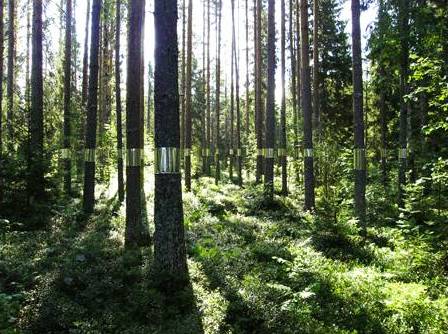
I’ve spoken about the convergence of art and architecture in previous posts, and Swedish firm Kjellgren Kaminsky Architecture was one such example.   Whereas the installation Clear Cut makes a visual statement about a particular conservation issue, Reflecting Time is a study of the interaction of  light and landscape.

The team headed north along the Norwegian coast, their only tools for this ephemeral installation 100 simple reflectors and the cameras they would need to record the work.  They climbed the seaside mountain, placing the reflectors in straight, parallel lines that defied the undulating landscape.  Then they spent time by the sea itself, marking the coast with tiny glimmers.

The tide is strong in Norway shifting the sea level up to 2 meters every day. A line of reflectors marked the coast, sometimes the reflectors lay on the ground later they float in the water. We made a ring further out in the sea untouched by the tide. It had an ephemeral glow that fascinated us.

In both cases the changing light and tides did the work, the art lay in meditating on the results.

October Air

National Geographic Magazine, Vol. 1

There must be something in the air.  Some Universal Energy of Inspiration that touches down in October, if not annually, then biannually for a brief moment in time. Or is it just coincidence that two events of such simple, yet great significance should have happened on the same date?

What had begun as an elite club for academics and wealthy travel enthusiasts was reorganized in January 1888 into  “a society for the increase and diffusion of geographical knowledge.”  The National Geographic Society was incorporated a few weeks later and the first issue of the magazine was published as its official journal on October 1st.

William Morris Davis, often called the “father of American Geography” was an early member and contributor who wrote the introduction to Vol.1 of the newly minted magazine.

History became a science when it outgrew mere narration and searched for the causes of the facts narrated; when it ceased to accept old narratives as absolute records and judged them by criteria derived from our knowledge of human nature as we see it at present, but modified to accord with past conditions.

The society’s historic mission has continued for well over a hundred years, extending beyond the specifics of geography to increase and diffuse geographic knowledge while promoting the conservation of the world’s cultural, historical, and natural resources.”

And so we come to conservation.  Continue reading

When Wheels Start Turning

“180+ countries. 2000+ events. A single day to move beyond fossil fuels.”

Even if you missed one of 350.org‘s September 24th Moving Planet events, the goals of reducing CO2 in the atmosphere is a 365 days per year project.

Whether its with Climate Ride in California, Clif 2 Mile Challenge in your neighborhood, or the Great Power Race in 2010, there have been many ways to get involved in this global call to action.

365 Days a year; 40,075.16 km around the globe; cast of thousands; cost? Priceless.  

Get Moving! 

Field of Dreams

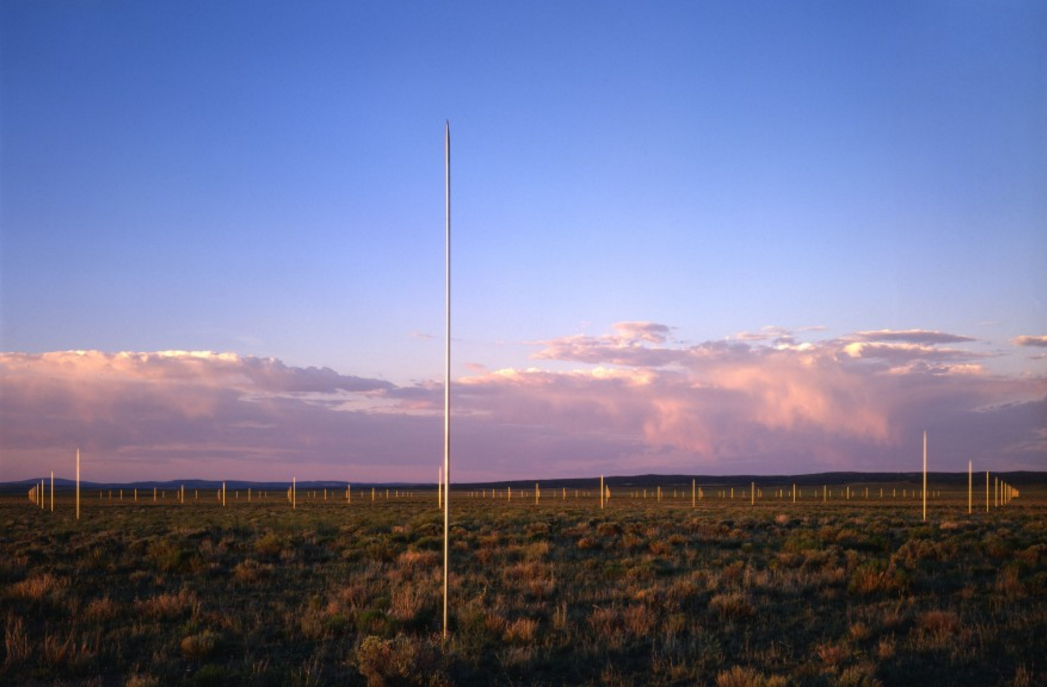
Walter De Maria, The Lightning Field, 1977. © The Estate of Walter De Maria. Photo: John Cliett

Walter De Maria, The Lightning Field, 1977. © The Estate of Walter De Maria. Photo: John Cliett

Based on his oeuvre one would say that Walter De Maria is an artist fascinated by mathematical precision and order. His work at Gagosian Gallery in New York City or The Nelson-Atkins Museum of Art in Kansas City in the United States or even the Chichu Art Museum in Naoshima, Japan exemplify this focus on the predictable progression of sunlight as it relates to planetary rotation and the perfection of spheres.

Continue reading

Tree House Redux


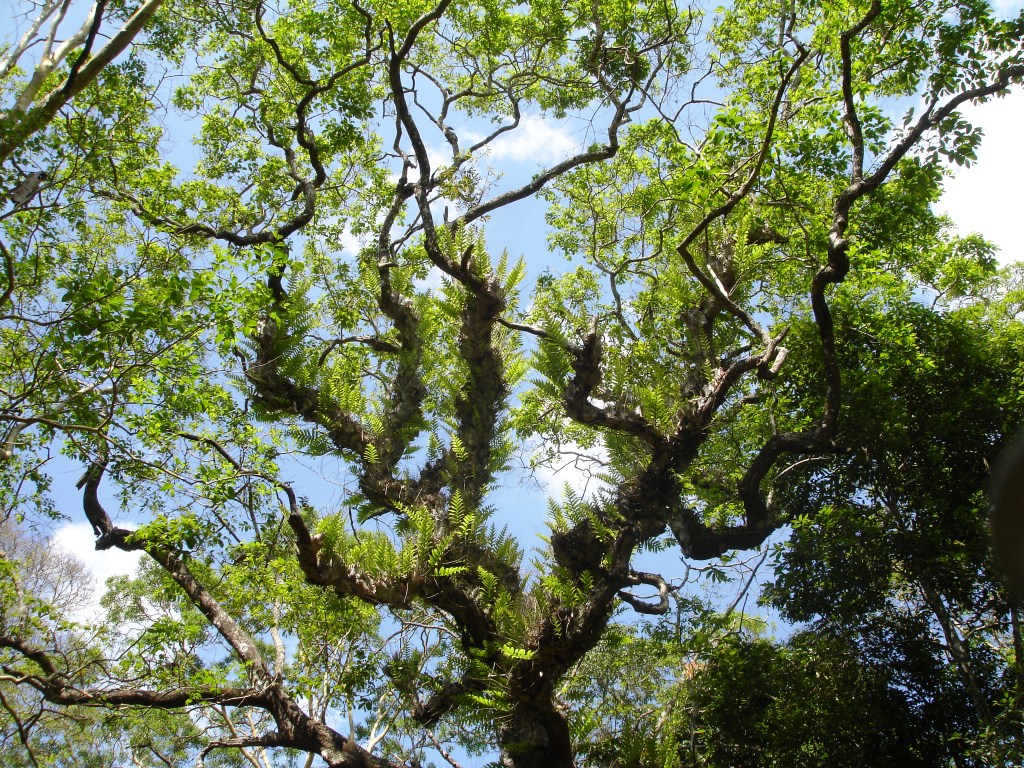
When I ponder the question “why I travel” I often return to the same answer; I travel to gather new experiences, to learn, to refresh, to reconnect with something lost.  I think we all have the tendency to become complacent with the familiar. Even one step outside of that familiarity brings us closer to a broader vision.  And for many who live in urban areas, the drive to step outside is a power in itself.  I believe we are programmed to feel connected with the outdoors, soothed by the power of green, taking in spiritual chlorophyll like deep breaths, to speak metaphorically.

But not everyone who craves communion with nature is ready to “rough it” in her embrace.  An innovative hotel built in Sweden’s Boreal forest (the same forest region that has inspired Land Art Installations) offers an inspiring way to wake up amid birdsong. Continue reading

The Forest For The Trees

“Nature is my manifestation of God.
I go to nature every day for inspiration in the day’s work.”
― Frank Lloyd Wright

Architects taking their inspiration from nature isn’t an innovation, in fact, its retrieving what has often been forgotten. Sometimes that inspiration leads them outside of the building process altogether and into the sphere of Art, or to be more precise, into the sphere of Land Art Installation. Continue reading

Biophilia: E.O. Wilson, from Thoreau to Theroux

In December 2010 the Oxford English Dictionary (fondly called the OED) added 2,400 entries, including “biophilia“.  But E.O. Wilson published the term (as well as it’s city kin) in 1984 in the book of the same name.

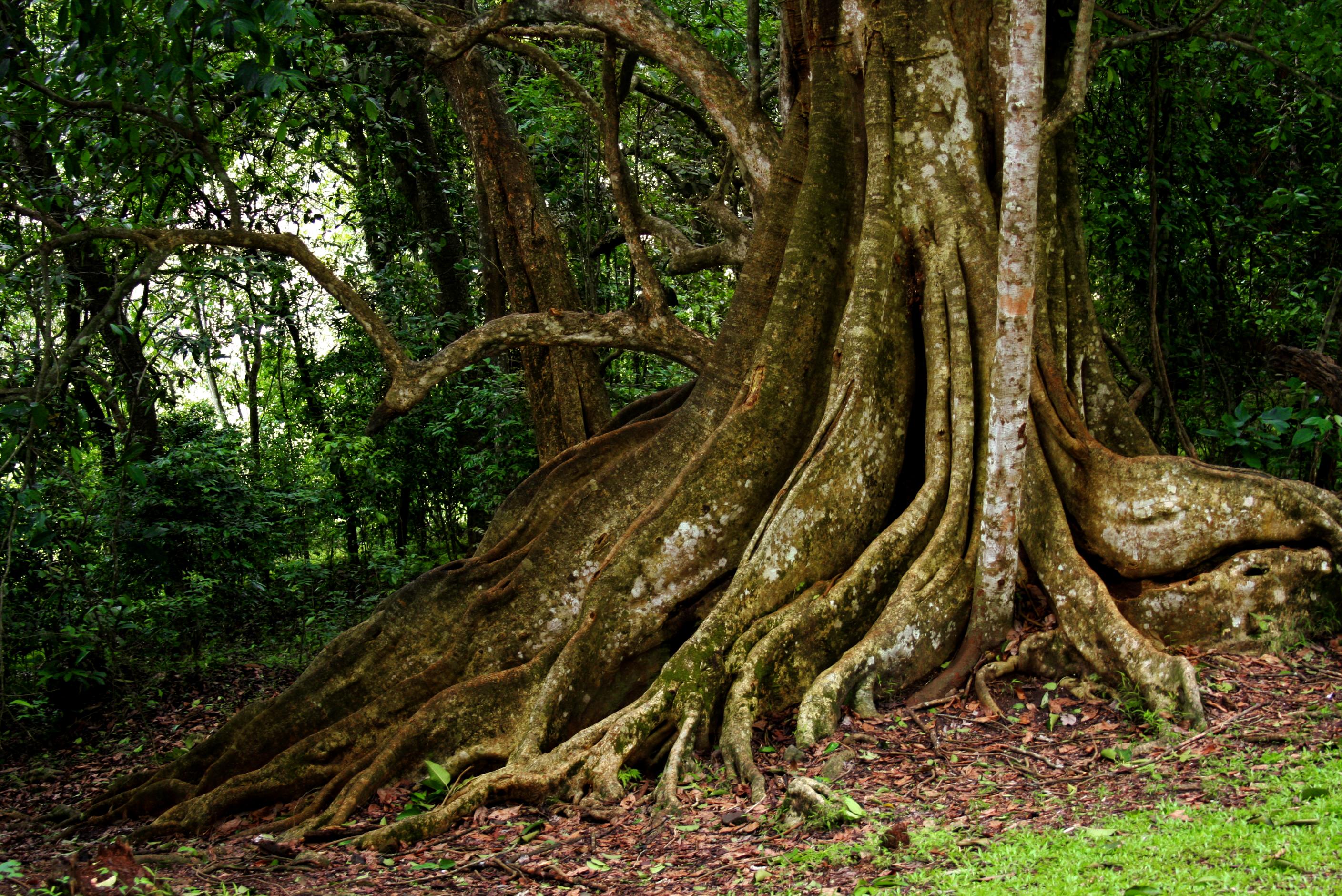
My attention was on the forest; it has been there all my life.  I can work up some appreciation for the travel stories of Paul Theroux and other urbanophile authors who treat human settlements as virtually the whole world and the intervening natural habitats as troublesome barriers.  But everywhere I have gone–South America, Australia, New Guinea, Asia–I have thought exactly the opposite.  Jungles and grasslands are the logical destinations, and towns and farmlands the labyrinths that people have imposed between them sometime in the past.  I cherish the green enclaves accidentally left behind. Continue reading

Captivating Vision

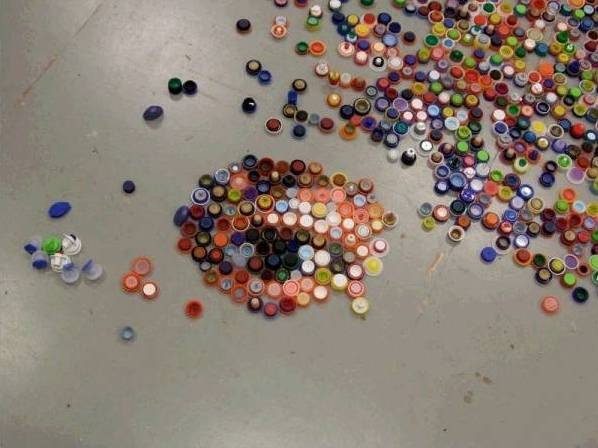
Mary Ellen Croteau’s “Nested Caps/eye”

Even the most enthusiastic recycler gets bogged down by bottle caps.  Their chemical make up is different from the bottles they top, so often they don’t fit into the categories of those ubiquitous numbers that are ascribed to other plastic items.

Artist (and self proclaimed Agitator) Mary Ellen Croteau has a history with statement art and commenting on the quantity of plastic waste has been part of her work for some time.  She’s used both bags and the caps to create work that is both captivating and provocative. Continue reading

Biodiverde

I live in a very green land. Especially post monsoon the landscape of Kerala is dotted with all shades of green like a pointillistic painting.

There’s the chartreuse of new growth tea. The Chromium oxide green of the lower, more mature leaves. The olive green of coconut fronds or the sage of the pineapple top. The celadon of bamboo, the sap green of buffalo grass or the emerald of the banyan tree….all the greens that blend when you squint into this verdant landscape.

The word green is closely related to the Old English verb growan, “to grow”.  It makes us think of nature, of biology, of ecology, of prosperity, even of innocence.

Do I need to mention that green happens to be my favorite color?

But I also spent many years of my life in parts of the world where the Autumnal Equinox means crisp air and changing leaves. And when the chlorophyll levels drop the spectrum changes to include the colors of spice– of turmeric, cinnamon, nutmeg and mace, with a healthy dose of dried capsicum thrown in with the help of the maple trees.

Unless someone from another part of the world sends me photos of this annual metamorphosis I have only the poignancy of memories. But Christophe Niemann is always a good choice to add levity to longing.

“Vella-kkaran!”

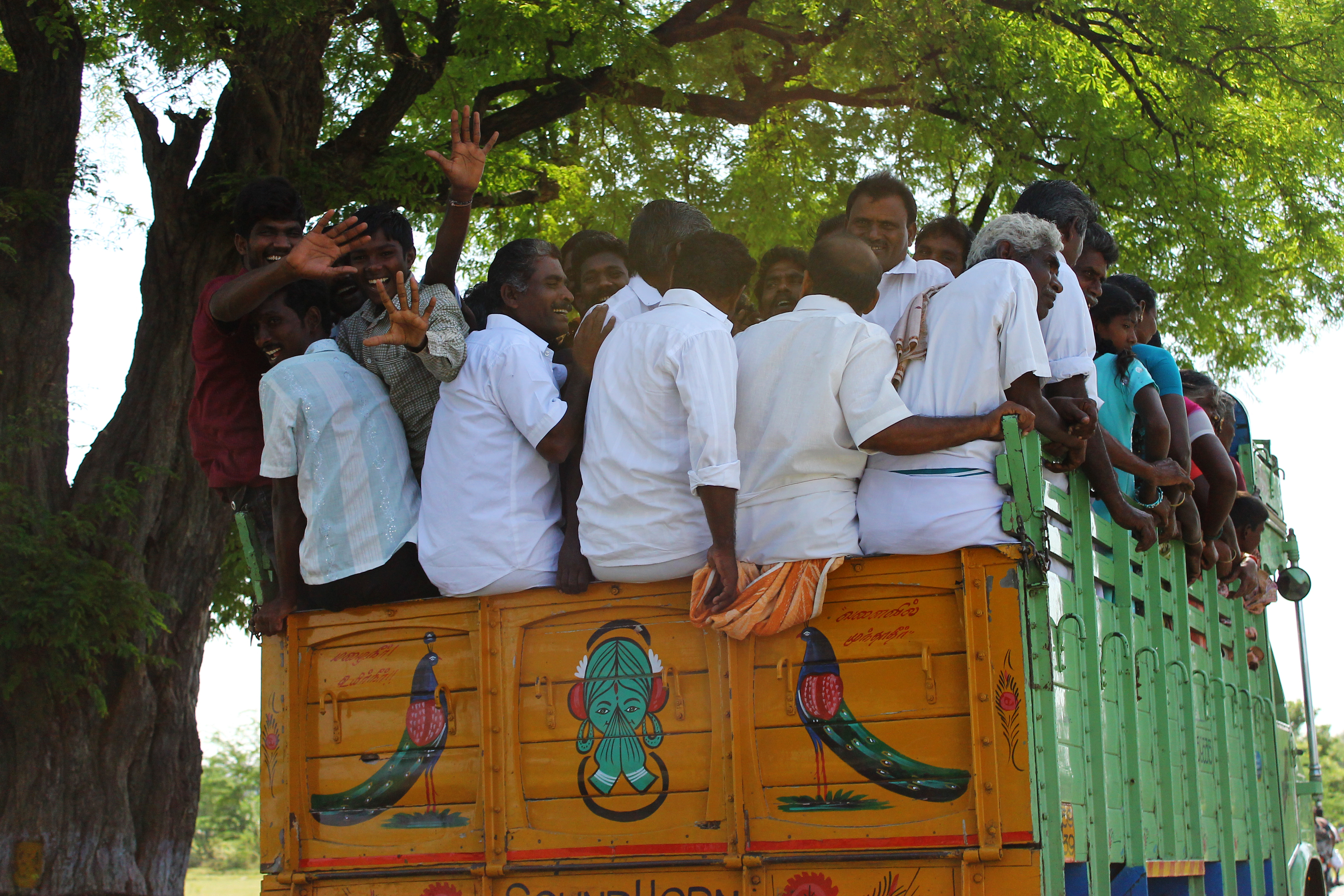
A group of celebratory Tamils on route to a festival

On a recent road trip into Tamil Nadu I was really struck by the ways it differed from Kerala. Although the states are direct neighbors, and many Tamil live and work in Kerala, the contrasts were striking.

They were small differences, subtle even, but enough to give the states a different flavor, if you will. Maybe its that Keralites seem a bit more serious, a bit more focused on their modernity and business acumen. There was something more colorful about the way life was portrayed next door. Although there is the old adage that the “grass is always greener on the other side”, an irony in this case to be sure, as Kerala is a far greener state in almost every meaning of that word.  (I highlight the word almost because, as Sung wrote in a previous post, much of the produce eaten in Kerala is grown in Tamil Nadu, despite their far lower rainfall.)

The short time I spent in the state left me with an impression of a less mechanized world.  A land of brick works and goat herds, of Bullock carts as lorries, of fields and fields of crop cultivation. Continue reading