Nature’s Art

Our relationship with the natural world has shifted considerably along with our technological advances.

The drawings in Lascaux morphed into Egypt’s hieroglyphs; into Greece’s elaborately painted frescos and urns; into the Renaissance’s Nature morte. 

Photo by Milo Inman

But the more precise the depiction became, the more likely it was that the animal in question had to meet its demise in order to be immortalized. Continue reading

“I just want to say one word to you. Just one word….Plastics” *

Yes, Plastics.  That ubiquitous, universal petroleum product that no one but a Hottentot can pass a day without touching.

It’s impossible to conceive of a world completely devoid of plastics, but we certainly can conceive of alternatives to at least some of its uses.  Forums such as Fortune’s Brainstorm Green bring together innovators and day dreamers with tangible results.

Eben Bayer and Gavin McIntyre, co-founders of Ecovative Design, aren’t much older than Benjamin Braddock *  was when he received that erstwhile advice. Continue reading

Pepper Terroir

Chili.  Chili Pepper.  Capsicum.  Multiple monikers for a simple fruit in the nightshade family that has successfully colonized all cultures around the globe.

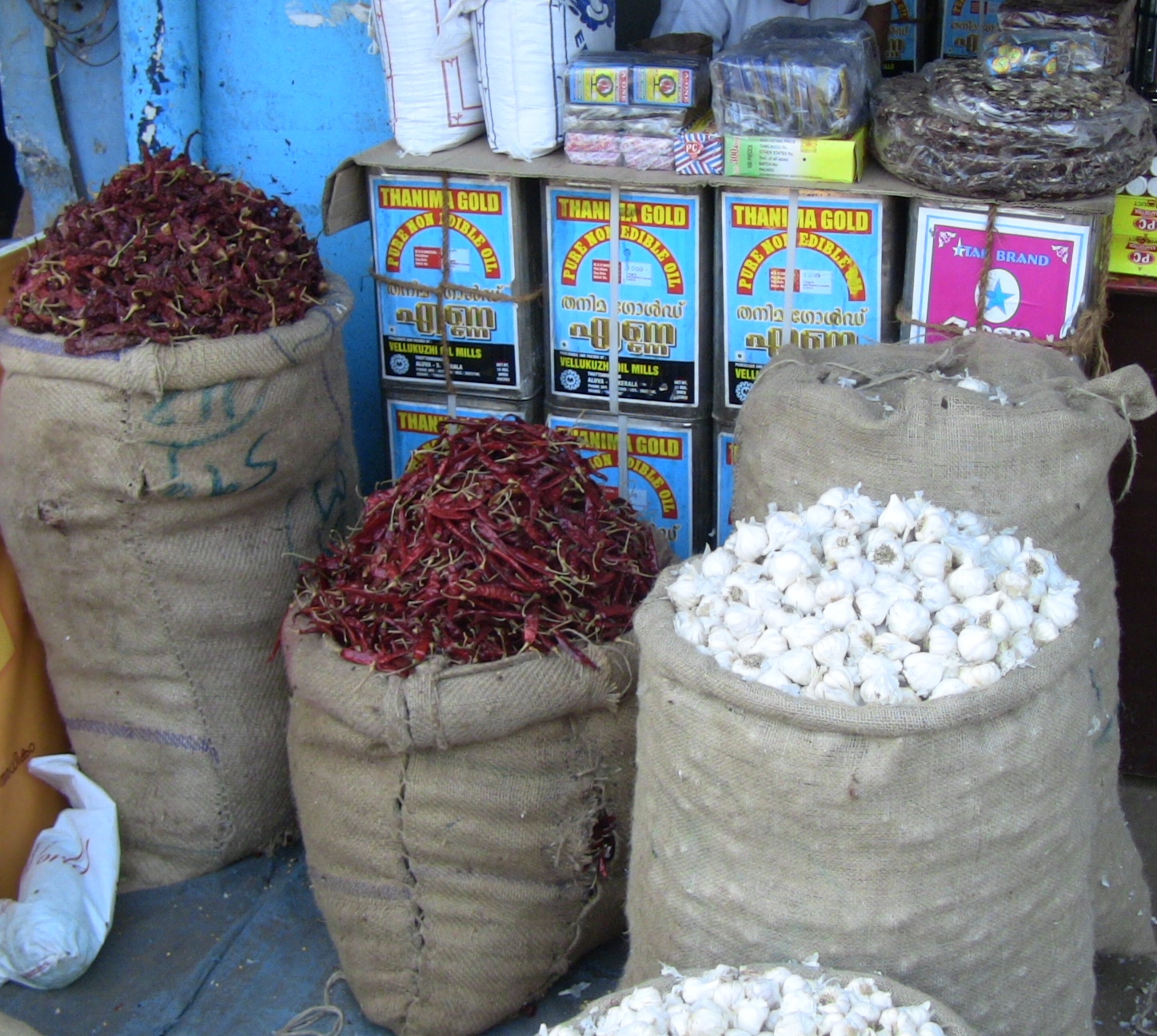
Chili Peppers and garlic at the Ernakulum Market, Cochin

This new world crop was part of the so called “Columbian Exchange”, using those newly opened passages to cross oceans and then continents.   Both the Spanish and the Portuguese had interests and influence across Asia and India, and these fiery fruits were quickly incorporated into local cuisine.

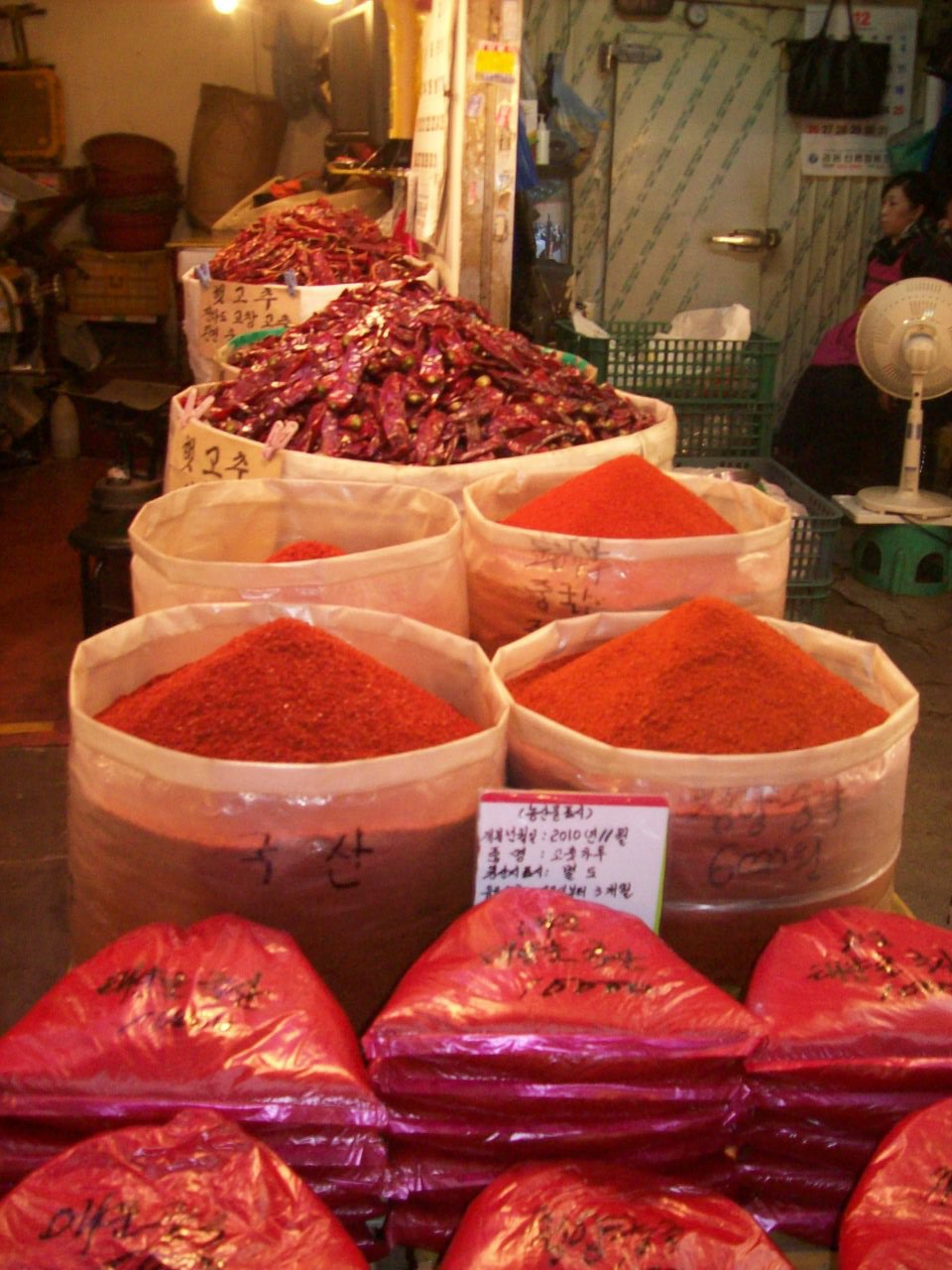
Chili Peppers (whole and ground) at Yangnyeong Market, Seoul

Oaxaca, Mexico has been a culinary mecca for decades and the chili has played an enormous role.  A market excursion wouldn’t be complete without a visit to the chili stalls.  As I’ve written in previous posts, this form of “shopping” goes way beyond simple provisioning.  It’s a both lifestyle and a lifeline to a different time…

Mark Bittman is referring to a particular terroir in his article.  But using an anthropomorphic conceit I’ll ask readers to consider the concept of “slow food” as a citizen of Pangaea.

A Better Tea Party

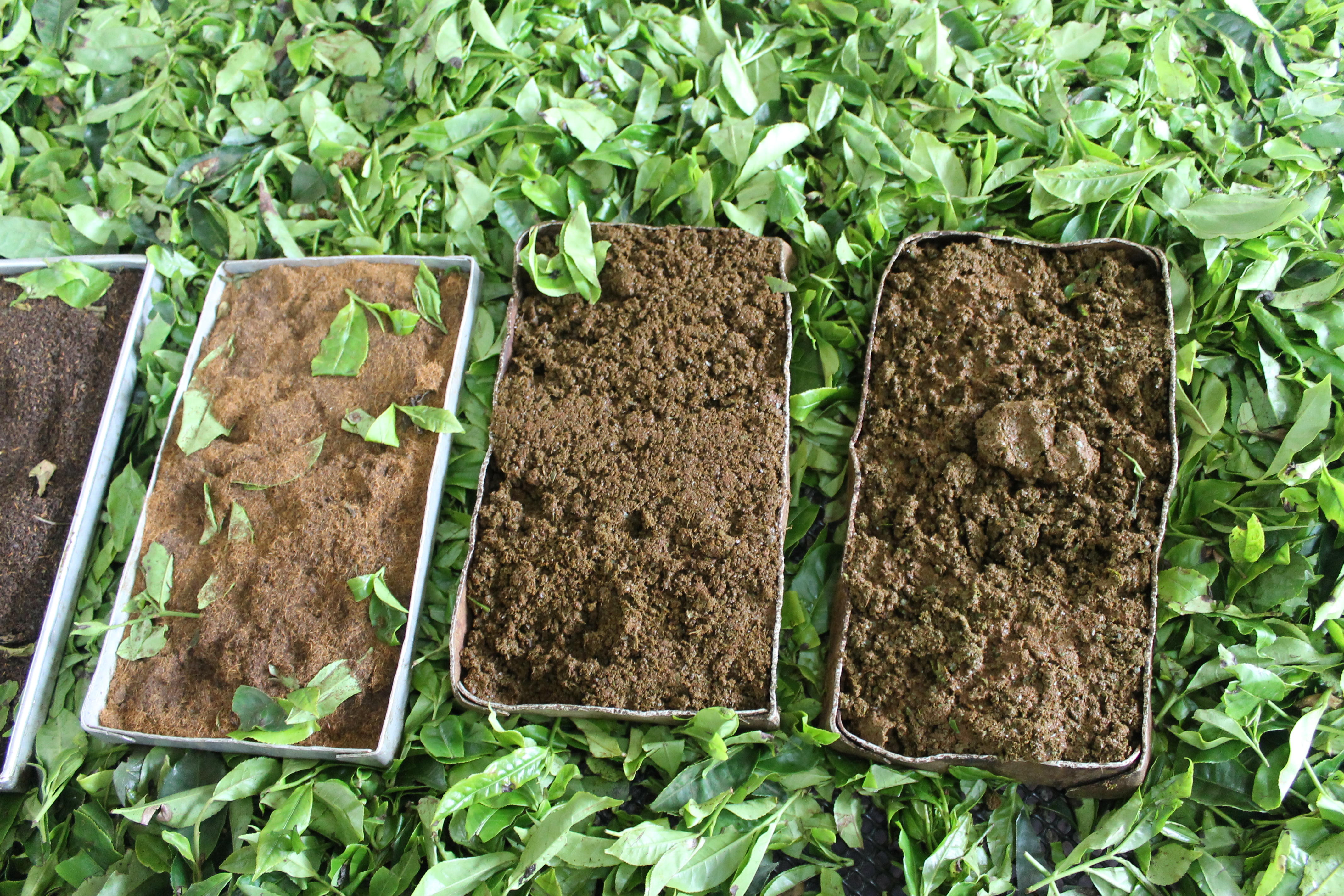
Our visit to Munnar’s High Range Tea plantations gave us more insight into the history of the drink than just the lively culture of the “cuppa”.

Traditionally called Chai, tea has been the backbone of numerous communities in the mountainous areas of India and Sri Lanka (formerly known as Ceylon). Schools, health clinics and even Hindu temples were built by the plantations for the betterment of the community.  The Shristhi Welfare Centre, founded by a local tea plantation, sells delicious High Range strawberry preserves and handmade paper products that contributes to the rehabilitative vocational work of physically and mentally challenged children of the plantation workers.  Unfortunately they were closed on Sunday when we wanted to visit.

There’s more to tea than meets the palette.  I will be writing more about the Shristhi Welfare Centre, and its relation to tea, in posts to come.

The Passions of Nature

Events around the globe provide examples of Mother Nature flexing her proverbial muscles, humbling the strongest among us with her power and reminding each of us who is boss.

But if “hell hath no fury like a woman scorned” we can also remember that same potency is the very stuff of life itself.

Snowy Charisma

There just seems to be something about Owls.  Wisdom personified.  Avatar of the Greek Goddess Athena and also of the Hindu Goddess Lakshmi.  Which came first?  To complicate matters, in other ancient traditions they represent less desirable qualities (bad omens in Arabian mythology, and death in some African and Mesoamerican cultures).

I can almost picture a Zack Snyder battle on the big screen covering all this territory.

Meanwhile they remain charismatic members of the ornithological world.

According to veteran Owl researcher Denver Holt:

 “People pay attention to owls more than other birds because they look like us,” he said. “They have a symmetrical face, eyes facing forward, a round, flat face and a round head with feathers that look like hair.”

In his New York Times article Jim Robbins writes that owls are not only harbingers but barometers, helping us understand the status of fragile ecosystems.  Daniel J. Cox’s photographs give readers a stunning view of both the owl’s majesty and scientific importance in these studies.

Bird of the Day? Let’s call these Strigiforme ambassadors the Bird of the Hour!

Of Mist And Maize

We’ve lived in India a year now (more on that in another post) and for much of this time I’ve wanted to visit Munnar, the iconic tea-laden hill station in the Western Ghats.  Most of our mountain excursions have been to Thekkady, a place we’ve grown to love for its proximity to the Periyar Tiger Reserve, and the team we work with at Cardamom County.

This weekend we had the best reason for a change of route–to scout a prospective organic farm that might join our portfolio of properties under management–so I was looking forward to also discovering the differences between these two hill stations.  I did in fact find something different in Munnar, but not in the way I was expecting it.  Continue reading

Collaboration Without Borders

Until they mate, acorn woodpeckers devote their time to gathering food for their relatives’ young. Credit: Walter Koenig

Let me tell you why I love Tuesdays.  Tuesdays are the designated “Science” day in the New York Times.  I should also say that I love Wednesdays, too!  That would be the “Food and Wine” day.

The fact that today is Friday only goes to show that I don’t always have time to view the paper on a daily basis.

In light of the Vijaykumar Thondaman‘s Bird Of The Day posts, I was excited to see this article about the collaborative nature of this species of woodpecker.

Sindya N. Bhanoo writes:

Acorn woodpeckers are industrious, cooperative birds that live in family groups. Each family has several “helper” woodpeckers that do not breed. These birds devote their time to gathering acorns and other food for the young.

In other words, they’re the equivalent of  ornithological  “nannies”.

I hope you’ll agree that the concept is interesting…and the photo isn’t bad, either!

It’s A Tough Job…

One of the many hats I wear within my La Paz Group responsibilities is orienting our new interns and visiting colleagues to the Kerala experience.

The usual itinerary includes a visit to some of the cultural sights at Fort Kochi, as well as Backwater excursions and of course, Thekkady and the Periyar Tiger Reserve.

I think I can say without reservation that each intern who enters the reserve has expressed the clear desire to encounter one of India’s most charismatic fauna–the elephant– and some have been luckier than others.

An important part of Indian mythology and culture, here in Kerala elephants were once called “sons of the Sahya”, meaning “sons of the Western Ghats”–referring to the mountain range that not only forms the border with a neighboring state but represents the heart of this one. Continue reading

Foraging for Plenty

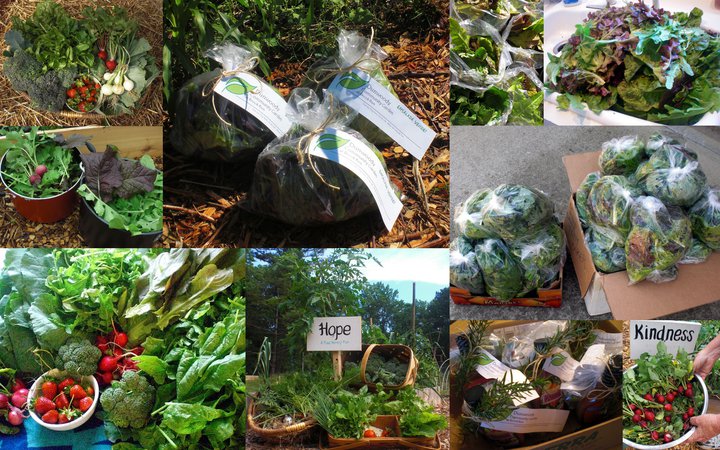
When I lived in either tropical or Mediterranean environments it was never surprising (but always exciting) to see trees and bushes laden with fruit in their season; mangoes, citrus, and papaya in Costa Rica, or figs, pomegranates and lemons on a Croatian island.  But when we temporarily relocated to Atlanta I was happy to discover similar levels of abundance in both urban and suburban environments.  In some cases there were trees that looked like they had outlived what some in the neighborhood are wont to call “the war of northern aggression”, such as the pear trees owned by the Dunwoody Preservation Trust, while in others it was a fresh commitment to collective action like the Dunwoody Community Garden where food pantry harvesters pick, wash and bag lbs of produce from donation plots to distribute to a local food bank. (Current estimates for these initiatives are over 1,500 lbs of produce plus 567 lbs of pears to be exact!)

In a time of disparity between the amounts of fresh food produced in the world and the number of people who go without it, I am happy to participate in and proselytize about programs that help alleviate this  imbalance. In the United States Community gardens are springing up around the country on both public and private land, in likely places such as empty lots, school yards and church yards, as well as surprise locations like urban rooftops.  And while those gardens are used by individuals to allow food security for their families, a large portion of them also plant with surplus in mind in order to donate to local food banks.  Continue reading

A Splashy Finish

Devas Chundan wins Nehru trophy boat race

“Alappuzha, Sunday, August 14, 2011: In a photo finish, snake boat Devas Chundan powered by oarsmen of Jesus Boat Club lifted the coveted silver trophy in the annual Nehru Trophy Boat Race, billed as the country’s biggest water sporting event, at Punnamada Lake here on Saturday.

Devas whizzed past Karichal Chundan of Freedom Boat Club and Muttel Kainakari of United Boat Club in a thrilling race….”

*     *     *

Here’s how Sung saw it:

Continue reading

A Round Of Races

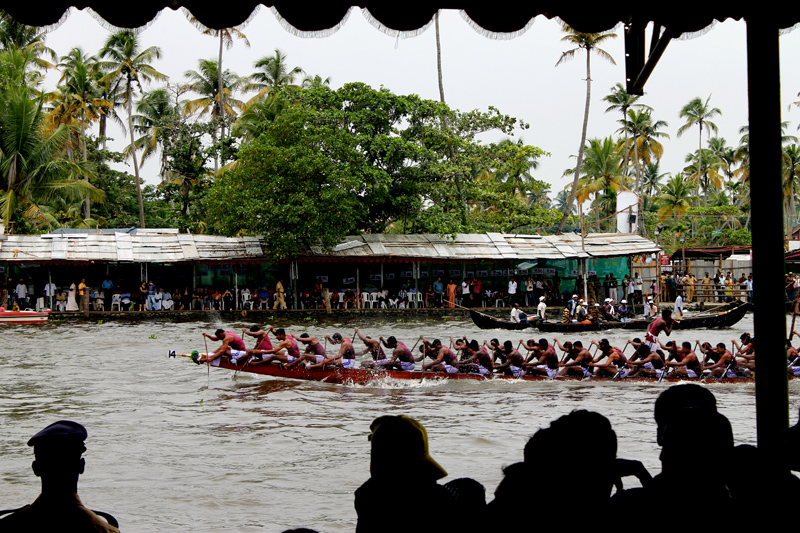
About one year ago today Crist, Milo and I fairly stumbled out of the Cochin Airport after traveling from Ithaca, New York*** and were whisked to view one of Kerala’s endemic sporting events, the snake boat races. Backwaters villages compete with one another in what traditionally commemorated the carrying of idols to the state’s many magnificent temples.

We had missed the fabled Nehru Trophy Race last year by a few days, but had arrived in time to see one of the other many races that occur every year around the Kerala harvest festival of Onam. The snake boats vary in size but the largest are over 50 meters long and slightly more than 1 meter wide with a high curved stern that represents the raised hood of a snake.  It isn’t only the length and shape of the boat itself that is impressive.  These races are almost certainly (someone please correct me if I am wrong) the sporting event with the largest number of members in a single team:  manned (or “womanned”, as the case may be) by over a 100 oarsmen who row in unison to the fast rhythm of `vanchipattu’ or boatmen’s song.  The boats are decorated for the races with flower garlands, adding an air of festivity to the shouts, songs and splashes.

Yesterday (as you can see in the photo above) we had seating in a covered pavilion Continue reading

Carpe Fructus!

Recently, after finishing my shopping at the central market we were on the return drive when I glanced to my left and saw a pushcart full of Rambutan and Mangosteen.  I quickly asked Shibu to pull over so I could make sure it wasn’t my imagination.  I have to acknowledge that this was one of the many market-going moments when I wished I’d remembered to tuck the camera into my bag!

The cart had a pile of each fruit…the rambutan (looking like a Martian lychee covered with rubbery “hairs”) ranging from dark red to brownish maroon, and the mangosteen, a beautiful purple brown bordering on eggplant with little stems attached to a woody cap like a circle of flower petals.


There were more mangosteens strung up like Christmas garlands by their stems.  Continue reading

Fruit Hunters

There’s a particular fruit stall that I frequent on Thevera Road. Its wares almost literally spill out onto the street, with filled bins overflowing the boundaries of the shop interior, fruit stacked high on shelves going up the ceiling on both walls of the narrow space. The back of the shop has a few tables where people can purchase fruit drinks, but I think the majority of their sales are of the fruit themselves.

There always seems to be something new, depending on the season (or week within the season). One day I entered to find a table overflowing with small, reddish purple plums. I’d never seen what I would call “stone fruit” in India before, so I excitedly pulled out one of my cloth bags and started picking through the pile for the ripest looking specimens. When I see plums it reminds me of living in Europe—where I used the multiple varieties in my version of the classic Tarte Tatin. Before living in Paris I actually had no idea there were so many types of plums, but as summer progressed new varieties would arrive at the Marché, each with more melodic names than the last: Reine Claude, Mirabelle, Belle de Louvain… and with each addition I would remake the tarte, and the family would pronounce that each one was the “perfect” plum for the recipe, eaten of course with a spoon of crème fraîche and the guilty expression of one caught licking the plate upon completion.

Here in India I brought the bag of plums home Continue reading

“To Market, To Market…”

Living abroad has illustrated vast differences in how one procures or purchases their food.  Although U.S. style supermarkets exist outside those borders, there are a world of other options visited on a daily basis elsewhere.

In France for example, one can indeed go to the “Hyper-Marché”, fill up your cart and be on your way.  But it is far more interesting to shop at your neighborhood street marché, where depending on where you live you can fill most of your culinary needs.  Even a small neighborhood would have a temporary agricultural market at least twice a week, and these would usually include cheese makers, and stalls with olives, cured meats and the like as well.  That’s not including the plethora of boulangeries, fromageries, boucheries, pâtisseries….my mouth is watering too much for me to continue!

Costa Rican towns have their weekly Feria de la Agricultura—filled with fruits, vegetables, eggs, cheeses, flowers and baked goods. On the southern tip of Croatia, Dubrovnik had multiple markets, some stationary like the one at the new Gruž Harbor and some  “floating” in the squares of the old city.
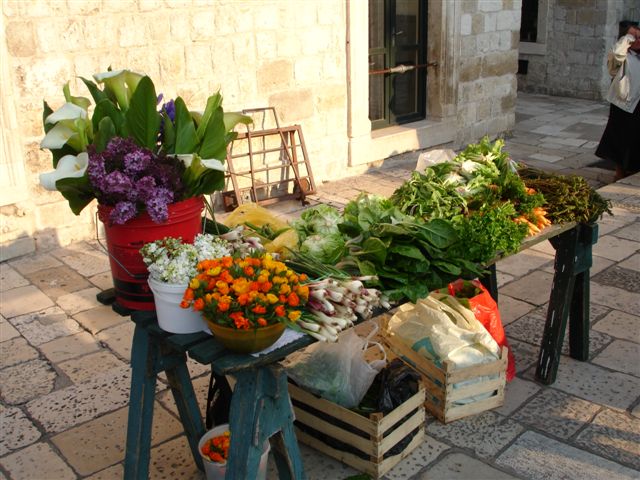
All forms of Farmer’s Markets can now be found all across the United States, one needn’t travel abroad to find them.  But I don’t think any of these compare to the sensory experience of an Indian market. Continue reading

Take Out Breakfast

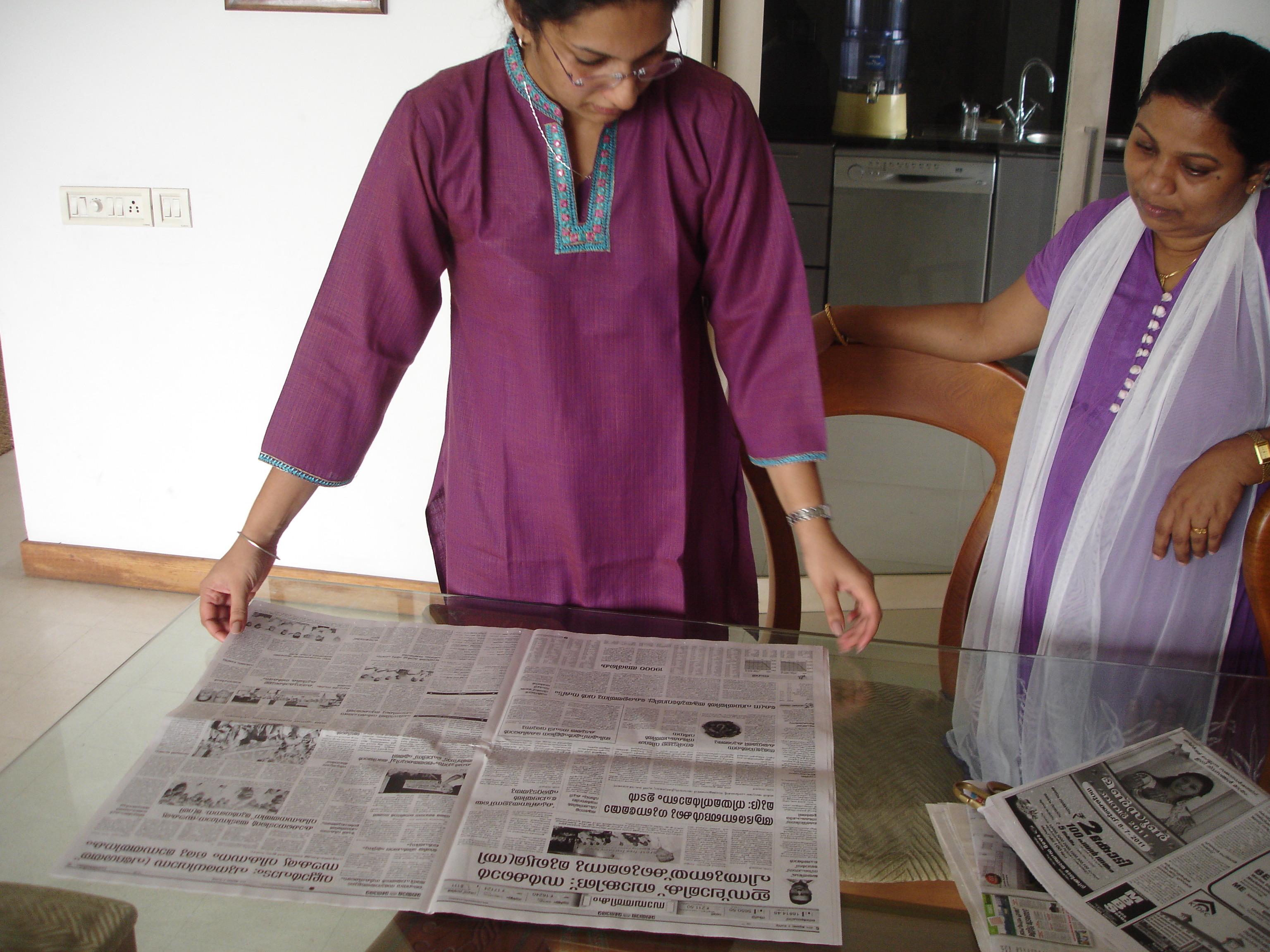
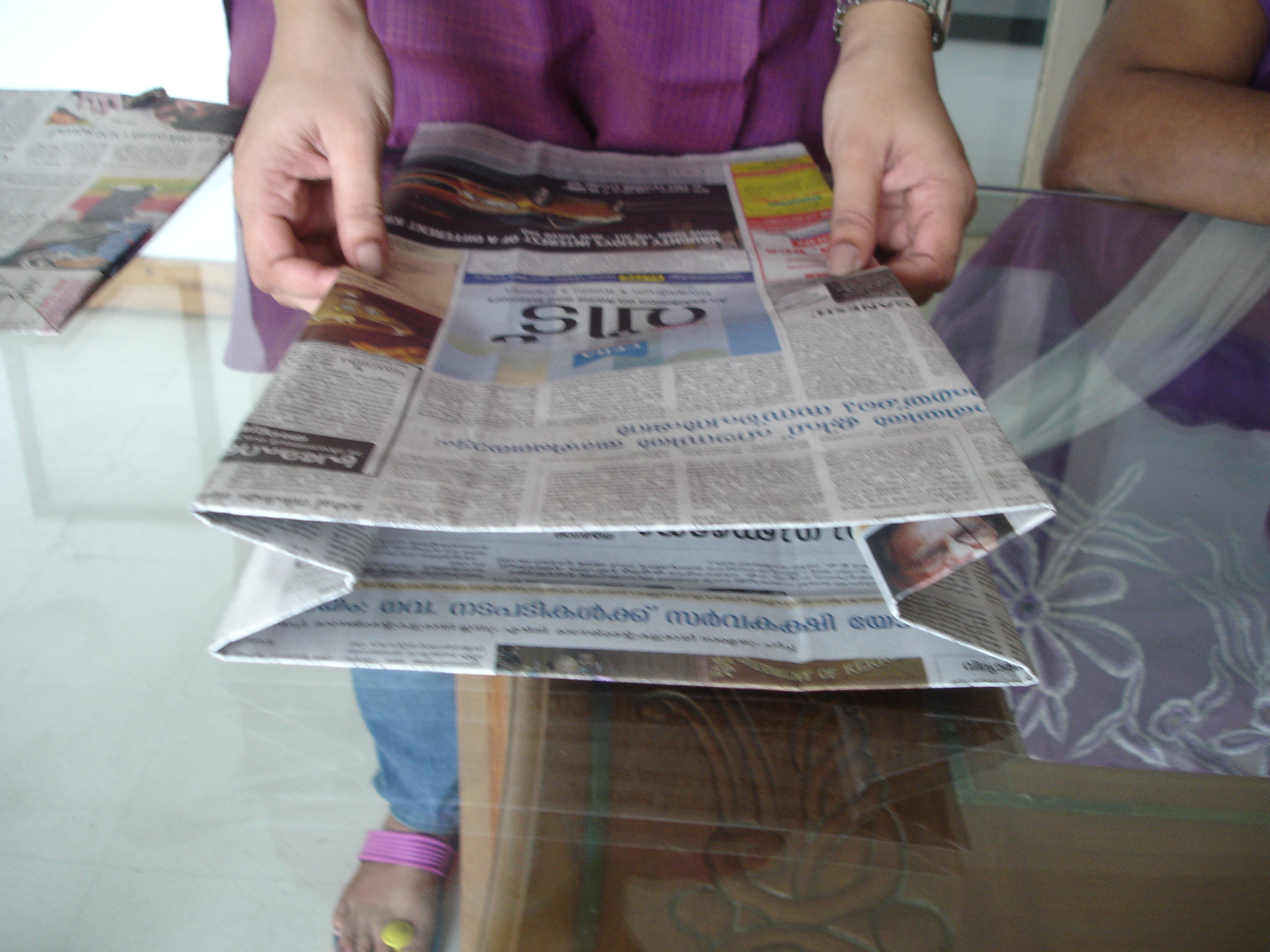
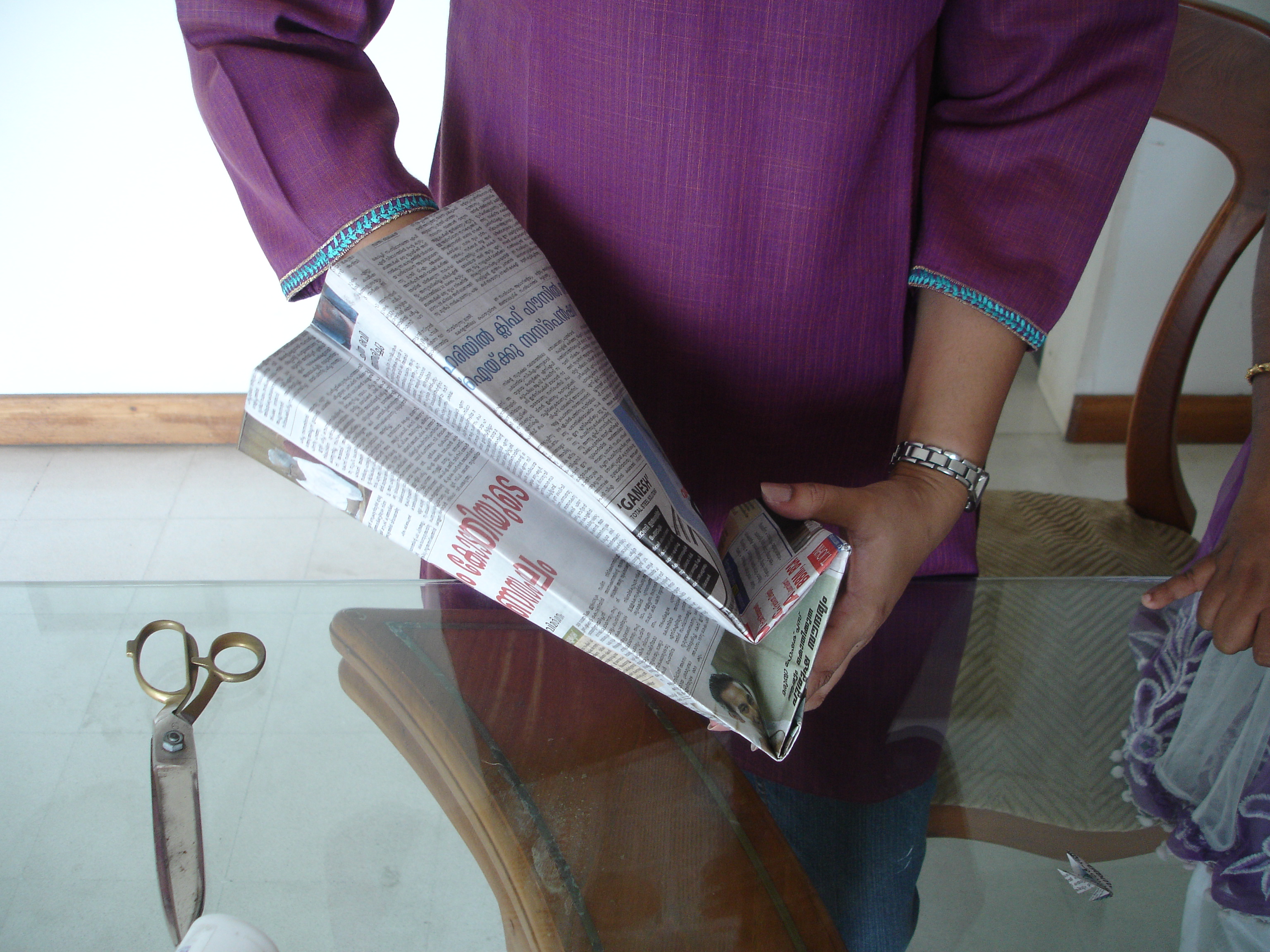
This morning I joined Diwia Thomas at her proverbial kitchen table for breakfast.  After the meal Deepa arrived for a lesson in newspaper bag making.  For those with experience in origami, paper airplanes, paper boats, or paper hats, this would be a relatively easy task.  Even gift or school book wrapping experience would come in handy.  (Unfortunately very few of those skills rank highly on my CV.)  I could also see how Henry Ford’s assembly line theories could assist in this case…precision is important and that often is more easily achieved through repetitive action.

During the hands on tutorial Diwia spoke about the evolution of the bag process.  She had taken a course some years ago and then used those skills to teach others.  But like a game of telephone the process has developed, with each “generation” of folders refining the systems to work more cleanly and speedily.  Diwia commented that she stands amazed watching some of the women working so quickly in their own style with such precise results.

What is so wonderful about the bags is their essential simplicity.  Made from newspaper, wheat paste glue and basic hemp string, they transform items found in most home kitchens into a useful and desirable commodity.  So useful in fact, that when they’ve been taken to a meeting in South America an argument ensued as to who would get to keep the bag as a sample. So combine that simplicity with the steady piecework income they provide and one has the perfect recipe for a community development project.

The Kitchen Table Connection: Following the Paper Trail

She wasn’t the creator of the newspaper bag concept, but Diwia Thomas has done her part to merge their production with the world of community development. Based on a deeply rooted desire to help women create a degree of financial independence, this lifelong resident of Cochin has used her business acumen, social network and marketing skills to advantage.

With the limited supply of paper pulp in India, newspaper printers have implemented the innovative practice of a de-inking process for recycled newsprint. Currently about a quarter of the paper the printers use is recycled material, which has both saved on paper pulp imports and driven up the price paid per kilo for old newspapers. India has a well-established history of recycling and these new developments have given more financial incentive to do so.

Diwia knows the system, her clients and her resources well. It only takes a gentle nudge to friends and family to leverage the equivalent of their daily coffee expenditures in the form of a weekly donation of their newspapers—they give them to her instead of selling them to a recycler (who would pay an amount worth a coffee at a local café). Only full, flat sheets of newspaper can be used in bag production, but with the ubiquitous use of newspaper in this culture as wrapping for everything from eggs, to vegetable market goods to crockery, there is plenty to go around for other recycling purposes. Continue reading