The colorful ebb and flow of daily life is evident in our Spice Harbour neighborhood of Mattanchery. We keep wondering what odd-abilia Ken Brown would find waiting for him here!
(all photos ©Ken Brown)
The colorful ebb and flow of daily life is evident in our Spice Harbour neighborhood of Mattanchery. We keep wondering what odd-abilia Ken Brown would find waiting for him here!
(all photos ©Ken Brown)

Pomegranate tree at Harvest Fresh Farm. Photo credit: Kayleigh Levitt
With Kayleigh stationed at Cardamom County we’re currently exploring ways to make our organic garden more productive, despite the challenges posed by local wildlife. With that goal in mind we visited a colleague’s farm in Tamil Nadu, in an area where they don’t face monkey challenges, but some of their produce requires special netting to protect against birds and bats.
While there we enjoyed a farm tour that included harvesting a few different species of pomegranate, which happens to be part of my daily menu for many years. (Frequent guests at 51 will notice the healthy and delicious seeds making an appearance in many ways.) Continue reading
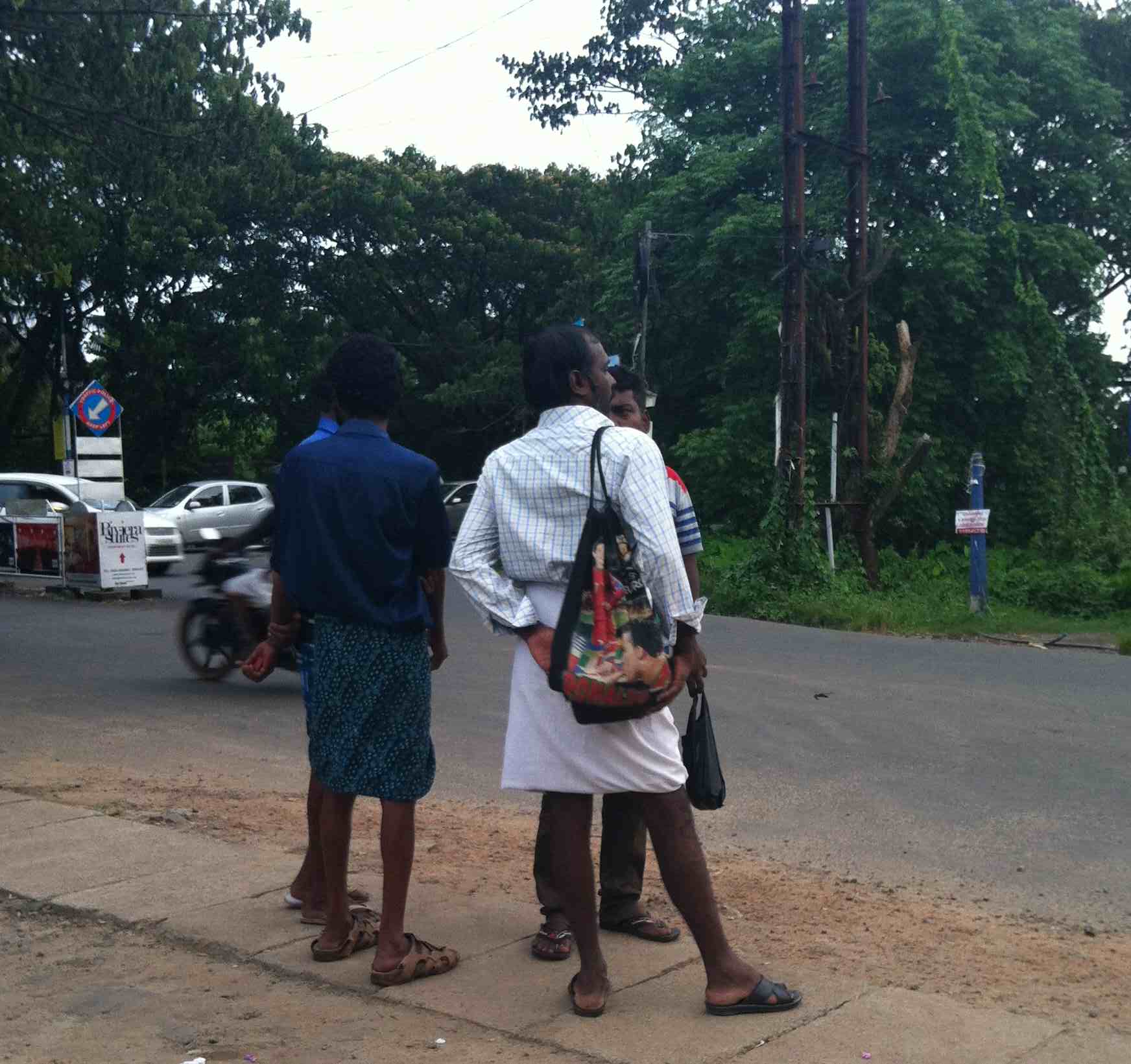
Thevara Ferry Junction
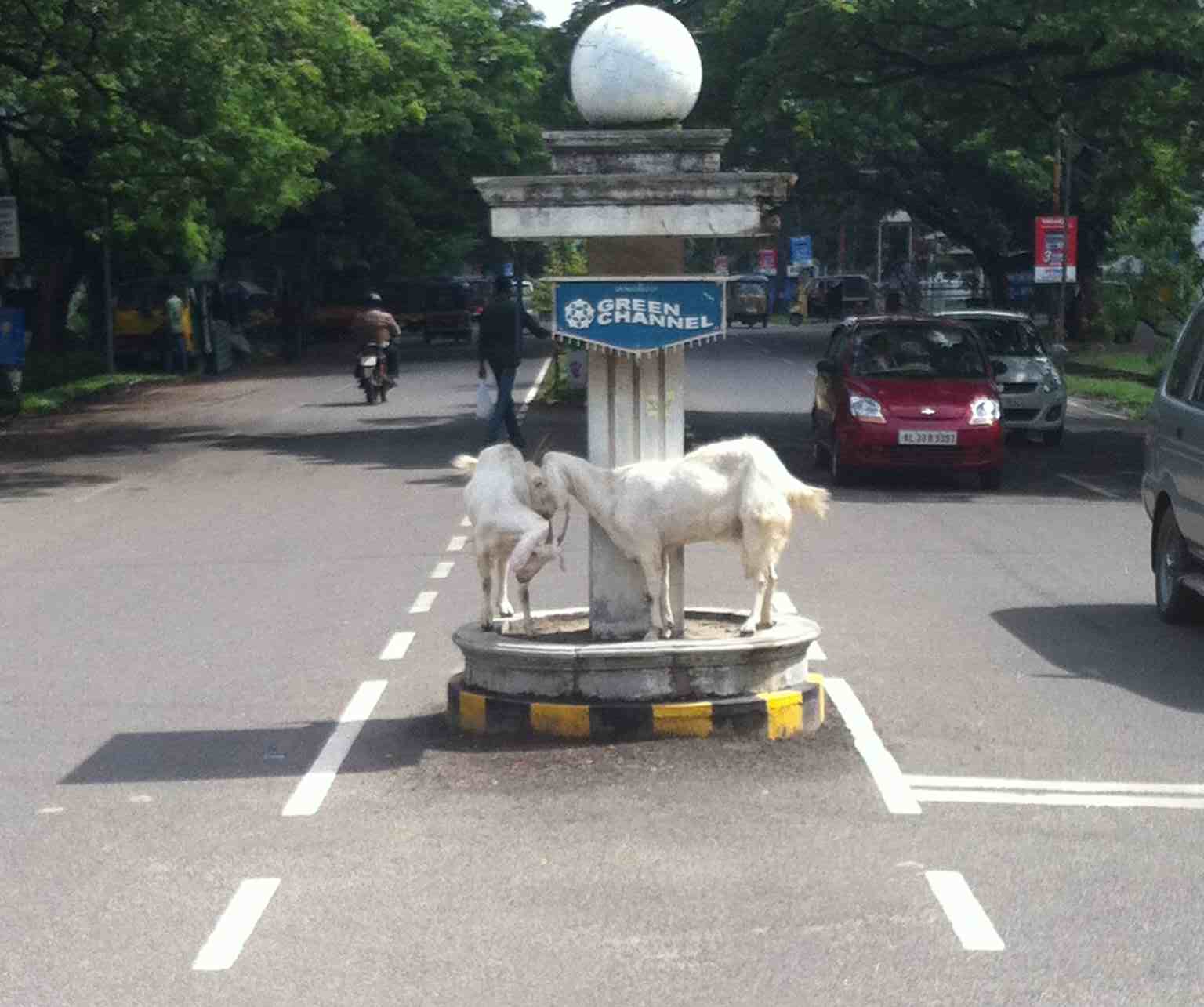
Panampilly Nagar
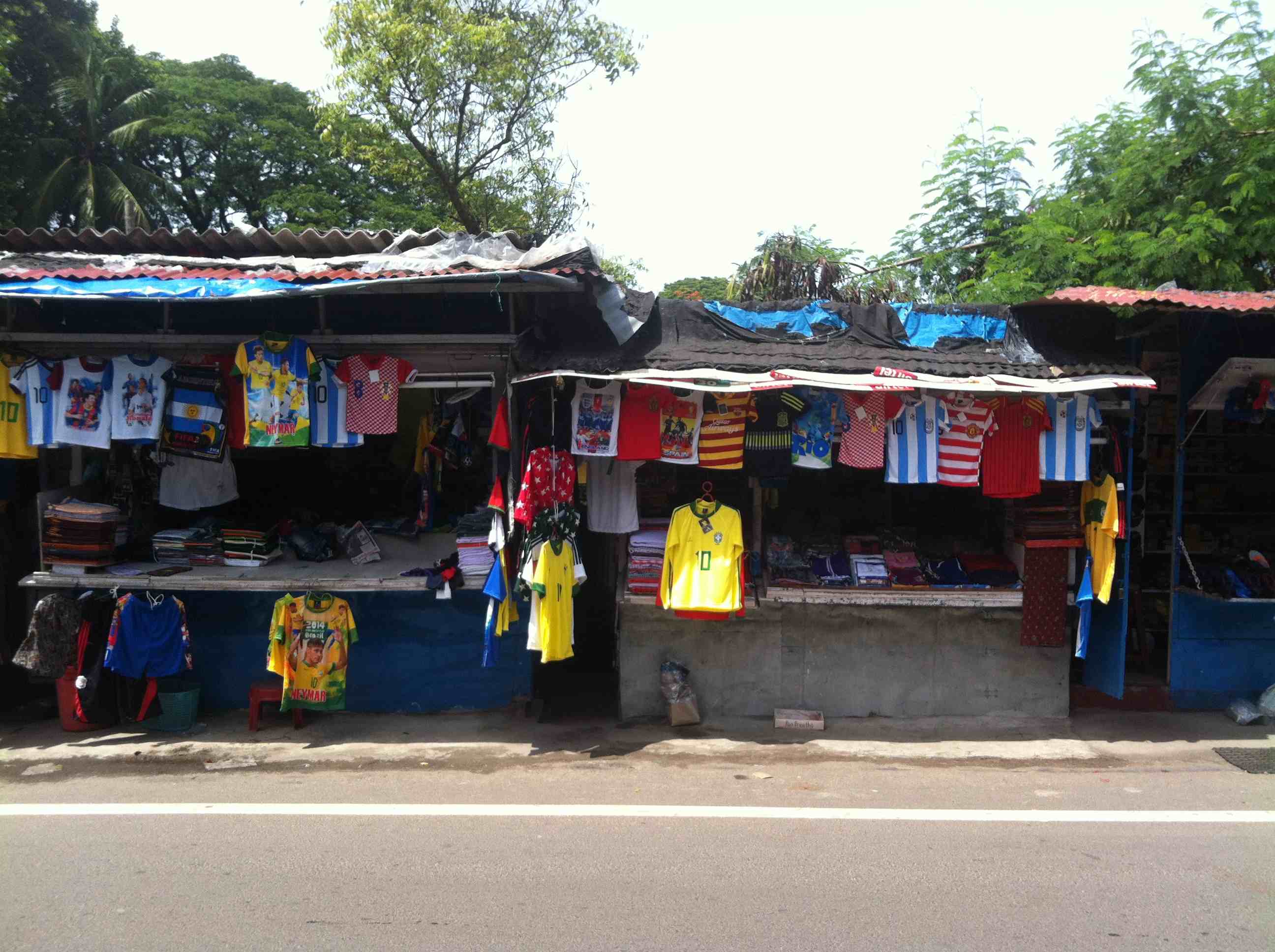
Mattanchery, Chakkaraidukku Road


Thevara Junction, Ernakulam
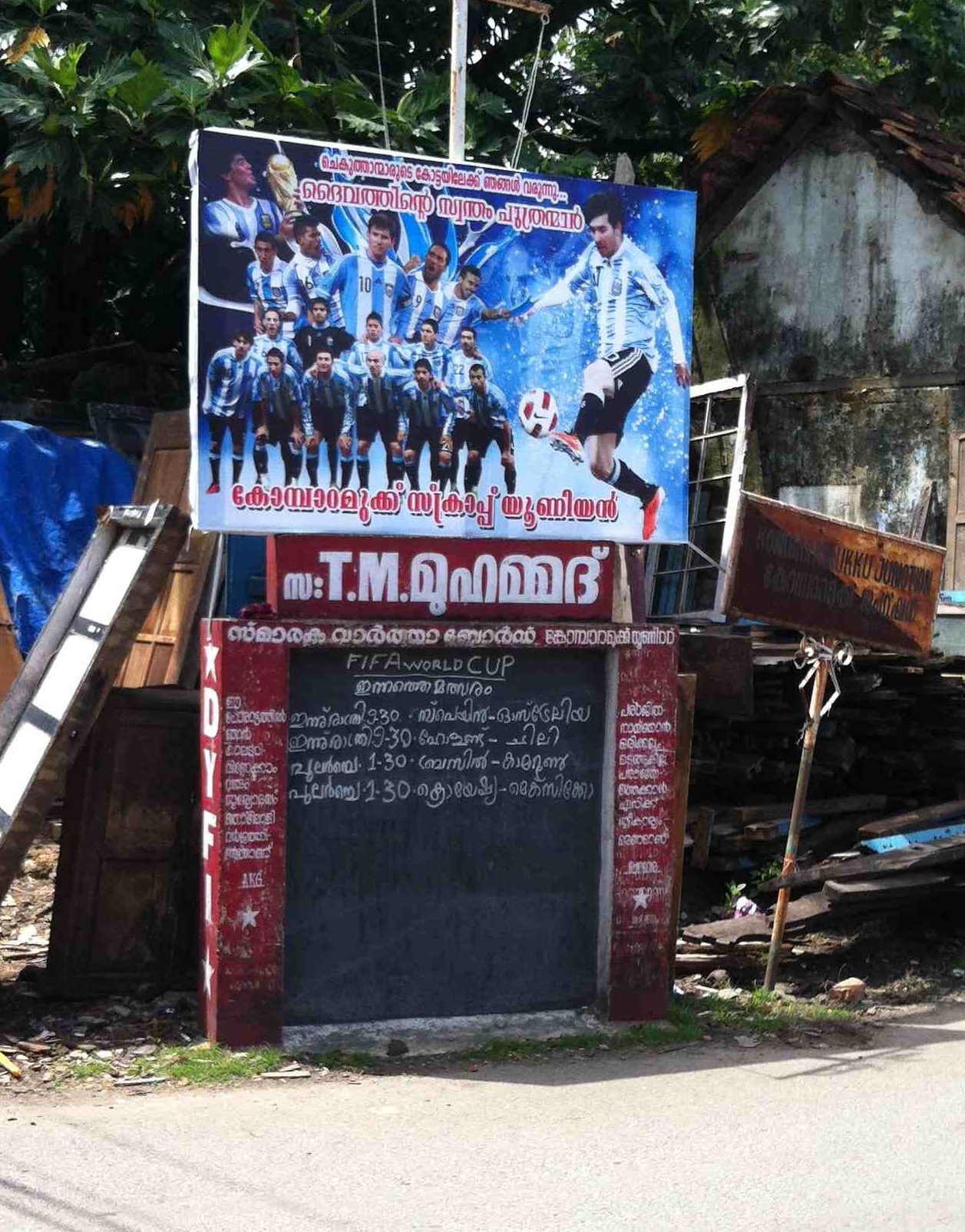
Kombara Mukku Junction, Mattanchery
It’s been several months since Chinese conceptual artist Xu Bing orchestrated the monumental task of suspending a pair of 12 ton birds into the nave of one of New York City’s most famous cathedrals. Fashioned from salvaged construction debris from Beijing’s World Financial Center, the phoenix pair is reminiscent of the more 2-dimensional work of Brazilian artist Vik Muniz in both philosophy and meticulously layered execution.
Throughout China’s history, every dynasty has had its form of phoenixes. Representing luck, unity, power and prosperity, these mythological birds have, for the most part, been benevolent, gentle creatures. But this pair, fashioned from the materials of commercial development, reflect the grimmer and grittier face of China today.
“They bear countless scars,” Mr. Xu explained, having “lived through great hardship, but still have self-respect. In general, the phoenix expresses unrealized hopes and dreams.” Continue reading
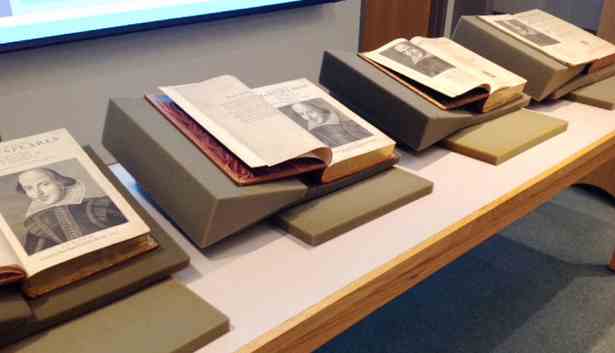
I spent my university years lugging around the weighty Riverside Shakespeare, the volume that has held the status of “definitive Shakespeare” text in academic circles since its first publication 30 years ago. Having never minded the moniker Shakespeare nerd–I could not help the stab of jealousy at missing the opportunity to experience Cornell’s flash exhibition of 4 rare folios in honour of the Bard’s 450 birthday.
For one day only, the Library is putting all four folio editions of William Shakespeare’s plays — the earliest published collections of his work, all printed in the 17th century and now among the most important books in all of world literature — on display to commemorate the 450th anniversary of the Bard’s birth.All the world may be a stage, but Cornell is fortunate to be one of the few places in the world that can put all four folios on display for its community of readers and researchers.
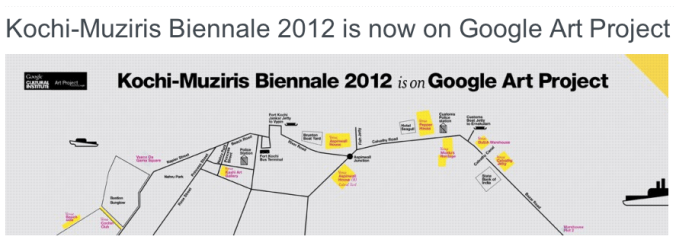
As we finish up our development of Spice Harbour and think about how to sculpt our space into one hospitable to both people and art the flow of news about the second edition of the Kochi-Muziris Biennale is welcome. We’ve written about art in many facets on these pages, including the connection between art and technology. It’s an amusing coincidence that just about a year ago I shared interactive links about the then new, and still very cool, Google Art Project.
So what fun to learn that the Kochi-Muziris Biennale 2012 had “made the cut”, so to speak! It actually isn’t really news, but the good folks at the KMB 2014 website know their social media, and they popped it onto their Facebook page for followers like to me to find, like a wonderful sprinkle of breadcrumbs toward the next edition.
Do you want to revisit and experience the Kochi-Muziris Biennale 2012? Thanks to Google Art Project potentially millions of people across the world can now virtually discover and explore India’s first biennale. With this the Kochi-Muziris Biennale becomes the world’s first and only biennale to be archived and digitized by Google Art Project which has till date only collaborated with museums and other permanent exhibitions. Continue reading
For many people “The Boston Tea Party” refers to an historical event that formed the tipping point for the American Revolution. But two centuries later (give or take) the name relates to a completely different, but no less iconic, moment in time. In the late 1960’s and early 70’s the #53 Berkeley Street Boston Tea Party was a legendary live-music venue featuring musicians from local bands to the Blues, Rock and Pop icons of day.
Music wasn’t the only dimension to a Boston Tea Party experience. Filmmaker Ken Brown cut his “creative teeth” as part of the team creating the venue’s light shows and visual effects.
We actually have one of the coveted DVDs of this work, but those not lucky enough to have one or to have been in Boston 40 years ago have the opportunity to make up for it now …
On Sunday at 7 p.m. at [Boston’s] Institute of Contemporary Art, Brown will screen “Psychedelic Cinema,” a 55-minute compilation of his Tea Party work, and answer questions afterward. The silent film will be accompanied by a live performance by Ken Winokur of Alloy Orchestra, Beth Custer of Club Foot Orchestra, and Jonathan LaMaster of Cul de Sac. Brown’s Tea Party work screened at the Coolidge Corner Theater in 2008, one of only a handful of public showings. We spoke by phone this week. Continue reading

Fred F. Scherer, left, and James Perry Wilson, center, paint the background for the American Bison/Pronghorn antelope diorama in 1942.

Visitors to the American Museum of Natural History look at a diorama for which Scherer painted the background decades prior.
Growing up in and around New York I spent many happy hours at the American Museum of Natural History. In addition to it being the depository of many anthropological, archeological and paleontological wonders, it also successfully brings the outside inside for many city dwellers. One of the ways they effectively did this was through museum dioramas. In the age that preceded high-quality large format photography the dioramas required skilled mural painters to help bring the taxidermic animals “to life”. Continue reading

All photos courtesy of the AKTC
We’d been living in Kerala for 6 months before we traveled back to the U.S. via Delhi in order to update our visas. Having only experienced the sights in my “southern home” up until that point, we scheduled our flight to allow for a Delhi city tour, and Humayun’s Tomb was the first item on the agenda.Unluckily for us the “Travel Gods” were not favoring us, and between flight delays and Delhi traffic we reached the gates of the tomb compound at 5:58pm, just in time for us to see the guard saunter over to lock them for the night. I was seriously disappointed, but I’ve since learned that perhaps those aforementioned gods were looking after our best interest after all. Continue reading
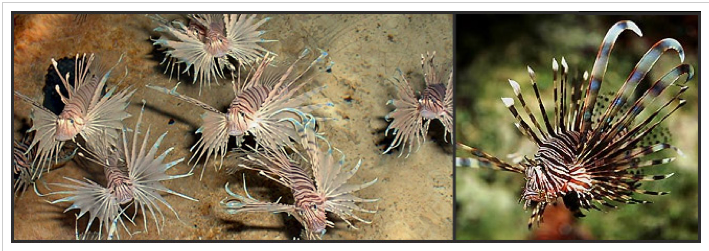
Lionfish (also known as turkeyfish) have venomous spines that can be very painful Photo: NOAA
When I was growing up a common Thanksgiving holiday decoration included a colored paper turkey formed by a tracing of my hand, the fingers forming turkey feathers. While that memory might seem out of left field it makes more sense when you start looking at photos of turkeys parading around a barnyard alongside the many lion fish photos we’ve been publishing in our Citizen Science in Belize series.
This NOAA article about lion fish, or turkey fish as they’re imaginatively calling it, is a perfect “if you can’t beat’em, eat ’em” extension. Continue reading
Collaboration is dear to our hearts, whether it be interpersonal, international or intercollegiate, not to mention intercorporate to coin a phrase. I couldn’t help but recall our posts on Elif Bilgin and Sush Krishnamoorthy when I came upon this video and read the bio of Shixie (Xiangjun Shi), the creative force behind it. Kudos to Brown University and RISD for having such an impactful program!
When I left home for college in the US, I was fortunate to be selected for the very first class of a new Dual Degree program, presented by Brown University and Rhode Island School of Design. WIthout predecessors, and in trusting embrace of Brown’s open curriculum, I was pretty much able to design my own education. Continue reading

Credit: Michael Ochs Archives/Getty
Last year we were a bit “off calendar” in honoring one of our favorite American Masters, this year less so. The good news is that his music and his relentless work on behalf of less fortunate people and the communities they were part of is so vast that, luckily for us, it will take some time to exhaust the full measure of his recordings.
For decades, we’ve had the Smithsonian recordings (with the help of Alan Lomax and Moe Asch) to thank for preserving both the musical and oral history of the nation. In honor of this less symmetrical birthday Rounder Records has released additional works from the archives, this time focusing on the part of Guthrie’s canon that was written for the American government.
In the Library of Congress recordings, the young musicologist and historian Alan Lomax made recordings of songs and stories in the 1940s of many of the country’s most colorful and important musicians, including Guthrie.
Along with John Steinbeck’s “The Grapes of Wrath,” it is one of the single greatest resources for understanding Depression-era Oklahoma: how the pioneer spirit reacted when confronted with crushing poverty. Continue reading
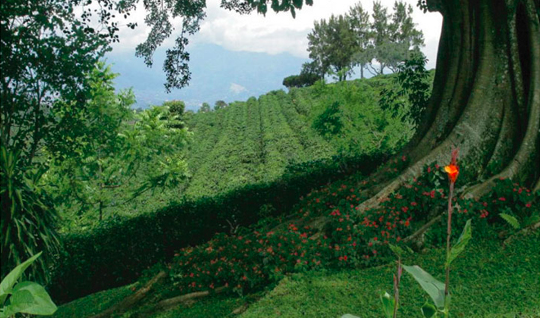
Shade grown coffee plantations in Costa Rica; photo credit: Emilia Ferreira
What first struck me when I read about the Smithsonian Migratory Bird Center this morning was that their bird friendly coffee certification was a great idea. What struck me second was that I’d read about it before on this site, or at least a teaser on the subject. Chalk not having a “part 2” up to a Cornell student’s busy schedule, but it certainly left the door open for me to discover this wonderful initiative on my own.
We’ve discussed the environmental benefits of shade grown coffee on these pages before, and the Cornell Lab of Ornithology is a La Paz Group “touch stone” in many ways. Leave it to them to so clearly make sense of all the sustainable coffee certifiers on the market from a bird’s eye point of view.
Making Sense of Sustainable Coffee Labels
They’re those little rectangular icons lined up on your favorite gourmet coffee bags—a tree, a flower, a frog, a harvester, each trying to tell you something about how the coffee was grown. But what does each one mean, and how do they differ? Here’s a list of common labels and their benefits for birds….
Bird Friendly. Certified by scientists from the Smithsonian Migratory Bird Center, this coffee is organic and meets strict requirements for both the amount of shade and the type of forest in which the coffee is grown. Bird Friendly coffee farms are unique places where forest canopy and working farm merge into a single habitat. By paying a little extra and insisting on Bird Friendly coffee, you can help farmers hold out against economic pressures and continue preserving these valuable lands. The good news is that there’s more Bird Friendly coffee out there than many people realize—we just need to let retailers know we want it…
Organic. As with other organic crops, certified organic coffee is grown without most synthetic pesticides and fertilizers and is fairly sustainable—although there are no criteria for shade cover. Because of coffee’s growth requirements, it’s likely that organic coffee has been grown under some kind of shade. However, many farmers shade their coffee using other crops or nonnative, heavily pruned trees that provide substantially less habitat for birds, and the organic label offers no information about this. Continue reading
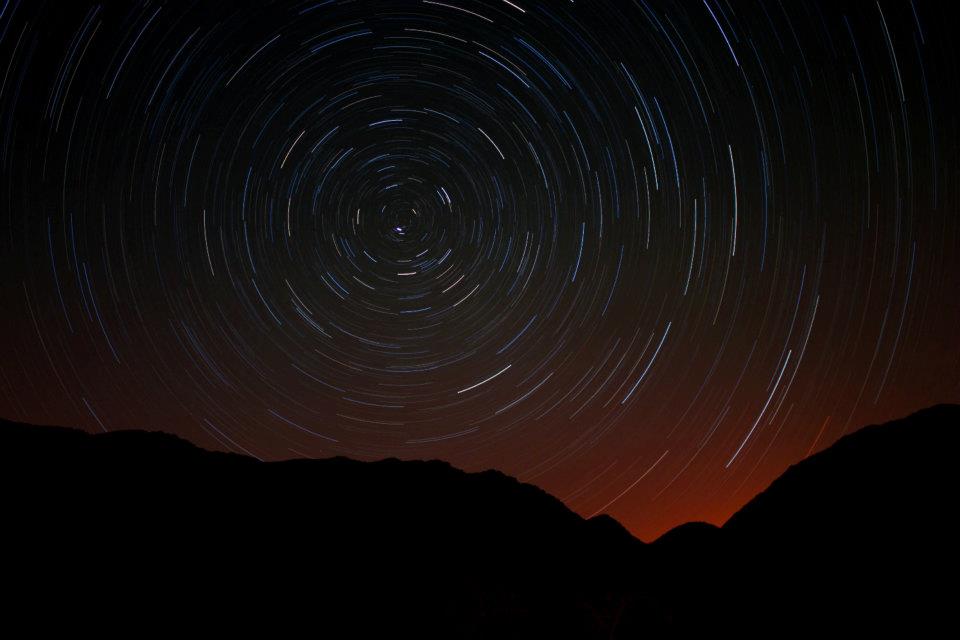
Long exposure photo from Wadi Dana, Jordan
Credit: Milo Inman
Before Vincent van Gogh painted his most iconic work in 1889 I doubt he had access to time-lapse images of the stars over Saint-Remy, but I’m confident there was something in his genius that connected his artistic vision with the realities of the nightly movements between earth and sky.
One look at Indie Producer/Director and timelapse enthusiast Gavin Heffernan’s Death Valley Dreamscapes alongside Petros Vrellis’ innovative animation “Starry Night” was enough to convince me!


How we do business and perceive the world has been informed for many years by the concepts of Recycling and Upcycling. So our first introduction to Trashy Bags during a trip to Accra was exciting to say the least.
Trashy Bags is a social enterprise that makes recycled eco-friendly bags and gifts from plastic trash. They employ over sixty local people to collect, clean and stitch plastic trash into bags and other products. Packaging and “billboard flex film” waste is a huge problem worldwide, not just in Ghana. But a growing issue in parts of world where clean drinking water isn’t readily available is the build-up of spent “water sachets”—non biodegradable plastic water pouches.
It is estimated that in Ghana, waste produced from plastic packaging amounts to 270 tonnes per day; most of it non-biodegradable. That adds up to over 22,000 tons of plastic in one year.
This figure has risen in just ten years by about 70%. Despite this rise, it is estimated that only 2% of plastic waste is recycled. You may ask what happens to the remaining 98%. Continue reading


 Organikos