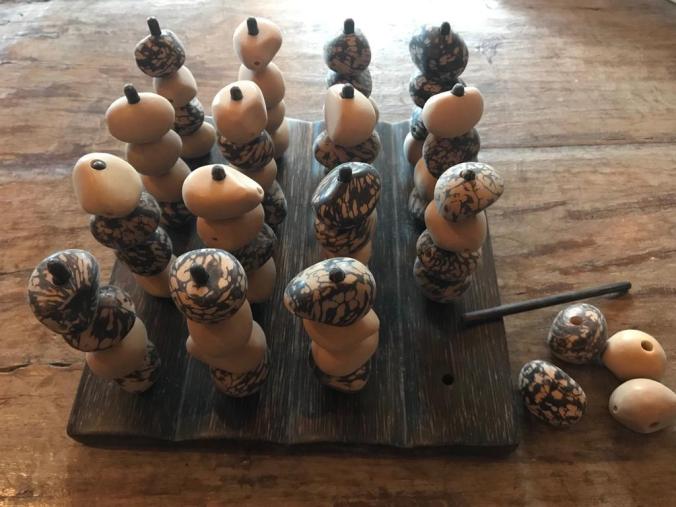
A friend in my early teens had chess skills well-matched with my own. We played constantly, the way some kids today play video games. I switched to backgammon in my late teens and played hundreds of hours over the years. I gave up backgammon when I discovered a new old game 20+ years ago in Ecuador. It is the game in the picture above, and I vaguely referenced it once here. I never stopped to think what drew me to play those games compulsively. Samanth Subramanian, who appeared in our pages once, five years ago, has made my day with this new piece. What We Learn from One of the World’s Oldest Board Games helps me put my love of old games in some kind of historical perspective:
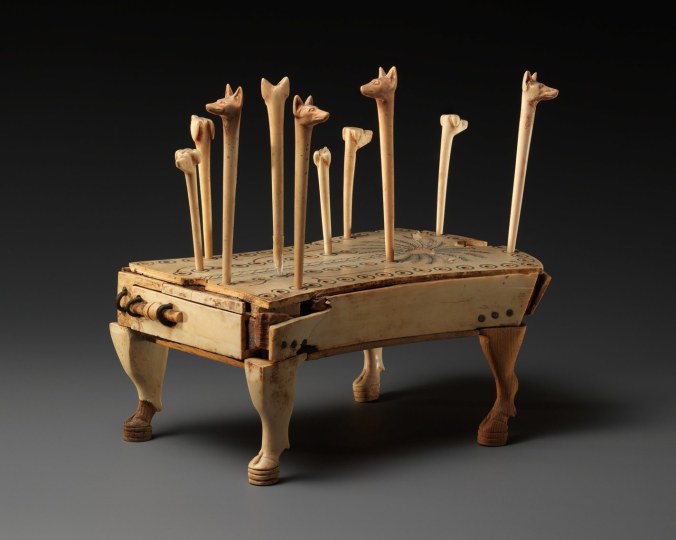
This ivory Fifty-eight Holes board was dug up by Howard Carter, in 1910, out of a pit tomb in Thebes. “We have before us,” Carter wrote, “a simple, but exciting, game of chance.”Photograph Courtesy The Metropolitan Museum of Art
A few years ago, almost by accident, Walter Crist happened upon one of the oldest board games in the world. Crist, who was then working toward a doctorate on ancient Cypriot board games, at Arizona State University, was searching the Internet for images of a game called Fifty-eight Holes. In the second millennium B.C., Fifty-eight Holes was the most popular game of its kind across Egypt, the eastern Mediterranean, and the Middle East, and roughly eighty boards of the game, in various degrees of incompleteness, rest in museum collections around the world. Images of these boards are well known to scholars, but the photo that Crist eventually found, on the Web site of a magazine called Azerbaijan International, was unfamiliar. Taken at an archaeological site near Baku, it showed a rock carving that bore a strong resemblance to the game’s board: two parallel rows of indentations and an outer, horseshoe-shaped run of more holes. It looked like a four-year-old’s sketch of a tree.
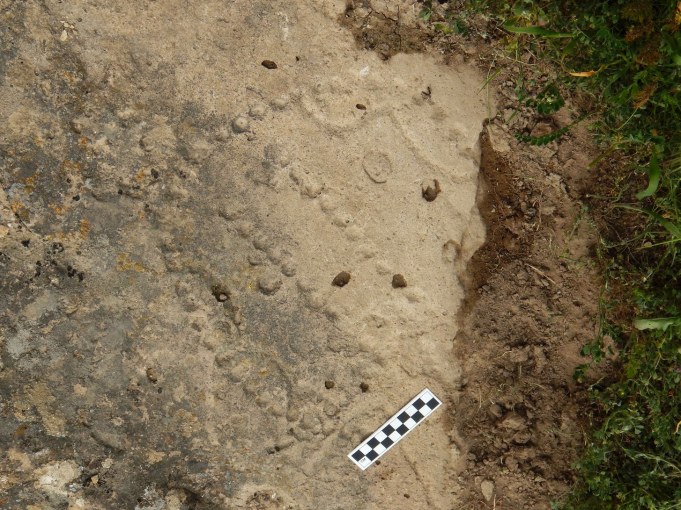
A series of depressions taking the form of the game of Fifty-eight Holes on a horizontal rock surface in Azerbaijan’s Gobustan National Park. Photograph by Walter Crist / Gobustan National Preserve
The site, Crist learned, had been destroyed to make way for a housing development, but he eventually got in touch with an archaeologist in Azerbaijan’s Gobustan National Park, who told him that the park held a similar carving. “I think he knew that it was a game, or that people thought it was,” Crist said. “There were other people arguing that it could be an astronomical chart, or a calendar—but nobody that had studied games in any kind of depth.” So Crist decided to go to Gobustan and find out for himself.
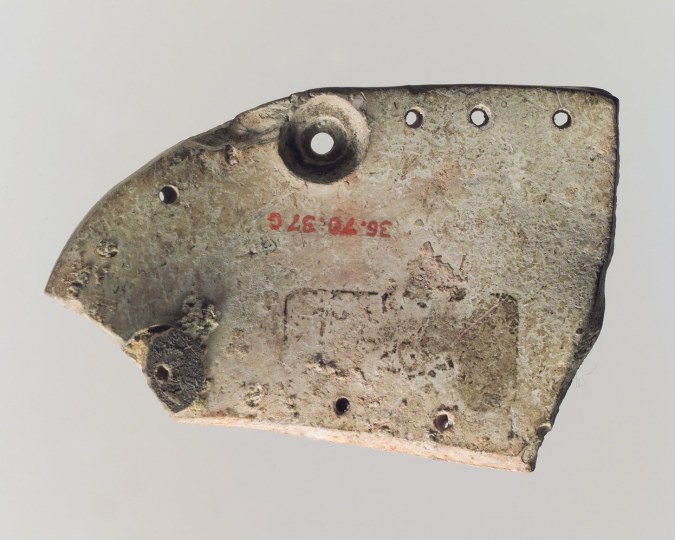
A fragment believed to be part of a Fifty-eight Holes game board, from the eighteenth century B.C. Photograph Courtesy The Metropolitan Museum of Art
Crist, who completed his Ph.D. in 2016, works at the New York Public Library, as a librarian. “I’m on the academic job market, which is terrible and difficult,” he said. When he went to Azerbaijan last spring, he paid for the trip himself, appending it to a visit to Athens to attend the Twenty-first Board Game Studies Colloquium. At Gobustan, near the Caspian coast, he found a vast moonscape of rocks, caves, and mud volcanoes. Archaeologists visit the park for its six thousand petroglyphs: carvings of hunting parties, bulls, boats, and dancing stick men. The glyphs date back at least four thousand years; some might be as old as forty thousand years, reaching back into the Upper Paleolithic age. Not much is known about the artists. Most likely, they were nomadic hunters who lived in rock shelters, charted the heavens, and buried their dead. Continue reading →
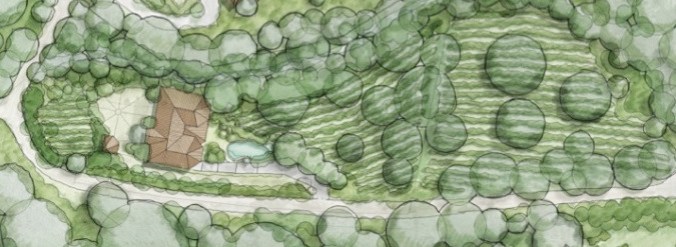
 That was then, this is now. Coffee is more valuable than grass. And the value of coffee that is as world class as what Seth planted at Xandari and also resistant to the challenges brought on by climate change is even greater. The trees that will be planted to shade the coffee will be of greater value–to birds as well as to the coffee–than the view of undulating hillside. The image above is a first step in the planning process of this restoration initiative. Organikos will start selling coffee in August, and the proceeds of those sales will pay for the restoration and ongoing improvements of this lot. That is an example of what we mean by 100% Forward.
























 Organikos