Agricultural Exploration, Flavor Surprise


aarvliag1

Where is Asha, or at least her book? I could utilize her culinary inputs related to southern Indian vegetables and flavors right about now.

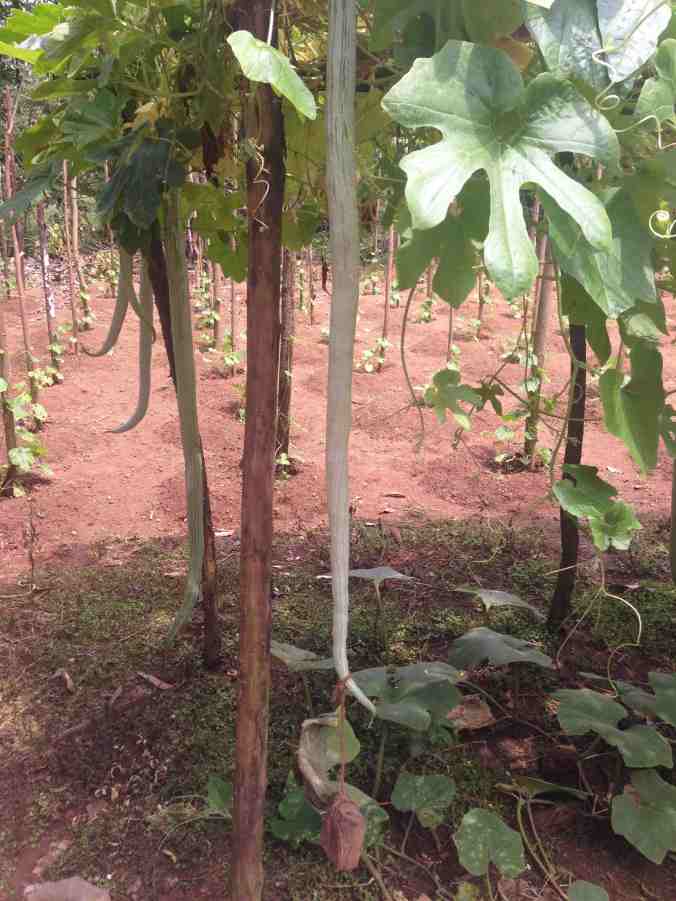
I am in the coastal region of southern Maharashtra now, just north of the Goa border. The cuisine is different from that of Kerala, but with many of the same vegetable inputs. For ten days my mission is primarily to food-focused. For a new project we are working on, our current task is to determine what food items will be grown on property and which will we sourced from local farmers. This is always a curious task. Continue reading

Tale Of Two Souths

Two Souths.jpg

I had the distinct pleasure of dining with a friend at Asha’s restaurant in Atlanta, and of having a discussion with Asha after dinner about our inverted common experience of operating restaurants in these two souths referenced in the title of her new cookbook (she has family in Kerala and I have family in Atlanta, and we both live in one another’s country of birth).

My foodie dinner companion and I thought it would be interesting for Asha to come to Kerala to share her culinary talents in one or more of the kitchens we were in the process of setting up at the time of that dinner a couple years ago. Asha was then, and obviously remains, quite too busy for that. Go, Asha!

Review: An Indian Twist on Southern Cuisine in ‘My Two Souths’

By

Can the remix be better than the original? It’s something to contemplate while working through the chef Asha Gomez’s debut cookbook, “My Two Souths: Blending the Flavors of India Into a Southern Kitchen,” with Martha Hall Foose. Ingredients make unexpected cameos that often steal the show. Continue reading

Organic Is A Word Well Suited To Curiosity

From the Oxford English Dictionary, skipping past the obsolete and rare definitions of the word organic, and picking the ones we find most interesting for our purposes, all of which predate by decades, and even centuries, one of the latest uses of the word organic in the categorization of a method of agriculture:

Belonging to the constitution of an organized whole; structural.

Of or relating to an organized structure compared to a living being.

Of, relating to, or characterized by connection or coordination of parts into a single, harmonious whole; organized; systematic.

Designating a work of art in which the parts seem naturally or necessarily coordinated into the whole; (Archit.) (in the writings of Frank Lloyd Wright) designating a style which attempts to make a unity of a building and its setting and environment; (also, more generally) designating any of various styles in which the character of buildings is more or less reminiscent of a living organism.

Characterized by continuous or natural development; (Business) designating expansion generated by a company’s own resources, as opposed to that resulting from the acquisition of other companies.

We care about these definitions because the word organic comes into our conversations constantly. We have avoided overuse in these pages of this and other words that we care about. But recently this word stands out, worthy of more of our attention. We will use it more, but carefully. A balance is required.


Extinction As Impetus For Travel?

header-image

We are all used to looking at guidebooks to learn more about a country before we visit – but how often do we stop and think about the things we can’t see there anymore? We’ve created Unknown Tourism, a series of vintage-style travel posters to commemorate some of the wonderful creatures we’ve lost, and are in danger of forgetting.

We try to be glass half full, so we will wait and see where this campaign (click the banner above) is going. I am drawn to anything that raises awareness of the need for conservation. It helps that the illustrations are evocative. Bravo to Expedia UK for thinking outside the box and making it look good.

But a travel company highlighting extinction to encourage travel is certainly going to strike some as problematic. Even there, I say bravo to them for taking a step in an unusual direction, and I hope it leads somewhere meaningful (as opposed to just attractively intriguing). Continue reading

Hotel As Showroom

Merrick-West-Elm-1200 (1).jpg

A prototype for a room in the hotel chain that the furniture retailer West Elm plans to launch in Charlotte, North Carolina, and other cities. PHOTOGRAPH COURTESY WEST ELM

This article goes on to make a very specific point about the experience of this company, in the state where it is based, which is not so much what caught my attention (more on which below):

Jim Brett, the president of West Elm, the furniture chain that sells what you might call mainstream modern furniture, was looking for the brand’s next act. He didn’t think he’d find it at the mall; West Elm already has more than a hundred stores. Children’s furniture might have been a logical next step, but it is burdened by complex safety regulations. Where else do lots of people sleep and sit? Brett, a frequent traveller, had spent countless nights in sterile, unwelcoming rooms. Hotels seemed like a good opportunity.

Last year, West Elm opened a commercial division for office furniture, and the company is now making furniture for Marriott’s SpringHill Suites hotels. More significantly, West Elm also signed a deal with a partner to open its own branded hotels. Brett and other executives discussed design ideas and scouted locations in mid-tier U.S. cities whose hotel markets seemed underdeveloped. Charlotte, North Carolina, was especially promising. Continue reading

An Unusual Travelogue

9780374710750.jpg

Publishers’ blurbs are sometimes much better than the sound of the word blurb would imply, and anyway I always trust them more than I could possibly trust Amazon’s tricky sales methods. Reviews in trusted publications are best, but they take much longer to read; this blurb has my attention, especially after pondering two decades of life online:

For Erik Reece, life, at last, was good: he was newly married, gainfully employed, living in a creekside cabin in his beloved Kentucky woods. It sounded, as he describes it, “like a country song with a happy ending.” And yet he was still haunted by a sense that the world–or, more specifically, his country–could be better. He couldn’t ignore his conviction that, in fact, the good ol’ USA was in the midst of great social, environmental, and political crises–that for the first time in our history, we were being swept into a future that had no future. Where did we–here, in the land of Jeffersonian optimism and better tomorrows–go wrong? Continue reading

Smart Reading, 20 Years On

screen-shot-2016-09-26-at-10-09-24-amThere is a 5-10 minute read in the upcoming issue of the New Yorker that helps put two decades into a narrow but interesting perspective. 20 years ago I was in the process of moving my family to Costa Rica for a job I had accepted one year earlier. I remember the period described below, which could be considered the transition to life online, as we now know it. Odd to think it was happening just as we moved to a kind of Garden of Eden. Slate has been a part of “life online” ever since. I was mainly drawn to Kinsley, one of the sharpest of thinkers and communicators. He is long, long gone from Slate. But the experiment was fruitful; Slate is alive and well even as the media landscape is oversaturated with copies of copies of copies:
TWENTY YEARS OF SLATE

The digital magazine’s founding editor-in-chief and his successors got together to survey its history and its contributions to online journalism.

It’s been twenty years since Michael Kinsley, the former editor of The New Republic, undertook a novel adventure: the creation of a magazine, underwritten by Microsoft, that was to exist primarily in what was then known as “cyberspace.” “There will be efforts to update it, perhaps on a daily basis,” the Times noted, in a report that appeared below the fold on page D1 of its issue of Monday, April 29, 1996, two months before the launch of Slate.

Recently, Kinsley, who was the editor-in-chief of Slate from 1996 until 2002, and his three successors—Jacob Weisberg, David Plotz, and Julia Turner—gathered in Washington, D.C., to record a podcast: a five-way conversation with Josh Levin, the magazine’s executive editor. It was a nostalgic and forgivably self-regarding celebration of what Turner characterized as Slate’s “smarty-pants, curious journalism, opinion, and analysis.” The editors posed, grinning, for a group photo. Continue reading

About The Roses

lueders-slide-odmi-jumbo

It is difficult to resist a story like this when you have recently completed a multi-year restoration.

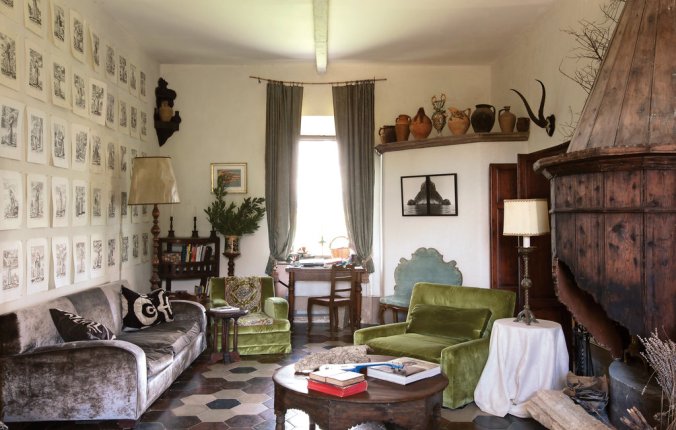
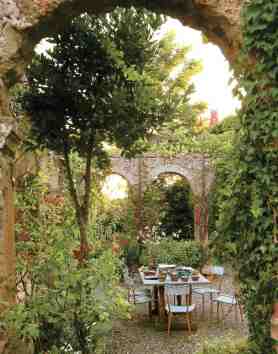
lueders-slide-vg4p-superjumboWhen it involves a former convent I have a particular reason to be interested. This article had me at the mention of Patmos, one of my favorite islands, but there is more. It is that cloister, with the rose garden seen in part in the photo to the right, that intrigues me. I have noticed that in European convents, the older the better, there are rose gardens that contain strains of rose that are difficult to find elsewhere. Presumably “antique” roses, they have a fragrance that is incomparable:

Restoring a Run-Down Convent in Tuscany

A mother-daughter duo brought back to life a centuries-old house in the countryside.

By

For 60 years, a 16th-century Franciscan convent designed by the Florentine architect Antonio da Sangallo the Younger, a creator of both the Palazzo Farnese and the Villa Madama in Rome, had existed in a state of abandoned decrepitude. Situated on the edge of the town of Pitigliano, in southern Tuscany, with vegetation engulfing its cloisters, the house had no electricity, almost no running water and no windows. It was exactly what the mother-and-daughter duo Holly Lueders and Venetia Sacret Young had been looking for: “the perfect ruin.” Continue reading

Better To Have Fizzled Than To Have Never Tried

20threlkeld-web1-master768

Hikers on Blencathra, in the Lake District in England. Two years ago, ramblers, climbers and hill-lovers banded together to try to buy the peak, but the effort has now fizzled. Credit Phil Moore for The New York Times

I admit to being partial to the idea of rewilding, as I have come to know about it, which I admit is limited; but with our bias for restoration of wildlife habitat clearly stated I find this story worth sharing:

In English Lake District, Tradition and Conservation Clash

By

THRELKELD, England — It was to have been a grand gesture, a deal that would transfer a mountain in the fabled English Lake District from the landed gentry to those who roam its heights, reversing a centuries-old pattern of ownership by the upper-crust few. Continue reading

Antikythera, Belize & Wondrous Discoveries

21tb-shipwreck-master768

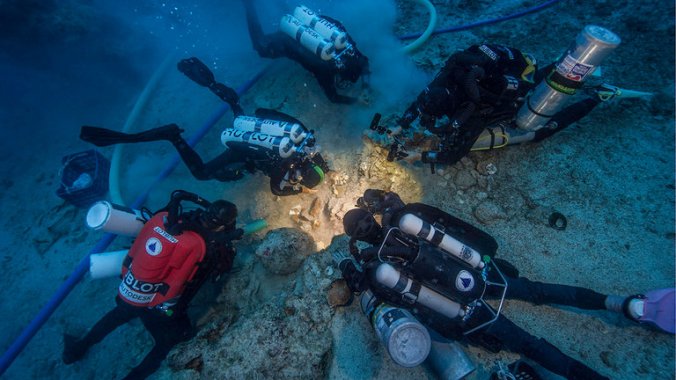
Divers and archaeologists excavating the 2,000 year old Antikythera shipwreck. Credit Brett Seymour/EUA-WHOI, via Argo

This story, about remains recently found under water in a region of the Greek islands where several of us at La Paz Group have very fond memories of, gives me pause. At the time the ship in this story wrecked, the Mayans in Belize were flourishing. The archeologists working at Chan Chich Lodge are still dating the structures there, but the sailor from the ship lost in Antikytheran waters would likely have found the Mayans quite advanced relative to his own culture.

Greece’s classical period was long over by the time this sailor lost his life, and Rome’s empire was still expanding, impressively. Lots of progress, civilization-wise, philosophy-wise, math-wise, geometry-wise in that Mediterranean zone; but also in what is now called Belize, and the wider Mesoamerican corridor. Reading this article, I appreciate the work of archeologists who advance our understanding of those who came before us:

Human Remains Found at Ancient Roman-Era Shipwreck

By

Underwater archaeologists have found a 2,000-year-old skeleton belonging to a victim of the famed Antikythera shipwreck from ancient Roman times. Continue reading

Get Jolted By Understanding Fish Better

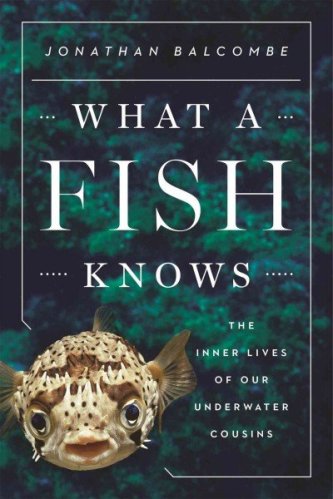
9780374288211_custom-a8005fb568cedbbcdfa556084e27717de66bba19-s400-c85The morning walk’s provided a different sensation from the learning component of the morning walk a few days back, giving me a jolt of new appreciation for all that I have no clue about related to life underwater; the jolter was an ethologist, of all things:

…The knifefishes of South America and the elephant-nose fishes … [are] both electric-producing, so they have EODs, which are electric organ discharges, and they use those as communication signals, and they communicate in some pretty cool ways. They will change their own frequency if they’re swimming by another fish with a similar frequency, so they don’t jam and confuse each other. They also show deference by shutting off their EODs when they’re passing by a territory holder…

Continue reading

The Future Of Coffee Matters To Us For More Than One Reason

3000

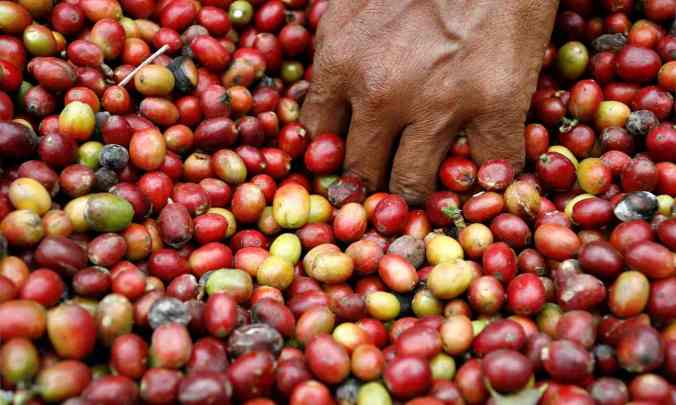
A farmer with coffee cherries from his latest crop, the seeds of which are roasted, ground and brewed to make coffee. Photograph: YT Haryono/Reuters

We work in several countries where coffee production is important to the national economy. We serve coffee in every property we have ever managed. Many of us working in La Paz Group are coffee junkies.

But more than that, as I have mentioned at least once in these pages, we care extra deeply about the future of coffee because on one of the properties we manage, some excellent arabica estate coffee is growing in the shade of a rainforest canopy. I owe you more on that topic. For now, what has my attention is ensuring the long run sustainability of this organic coffee production.

So you can be sure of where some of our team members will be next Tuesday. Join us if you can:

Climate change is threatening the world’s coffee supplies: what can we do? – live chat

Join us on this page on Tuesday 20 September, 2-3pm (BST), to debate the future of coffee, and the millions who depend on it, in the face of climate change

What we’ll be discussing Continue reading

Renaissance & Other Possible Interpretations Of Our Times

florence

During my morning walk today, while taking in the Onam visuals, I was at the same time absorbing sound, in the form of conversation, from the same phone that was snapping pictures. I use the time of my walks to listen to podcasts, one of the easiest ways for me to stay attuned to happenings and ideas from the USA, my onetime home, and home to many of the people who visit properties we manage.

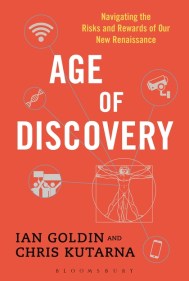
The central idea of today’s podcast, at once frank about the perils of the “Age” we are in now but also optimistic about how to harness modern tools to navigate these times, took me by surprise:

New Maps, New Media and a New Human Condition

AgeofDiscovery-copy.jpgscreen-shot-2016-09-14-at-2-14-06-pm

Some 500 years ago, Johannes Gutenberg, Nicolaus Copernicus, Michelangelo and others were part of the Renaissance, a time of significant cultural change. Now, authors Ian Goldin and Chris Kutarna say we are in the midst of a second Renaissance.

Continue reading

Onam, Kerala, 2016

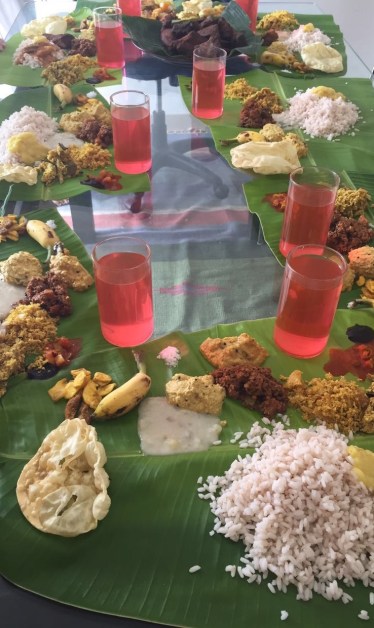
img_5224-1Yesterday, the midday meal was a traditional one for this time of year. We have written about Onam festivities each of the years that we have been based in Kerala, since 2010. Now, during our seventh such celebration, we finally hosted an Onam feast in our own home. In order to be sure that the guests at our table would have the best of the traditional foods of the season we made the only sensible decision: we ordered the feast from a local kitchen we favor.
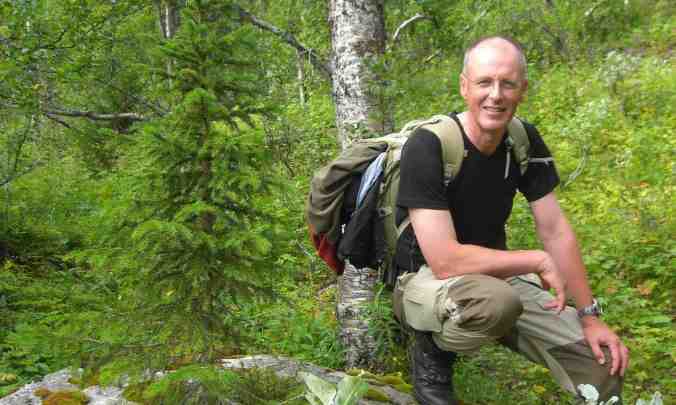
These dishes, which we have written about in previous years, tasted as if they were the best we have yet had. Maybe because it was all so easy and pleasant. Our guests, anyway, we knew to be not high maintenance. It was a cross section, functionally speaking, of La Paz Group’s Kerala team, including (from left going around the table in the picture below) engineering, finance, revenue management, reservations, sales, design, me, and front right is the man in charge of it all, who was also the photographer. Continue reading

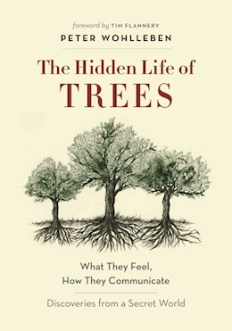
The Man Behind The Hidden Life of Trees

3648

Trees a crowd … Peter Wohlleben and friends. Photograph: Peter Wohlleben

9781771642484The man who thinks trees talk to each other

Beech trees are bullies and willows are loners, says forester Peter Wohlleben, author of a new book claiming that trees have personalities and communicate via a below-ground ‘woodwide web’

Early this year I linked out to a profile of Peter Wohlleben, and that post was remarkably well received. The post about the woodwide web concept more recently, clearly connected conceptually, was also well received, while pointing to the findings of other researchers (if you did not listen to the Radio Lab piece, do yourself a favor and do so). I am happy to link to more about the ideas in this book, and to learn more about the man himself:

Trees have friends, feel loneliness, scream with pain and communicate underground via the “woodwide web”. Some act as parents and good neighbours. Others do more than just throw shade – they’re brutal bullies to rival species. The young ones take risks with their drinking and leaf-dropping then remember the hard lessons from their mistakes. It’s a hard-knock life.

Continue reading

Sanitation’s Reincarnations

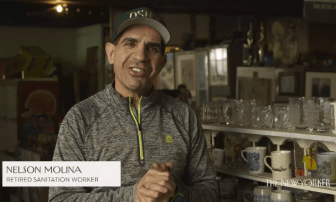
Still from video by The New Yorker

Still from video by The New Yorker

Some trash can be found and then turned into art, like the pieces of plastic that were built into sculptures at the National Zoo. Other trash is not necessarily garbage, but merely objects that someone doesn’t have the space or energy to take care of, and that man’s trash can become another man’s treasure. A man who worked for the New York Department of Sanitation for about thirty years spent a good part of his career collecting and curating things people threw away, but which caught his eye as interesting treasures, as David Owen explains:

Saving Treasures from the Trash

A Sanitation worker shows off the notable items he has rescued from curbs and bins over the course of thirty years.

Nelson Molina grew up in a housing project in East Harlem, in an apartment where his mother still lives. “Starting when I was nine years old, in 1962, I had a passion for picking up,” he said recently. “I had, like, a three-block radius. I would look through the garbage and pick up toys that people threw out, and I would fix them. I had two brothers and three sisters, and I was like Santa Claus to them.” Continue reading

Wulff & Konstali & Hygge

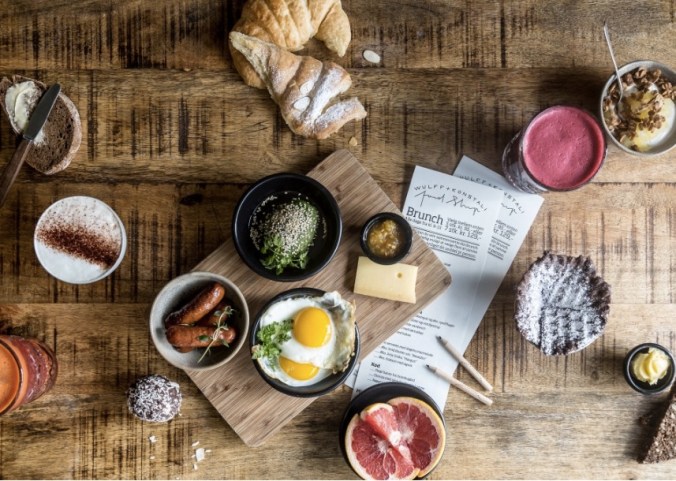
Brunch

Image from the Galleri of Wulff & Konstali’s website

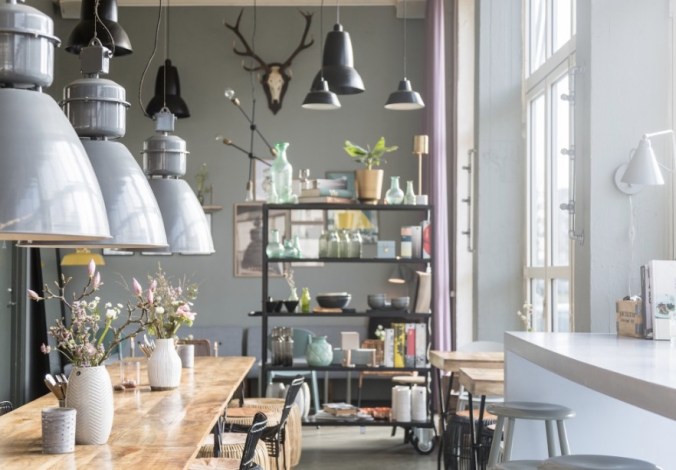
It is just after 10am Sunday morning in Kerala, as I type this. Maybe because brunch is associated with late Sunday mornings, or maybe because I just read Jocelyn’s post (or maybe both) my mind is wandering in the direction of food experience. While we have had (and hosted) many a fine brunch in Kerala at the moment my brunch-thinking has drifted to Copenhagen. You do not need to speak Danish to sense the hygge in the image above, or to want to experience it in the space pictured below.

Hyggespace.jpg

Image from the Galleri of Wulff & Konstali’s website

If you need a primer on hygge, the best place to find it is this article just published in the Guardian, which also happens to be how my attention was brought to Wulff & Konstali:

…“Hygge is when you treat yourself, it’s not that healthy, but it’s good food,” Agnete says. Continue reading

The Essayist Essay

Heller-Trump-Oberlin-Collapse-of-Public-Language-1200.jpg

A student at the University of Chicago, which recently declared itself a space safe from safe spaces. PHOTOGRAPH BY B. O’KANE / ALAMY

I have just read the most remarkable short essay (or is it a blog post?), the best in a very long time because it is eloquent, wrestles with important ideas, and is very timely. Although the title of the essay has a reference to a divisive character who I do not look forward to reading more about, I nonetheless waded in because the writer has written some of my favorite reported pieces in the last couple years.

And it was rewarded quickly, because as soon as the second paragraph he used a word that I did not know, a beautiful word. And followed that with a couple beautiful sentences opening the third paragraph. I was hooked. And in less than half an hour I was fully rewarded with inspiration and motivation.

Essays and the essayists have been the topic of numerous posts here over the years, because we have many language-lovers and word-players among our ranks. (For silly example, the first word in the title of this post is meant to convey “the most essay-ish of all” while using the word that normally just means someone who writes an essay.)  But also because, as we have tried to also communicate, words matter alot in translating ideas and ideals into actions. So, may I recommend: Continue reading

Guilt In The Eye Of The Beholder

00otg-losangeles-master768.jpg

A raspberry dessert at Café Gratitude in Hollywood. Credit Monica Almeida/The New York Times

A few days back I was struck by a post on this site about lab-grown foods, and wanted to continue the thought exercise by sharing a few comments on a brief article I had just read elsewhere on the intersection between performance art and food issues. Two more cents to add here, by way of a few excerpts from this fascinating, if alarming, article:

Eschewing a Vegan Lifestyle at Home, but Still Embracing It at Work

Continue reading

Guilty As Charged

Caplan-Bricker-Austrian-Food-Performance-Artists-1200

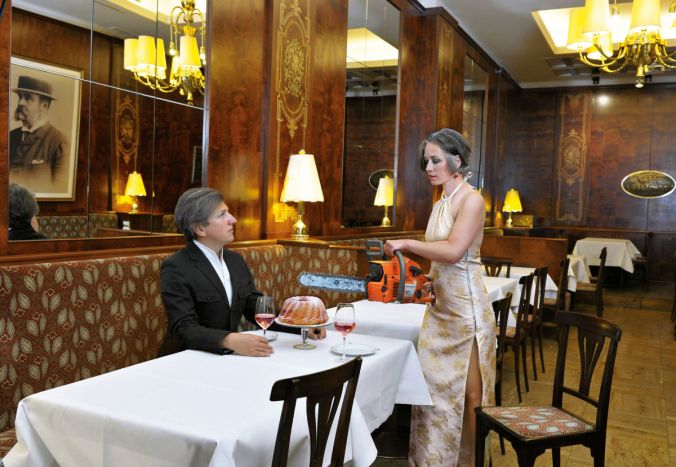
The Austrian performance artists Sonja Stummerer and Martin Hablesreiter, a.k.a. Honey and Bunny, want to make us reëxamine the culinary mores that we take for granted. PHOTOGRAPH COURTESY SONJA STUMMERER AND MARTIN HABLESREITER

I have been on the road for most of the last six weeks and have been consumer of the posts on this site, rather than contributor, for the entire stretch since we got distracted by a hurricane. That’s okay. Other contributors have carried the ball forward well, and before I forget I want to share one recent item I read elsewhere that seems a fitting counterpoint to Jocelyn’s most recent post.

That topic has a kind of ick factor I cannot articulate while at the same time is clearly a topic we are going to need to deal with more and more. I am certainly guilty of avoiding the topic, and must overcome the ick thing. Clearly linked to the lab/food topic is the issue of food waste, which we address on a regular basis here.

We need more diversity in our approach to these tough topics to avoid the feeling of being overwhelmed; antidotes to the ick/tough factor to make the topic more palatable, so to speak. We are so serious in our earnestness that we no doubt add to the weight of the topic, and I speak guilty as charged on that too. It may be that “playful” is an appropriate alternate approach from time to time, as this item suggests:

THE WASTEFULNESS OF MODERN DINING, AS PERFORMANCE ART

Many of us reflect, at least occasionally, on how our gastronomic habits affect the health of the planet. We regret that our takeout dinners come in a Styrofoam container inside a paper bag inside a plastic bag, with white plastic utensils in their very own plastic sheaths. We feel guilty when we order too much food at a restaurant and resign half an entrée to be scraped into the trash. But the pull of convention is most often stronger than these feelings. We eat in the manner we’ve grown accustomed to eating.

The sly and playful Austrian performance artists Sonja Stummerer and Martin Hablesreiter want to make us reëxamine the culinary mores that we take for granted. Continue reading